

Should a company’s nationality matter?
Rising geopolitical tensions have given governments reason to act against companies of certain nationalities on ‘security grounds’

IN THE 1990s, as the world saw an increased ease and openness to international trade and financial flows, political scientist Robert Reich argued that corporate nationality was becoming increasingly irrelevant.
Yet, two decades later today, as the world order undergoes an inexorable shift and as people’s views become increasingly polarised, it would seem the nationality of companies matters more than ever.
Rising geopolitical contestation has given governments reason to take action against certain companies based largely on their nationality on “security grounds”.
In 2019, the US banned Chinese tech firm Huawei, alleging links to the Chinese government. Five years later, the US moved to ban the sale and use of Moscow-headquartered Kaspersky’s antivirus software, similarly due to national security concerns and potential influence from the Russian government.
India was the first country in 2020 to ban Tiktok on national security grounds, unleashing a series of similar actions from a host of other countries that moved to restrict the use of the popular social media app on personal devices.
It’s little wonder then that some companies would try to sidestep these by managing their origin story, or even masking it.
To be sure, this isn’t a new practice. In the book The Great Disruption, author Srividya Jandhyala noted that “cloaking” was a common strategy among German firms in the 20th century.
By changing their organisational structure to camouflage ownership or relocating to neutral countries, these companies avoided political risk, she wrote.
Companies can also reshape their corporate nationality by entering into partnerships or mergers and acquisitions with foreign firms, she added.
These days, this playbook of “origin washing” is kept alive by the intensifying US-China rivalry and ongoing global bifurcation.
Tiktok, on its website, has tried to debunk the myth that its parent company ByteDance is Chinese-owned, even if it was founded by Chinese entrepreneurs. The company also noted that it is now 60 per cent owned by global institutional investors.
Online retailer Temu, which has marketed itself as an American company, is in fact owned by PDD Holdings, which changed its legal domicile from Shanghai to Dublin two years ago.
Closer to home, Skintific, seemingly an Indonesian brand, is in fact created by a Chinese company with claims that its formula comes from “global laboratories, such as South Korea and Canada”, South China Morning Post reported in 2024.
Paurav Shukla, a professor of marketing, said in 2017 his research suggests that brands that disguise their origins risk damaging their bottomline.
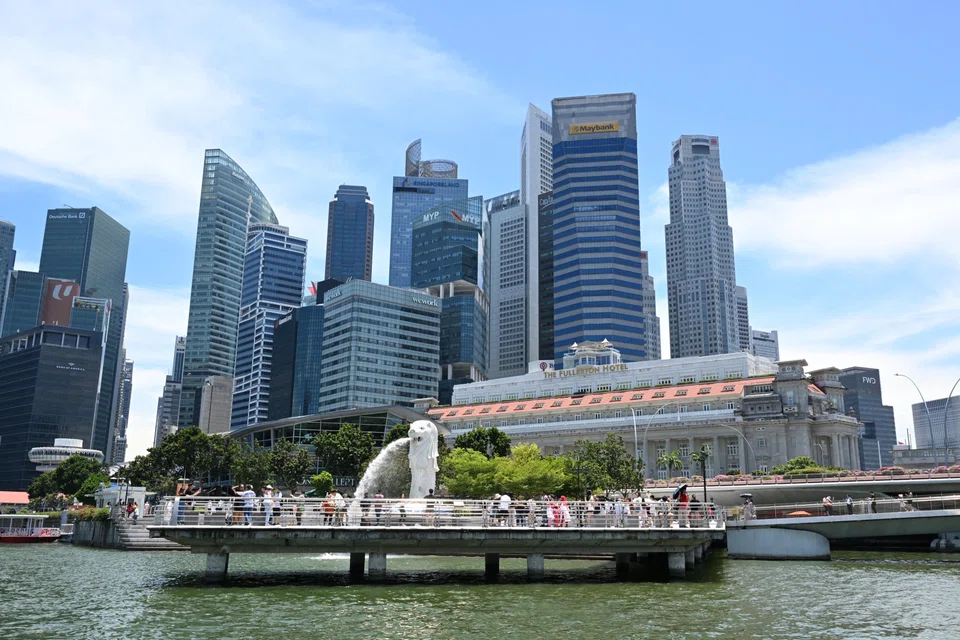
But beyond consumer backlash, “origin washing” also has several implications for Singapore, which has been seen as an attractive base for companies seeking to set up their headquarters in a neutral country.
Last year, the Australian Financial Review reported that Yuxiao Fund, a Chinese company, had “tried to acquire control of military-use mineral assets in Australia” by being domiciled in Singapore.
While Singapore rightly should not stop any foreign businesses from wanting to be domiciled here, there is perhaps a need for the authorities to screen new entrants more carefully, given the possibility that it may be needlessly caught in the middle of a complicated dispute and faced with potential reputational risks.
TRENDING NOW

Motoring tycoon Peter Kwee is back in court: Here are his previous legal battles

Demand, tech capabilities position Apac and AI as Skyscanner’s next growth frontiers: CEO Bryan Batista

Beyond the greenback, Vietnam’s big borrowers turn to Asian-currency bonds
Nvidia’s outlook cut to stable by Moody’s on governance concerns

