Should minorities accept Second Chance offer?
There may be little point continuing to ride along with the company’s founder, if his current focus on listed stocks is not possible under SGX listing rules

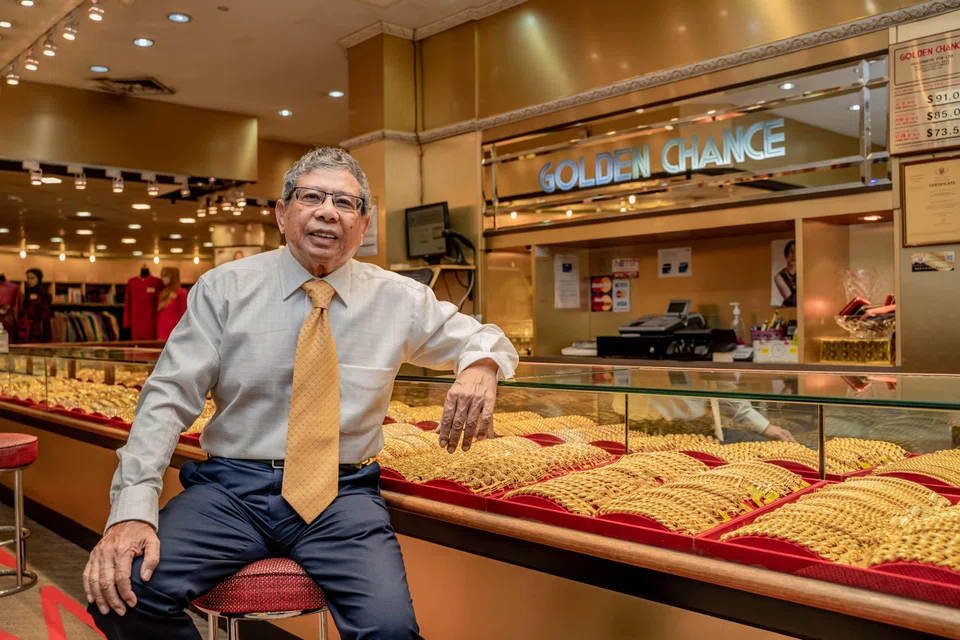
THE origin story of Second Chance Properties dates back to 1975, when its founder and chief executive Mohamed Salleh started a tailoring business that lasted only four months.
By the company’s account, Salleh restarted the business a few months later and named it Second Chance.
This past week – on Jul 10 – Salleh made an unconditional offer for Second Chance Properties at S$0.30 per share via a special purpose vehicle called Final Chance Holdings.
Taking Second Chance Properties private would give Salleh more flexibility to invest the company’s capital, including by taking a chance on financial market investments as interest rates peak.
Second Chance Properties owns apparel and gold retailing businesses, and invests in real estate and securities. During the years leading up to the pandemic, it streamlined and consolidated its operations.
Even its property investments, which had been the key attraction for investors, were pared down. The plan was to wait for an economic downturn, and re-enter the property market.
When the pandemic hit in 2020, however, the company decided stocks were far more attractive than real estate. “Even as Covid-19 induced a global recession, property prices in Singapore did not fall, as unprecedented low interest rates supported the property market,” Salleh said, in the company’s annual report for the financial year to Aug 31, 2021.
“The board decided to invest in battered down stocks with strong fundamentals for dividend income. This has now become our core business, and we look to increase our recurring dividend income by continuing to add to our portfolio,” he added.
Second Chance Properties continued to invest in stocks the following year. “We have and will continue to recycle the proceeds from the sale of properties into high dividend yield companies with strong fundamentals,” Salleh said, in the company’s annual report for FY2022.
“Our dividend income for this financial year has increased substantially over the last year, and is set to increase much further as we build our investment portfolio,” he added.
However, Second Chance Properties later found that it had breached SGX Listing Rule 1020, which essentially states a listed company that sets up an investment fund exceeding 50 per cent of its net asset value (NAV) has to comply with the listing requirements for investment funds.
The company said on Oct 22, 2023 that SGX had “no objection” to its application for a waiver to comply with Listing Rule 1020 for a period of four years in order to reduce its securities holdings to below 50 per cent of its NAV in an orderly manner.
“During this four-year timeframe, we will need to divest approximately S$150 million in securities to achieve full compliance with this regulation. As a consequence, the group can expect a substantial decrease in dividend income over the coming four years,” Salleh said in Second Chance’s annual report for FY2023.
Big securities exposure
Second Chance Properties reported a 38.5 per cent increase in net profit to S$19.7 million for FY2023, on a 2.8 per cent decline in revenue to S$41.9 million.
Contributions to the group’s profit before interest, tax and unallocated expenses from its securities investments increased 94.9 per cent to S$18.9 million. Contributions from real estate fell 17.4 per cent to S$4.2 million, while contributions from gold retailing dropped 16.9 per cent to S$3.2 million.
Apparel suffered a loss of S$830,000 for FY2023, versus a loss of S$770,000 for FY2022.
For H1 FY2024, the group’s net profit fell 52.8 per cent to S$4.3 million on a 10.4 per cent decline in revenue to S$13.3 million.
Contributions to profit before interest, tax and unallocated expenses from securities investments declined 42.4 per cent to S$3 million, and 58.4 per cent to S$2.3 million from its real estate division. Contributions from its gold business increased 33.8 per cent to S$1.9 million. Its apparel business was in the red for both periods.
Second Chance Properties’ NAV as at Feb 29 was S$0.302 per share.
The company said in a recent filing that the NAV of its quoted securities as at Jun 30 was S$0.223 per share.
Its most recent quarterly share investment update said that 30 per cent of its securities portfolio as at May 31 was invested in Singapore while 69 per cent was invested in China and Hong Kong. The remaining 1 per cent was invested in Australia.
Among its 10 largest holdings were China Mobile, China Construction Bank and CapitaLand India Trust.
Tightly held stock
Salleh and four other shareholders of Second Chance Properties, holding nearly 85.1 per cent of its shares, have agreed to accept the offer.
Will the offeror succeed in securing a high enough level of acceptances to seek a voluntary delisting of the company, or even exercise the right of compulsory acquisition?
My own view is that minority shareholders of Second Chance Properties have little reason to hold out in this case.
None of the group’s main business units appears likely to deliver strong growth in the immediate future.
The offeror also does not appear to be lowballing minority investors. The offer price is 39.5 per cent above Second Chance Properties’ closing price the day before the offer was announced, and almost equivalent to the company’s NAV.
More importantly, many investors find Second Chance Properties interesting because it is a means of riding along with a well-respected local entrepreneur. But does this still make sense if Salleh’s best commercial instincts now cannot be pursued because of SGX listing rules?
It might be more sensible to allow Salleh a final chance to make it big with Second Chance Properties as a privately held entity, while minority shareholders of the company hunt for another chance to re-invest the proceeds from the offer.
The Mark To Market column will take a break next week, while the writer clears some leave
TRENDING NOW
Fed hike throws Singapore banks a margin lifeline; UOB most likely to feel impact
He built the Vingroup empire. Now South-east Asia’s richest man is handing some key roles to his sons
Real-estate veteran Desmond Sim quits from CEO roles at Realion, ETC
Chagee, Mixue and Luckin won the market. Sustaining their edge is the harder part