

Should non-property groups avoid buying property?

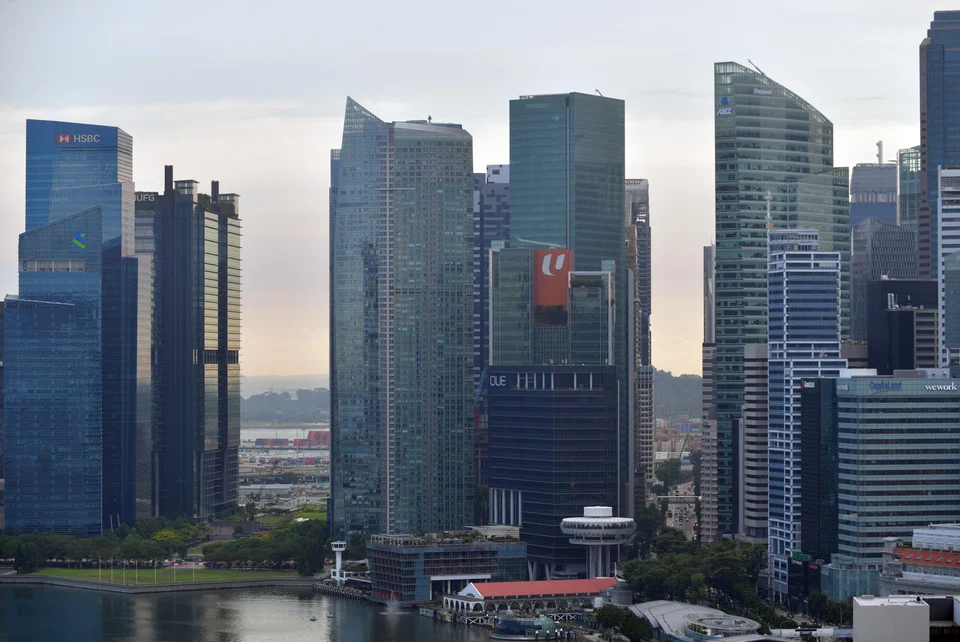
LISTED property groups are generally not well-loved by investors, often trading well below book value, perhaps for good reasons.
Earnings from property development projects can be lumpy. For housing developers in Singapore, profit margins may be low and the risks of cooling measures are high.
The yield on marked-to-market valuations of investment properties is often unexciting. And plenty of capital could be tied up in owning low-yielding assets.
The solution for property groups may be to pursue asset-light strategies. Spread a company’s equity across more development projects and investment properties by working with co-investors. At the same time, earn 100 per cent of the fees from managing the said projects and properties.
In short, growing a fee income business can help property groups boost return on equity (ROE).
But while property groups should pursue asset light strategies, there may be good reasons for non-property groups to own property.
Many listed companies in various businesses have created value for shareholders from their property assets. Numerous condominium projects in Bukit Timah and elsewhere have sprouted up on sites which housed production facilities of different businesses.
More recently, leading telco Singtel is redeveloping its Comcentre headquarters, near Somerset MRT station, into an office-led development to maximise the site’s potential, via a joint venture with Australia-listed real estate group Lendlease.
However, property prices in Singapore today are high. The net yield on office buildings is typically low, often below debt costs. Also, with higher interest rates, the cost of equity of investors in listed entities has risen.
Is shipbuilder Yangzijiang Shipbuilding – a constituent of the benchmark Straits Times Index – behaving irrationally by buying an office building here?
Robinson Point
In late March, Yangzijiang said its 81 per cent-owned subsidiary will buy a 21-storey freehold commercial building, Robinson Point, at 39 Robinson Road, in the Central Business District (CBD), for an agreed property value of S$399 million.
The property comprises 15,724 square metres of gross floor area, with retail units on the ground floor, car park bays on levels three to five and office units on the remaining floors.
Financially, there is no impact on Yangzijiang’s book value from this property purchase. But the deal is negative on the group’s earnings per share (EPS).
Assuming that the purchase took place on Jan 1, 2022, and based on the financials of Yangzijiang and the property company owning Robinson Point for 2022, the acquisition would lower Yangzijiang’s EPS from 71.25 fen to 70.51 fen.
Beyond the somewhat negative financial impact, is Yangzijiang’s rationale for buying the commercial property sound?
The group wants to preserve the value of its funds generated from core shipbuilding activities. It sees buying the property as providing a hedge against continued inflation, as well as stable cash flow to minimise fluctuations in the returns of the group. Also, Yangzijiang hopes to enjoy capital gains from the appreciation of the property.
Yangzijiang adds that buying a building in Singapore’s financial district allows it to enhance its profile.
The group’s executive chairman and chief executive officer Ren Letian said a professional real estate manager will be appointed to manage the marketing activities and operations of the building, with the idea of branding it a financial hub to attract the likes of institutional investors and family offices as tenants.
Ren stressed the property buy is a one-off exercise and Yangzijiang’s focus remains in the shipbuilding business.
Yangzijiang is cash rich. As at end-2022, the group had cash and cash equivalents of 10.8 billion yuan (S$2.1 billion) and total of borrowings 4.6 billion yuan.
There appears to be little harm in a cash-rich business buying a building. Indeed, with high interest rates, cash-rich property buyers have an edge over buyers who rely significantly on debt funding.
The recurrent income generated from owning a building can be a useful contributor to cash flow and profitability when a company’s core business hits a rough patch.
Moreover, a freehold commercial building in the CBD has its appeal given the scarcity of such buildings. Taking a really long-term view, there could be redevelopment potential if Robinson Point is redeveloped together with neighbouring 61 Robinson Road, where GuocoLand has reversionary interest in the freehold land.
Better uses of cash
Nonetheless, businesses need to carefully evaluate the deployment of capital. Putting monies into property for yield in the low single digits may not work for equity investors, who are counting on a company generating high single-digit ROE or more from the core business.
Alternatively, if a listed company is not reinvesting cash in its core business, maybe it should return such cash to shareholders via a special dividend. Shareholders can then choose how to reinvest such proceeds.
Sure, owning a building can enhance a group’s profile. Still, there are possibly cheaper and more effective ways of doing so. For example, businesses can do community outreach and enhance their branding via sponsoring sports, arts or charity events.
Should Singapore continue growing as a business hub and a magnet for the wealthy, buying physical property can generate positive returns over time, even if one paid slightly above market price or bought at a wrong point in the property cycle.
For any property investor, having holding power matters. As long as one avoids being forced to sell a property at a time that is not of one’s choosing because of cash flow difficulties, one may likely gain from owning property in Singapore.
Still, amid much disruption, many listed entities should put laser-like focus on the core business. Ensure that the business secures a vital competitive edge. Pivot in time if need be.
Run a business well and keep a prudent balance sheet. Diversifying into owning property to get insurance is then unnecessary.
Investors buy into listed businesses because they like prospects in a particular line of business and the competitive positioning of a specific entity.
Real estate has a place in investment portfolios alongside asset types such as equities and bonds. However, investors can diversify their exposure across various investment instruments on their own.
Shipbuilders and others need not diversify into property or other financial investments on behalf of investors.
TRENDING NOW

China Investment Corp, PGIM’s 50% stake in Nex mall up for sale; asking about S$1.2 billion

Higher rates, weaker spending: Is the Philippines entering stagflation?
Singapore tech stocks plunge as Nasdaq bloodbath spills into region
OCBC wealth clients turn defensive amid market volatility as Q3 profit rises 3%

