

Should Suntec Reit internalise its manager?
If there is a lesson from the Sabana Reit experience, it is perhaps that aligning the interests of all stakeholders is difficult but absolutely crucial

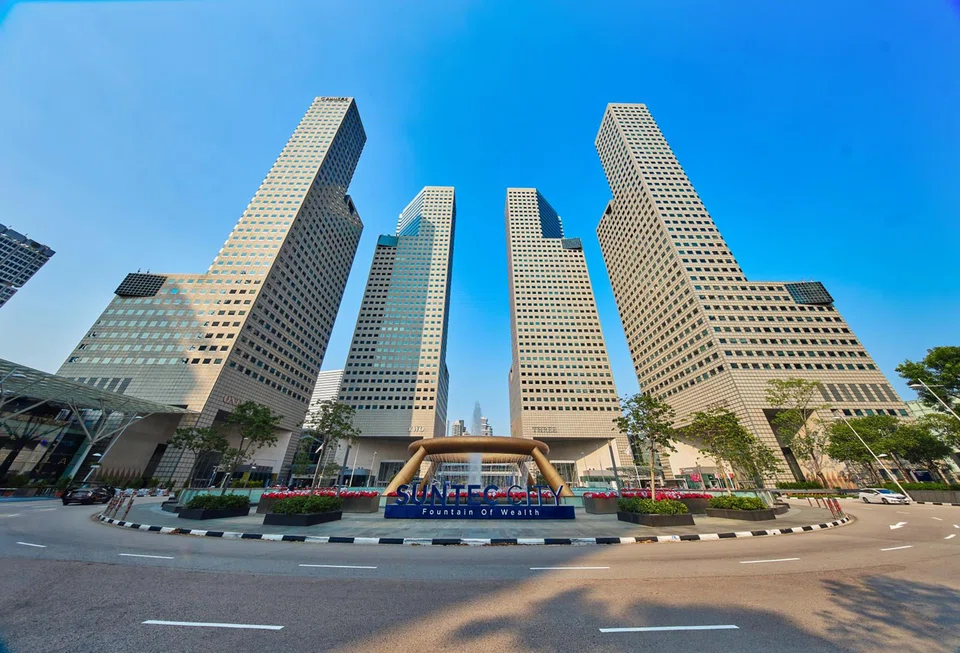
THE board of Suntec Real Estate Investment Trust’s (Reit) manager should probably be prepared to field some questions from unitholders at the coming annual general meeting (AGM) on Apr 18 about whether it is time to consider internalising the management function of the trust.
This past week, RHB said in a report that Suntec Reit is uniquely positioned to benefit from such an internalisation – given the relatively large size of its property portfolio and its limited reliance on its sponsor group for acquisitions and funding.
RHB is specifically suggesting that Suntec Reit acquire its manager for between S$307 million and S$430 million, by issuing new shares to its sponsor group.
The research house figures this could boost Suntec Reit’s distribution per unit (DPU) by as much as 6 per cent.
RHB added that an internalisation exercise is unlikely to have much impact on Suntec Reit’s overall debt cost, and could potentially lower its cost of equity.
“We believe that internalisation could be a win-win for all stakeholders and result in a healthy DPU uplift over the long run,” RHB said in its report.
Suntec Reit was among the earliest Reits to list in Singapore – it hit the market in late 2004. Its manager ARA Asset Management is today owned by Hong Kong-listed ESR Group.
Suntec Reit holds real estate assets worth S$12.2 billion. More than three-quarters of these assets consist of offices, shops and convention space in Singapore. The Reit also holds offices and retail properties in Australia and the United Kingdom.
RHB noted in its report that Suntec Reit’s concentration on commercial properties stands in contrast to ESR Group’s focus on “new economy” properties that support the e-commerce sphere.
For 2023, Suntec Reit’s distributable income fell 19.1 per cent to S$206.8 million, and its DPU declined 19.7 per cent to S$0.07135. This was attributed to higher financing costs as well as a weaker Australian dollar.
Suntec Reit last year divested S$94.4 million of strata units at Suntec City Office Towers, at average prices of 31 per cent above their book value. The proceeds were used to repay debt.
Even so, Suntec Reit ended 2023 with relatively high aggregate leverage of 42.3 per cent. Against the backdrop of higher interest rates, this has resulted in a lot of nervousness in the market.
On Friday (Apr 5), Suntec Reit closed at S$1.13 – an appalling 46.2 per cent discount to its net asset value (NAV) as at Dec 31 of S$2.10 per unit.
Motivations of stakeholders
Suntec Reit would probably garner a higher market valuation if it pursues an internalisation initiative, in my view.
For one thing, it would gain a certain cachet in a market where every other Reit is externally managed. It may also be viewed as an easier takeover target.
The big question is whether the interests of all the parties involved can be sufficiently aligned for a deal to get done.
RHB said past transactions involving Reit managers have been priced at seven to nine times their annual management fees.
For instance, Croesus Retail Trust acquired its manager in 2016 for S$50 million – which was 7.4 times its management fees.
In another transaction, City Developments purchased a 50 per cent stake in IReit Global’s manager in 2019 for S$18.4 million. This was equivalent to 9.4 times its management fees.
In 2018, ESR Logos Reit (which was then known as ESR-Reit) merged with Viva Industrial Trust (VIT). As part of the deal, VIT’s manager changed hands for S$62 million – or 7.1 times its management fee.
In 2019, a unit of ESR Group bought 51 per cent of Sabana Reit’s manager for S$21.8 million – or about 9.3 times its management fees.
RHB said Suntec Reit’s manager should probably be priced at a discount to these past transactions, considering the Reit’s large size and mature growth profile. The research house applied a five to seven times multiple to fees earned by Suntec Reit’s manager to arrive at the price tag of S$307 million to S$430 million mentioned earlier.
So, would a proposal for Suntec Reit to acquire its external manager at such a valuation be viable?
The way I see it, the independent unitholders of Suntec Reit may baulk at having to pay anything for a manager that has not brought much to the table – especially at a time when the market value of Suntec Reit’s units are in a slump.
However, they might ultimately be persuaded to support an internalisation deal if they are convinced that it will significantly boost Suntec Reit’s DPU and market value.
As for ESR Group, an internalisation deal would enable it to increase its stake in Suntec Reit at a discount to NAV. This would position ESR Group to ride any market re-rating of Suntec Reit that follows.
Yet, ESR Group might not be interested in giving up the fee income it currently earns from Suntec Reit unless it is more than compensated by an increase in DPU income from its increased stake.
Lessons from Sabana Reit
In the end, an internalisation of Suntec Reit’s manager may take place – not because it is win-win for the key stakeholders but because it avoids a lose-lose situation.
In August last year, unitholders of Sabana Reit voted to remove its external manager, and direct its trustee to set up a new internal manager. Some eight months on, the process has proven to be expensive, lengthy, rancorous and uncertain.
A key sticking point is whether implementing the internalisation resolutions that were passed last year requires an amendment to Sabana Reit’s trust deed. Such an amendment would require an extraordinary resolution with a 75 per cent approval threshold, which ESR Group stands a good chance of blocking with its more than 21 per cent stake.
On Jan 9, Sabana Reit’s trustee filed an Order 32 application with the courts to clear up the matter.
The way I see it, the best way forward for Sabana Reit is for it to acquire its external manager from ESR Group. This will require that Quarz Capital – the activist investor that has led the push for internalisation – and ESR Group put aside their differences and begin serious negotiations.
Quarz and ESR Group both have good reasons to bend a little at this point. For Quarz, there is little point continuing with an expensive campaign that it might not win.
On the other hand, ESR Group has little reason to hold on to the manager of a Reit that is not an effective property securitisation platform anyway – especially with growing investor scrutiny of the benefits that sponsor groups bring.
It would make more sense for the two parties to engineer a market re-rating of Sabana Reit by allowing it to acquire its existing manager – so that they can both eventually exit their positions.
Interestingly, Quarz reached a resolution with ESR Group last week over alleged defamatory statements made in the heat of its fight for internalisation. Whether this leads to them working together remains to be seen, though.
If there is a lesson from Sabana Reit’s manager internalisation experience it is perhaps that aligning the interests of all stakeholders is difficult but absolutely crucial.
The managers and sponsor groups of failing Reits should take appropriate action before disgruntled investors turn mistrustful and militant.
If Suntec Reit is to reap the benefits of internalising its manager, its stakeholders have to be prepared to work together – and the best time to begin doing so is now.
TRENDING NOW

Once staunchly pro-China, Malaysian Chinese businesses are now distancing themselves from Beijing

Looking beyond looming CEO succession, should UOB potentially pursue a transformative merger?

Could stablecoins be the future of money?

Grab CEO’s wife Chloe Tong on life with Anthony Tan and finding her purpose

