

Should ThaiBev’s minority shareholders support the proposed FPL-F&N share swap?
FPL and F&N are plainly undervalued, but ascribing a precise fair value to a company can be tricky

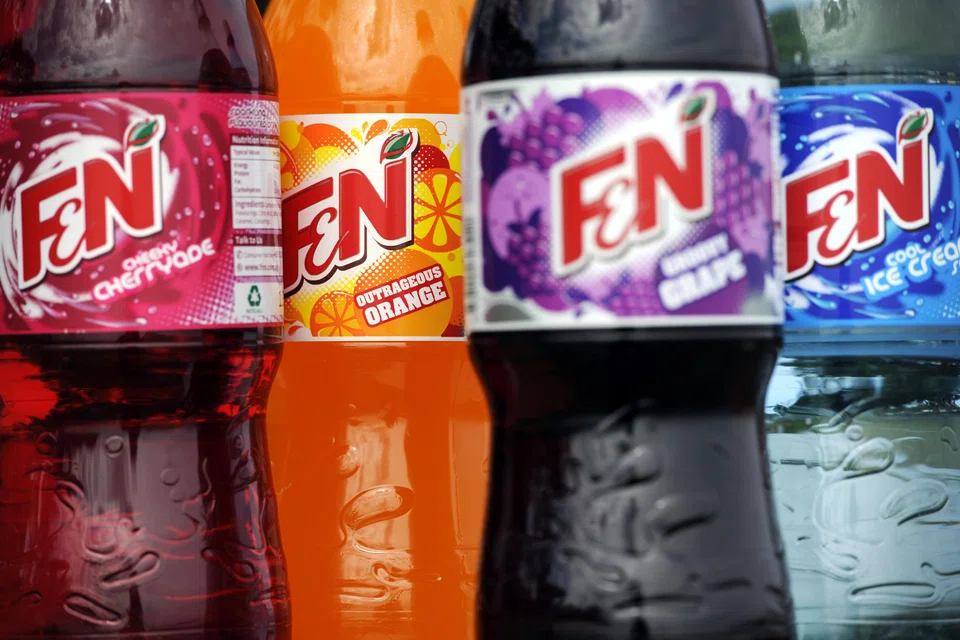
WHILE this column was on a hiatus last month, Thai Beverage (ThaiBev) unveiled a proposal to offload its entire interest in Frasers Property (FPL) and increase its stake in Fraser and Neave (F&N).
The deal will turn ThaiBev into a more focused beverage and food group, and is expected to be immediately accretive to its earnings.
Yet, minority shareholders of ThaiBev may have misgivings about the significantly higher premium to market price at which the company is receiving F&N shares under the deal versus the FPL shares it is parting with.
The deal will also do nothing to improve the narrow free floats of F&N and FPL that have contributed to the low trading volume and deep undervaluation of their shares.
Before the market opened on Jul 18, ThaiBev said that it had reached an agreement with TCC Assets to exchange 1.13 billion FPL shares priced at S$1.89 each for 601.63 million F&N shares priced at S$3.55 apiece. No cash will change hands.
ThaiBev noted that the valuations accorded to FPL and F&N were the result of extensive, arm’s length negotiations.
The transaction will result in ThaiBev increasing its stake in F&N from 28.31 per cent to 69.61 per cent, and reducing its interest in FPL from 28.78 per cent to zero.
TCC Assets, a privately held vehicle of ThaiBev’s controlling shareholder Charoen Sirivadhanabhakdi, will increase its stake in FPL from 58.1 per cent to 86.89 per cent, and cut its stake in F&N from 58.9 per cent to 17.6 per cent.
Judging from the reaction in the market, the deal was more exciting for shareholders of FPL and F&N than for shareholders of ThaiBev. In particular, F&N closed 21.5 per cent higher on Jul 18.
FPL climbed 2.5 per cent the same day, while ThaiBev was only up 1 per cent.
While the proposed transaction will have no direct impact on minority shareholders of FPL or F&N, the valuations accorded to the two companies were a strong positive signal that their shares are deeply undervalued.
For minority shareholders of ThaiBev, the picture is more complicated. On a pro forma basis, the deal would have boosted the company’s earnings per share for the 12 months to Mar 31 by 4.3 per cent.
However, the valuation accorded to F&N under the deal of S$3.55 per share is 232 per cent above its last closing price on Jul 17 of S$1.07 per share. FPL’s valuation of S$1.89 per share under the deal is 136 per cent above its closing price on Jul 17 of S$0.80.
Are ThaiBev’s minority shareholders being shortchanged by its controlling shareholder injecting F&N shares into the company at a far higher premium to market price than it is taking FPL shares?
Complicated exercise
To be clear, I am not suggesting ThaiBev should have based the exchange ratio for FPL and F&N shares on their recent market prices. Those market prices plainly do not reflect the underlying value of their assets and businesses.
The market value of F&N’s 55.5 per cent interest in Kuala Lumpur-listed F&N Holdings alone was more than its own market capitalisation, and that FPL’s market capitalisation is barely one-third of its net asset value (NAV).
While such extreme undervaluation is easy to detect, ascribing a precise fair value to a company can be tricky. Different valuation models and techniques are necessarily applied to different types of companies.
Peer comparisons can also be complicated, as no two companies are exactly the same.
ThaiBev said in its Jul 18 announcement that four segments of F&N – Vietnam-listed Vinamilk, F&N Holdings, its remaining unlisted beverage and dairy businesses, and Times Publishing – were valued against their peers and then aggregated to arrive at a sum-of-the-parts (SOTP) valuation for the whole group.
Among the companies considered to be its peers in the beverage and dairy fields were Ultrajaya Milk Industry & Trading Company, Farm Fresh, Dutch Lady Milk Industries, Yeo Hiap Seng, Carabao Group, Osotspa, and Sappe.
The SOTP valuation was cross-checked against a discounted cash flow valuation based on the company’s internal projections of the key businesses under F&N, interviews with management and research reports.
ThaiBev said that the valuation approach for FPL took into account its NAV, its recent financial statements, the market value of its stakes in its real estate investment trusts and the value of its asset management platform based on precedent transactions.
Also considered were the discounts to revalued NAV at which other real estate companies have been taken private in recent years, including Global Dragon, Chip Eng Seng Corp, CapitaLand, Perennial Real Estate Holdings, United Engineers and Wheelock Properties.
While most investors would probably not find fault with the valuation methods behind the negotiated prices for FPL and F&N, some of them might wonder if these same prices would ever have been offered to the respective minority shareholders of the two companies.
Further corporate action?
Having said that, ThaiBev does have a strong incentive to accept the seemingly rich effective price tag for F&N. If the deal is approved by its minority shareholders, the company will become a more focused beverage and food group.
Combined with the earnings accretive effect of the transaction, this could help ThaiBev garner a wider investor following and boost the market value of its shares over time.
As for minority shareholders of FPL and F&N, the big question is whether the proposed deal is a harbinger of further corporate action to unlock value.
Some patience might be required, though. ThaiBev said last month that there are currently no plans to take F&N private, and that there is merit to keeping it as a separately listed entity given its strong brand value and heritage.
Indeed, any immediate value-unlocking initiative that does not accord a valuation of at least S$1.89 per share to FPL and S$3.55 per share to F&N would not be a good look for ThaiBev and TCC Assets.
In the meantime, the narrow free floats of FPL and F&N could continue to weigh on the market values of their shares.
The writer owns F&N shares
TRENDING NOW

Ex-Nvidia CEO Jensen Huang carried a secret for more than a year. It led to his downfall

South-east Asia has lost Nvidia’s best salesman

Demand, tech capabilities position Apac and AI as Skyscanner’s next growth frontiers: CEO Bryan Batista

Jensen Huang discusses comeback as Nvidia CEO with allies: report

