

SIA ends an interesting chapter of its history with redemption of its last remaining MCBs
Among the lessons for market watchers is that investors in the local market are not as apathetic as they are often made out to be

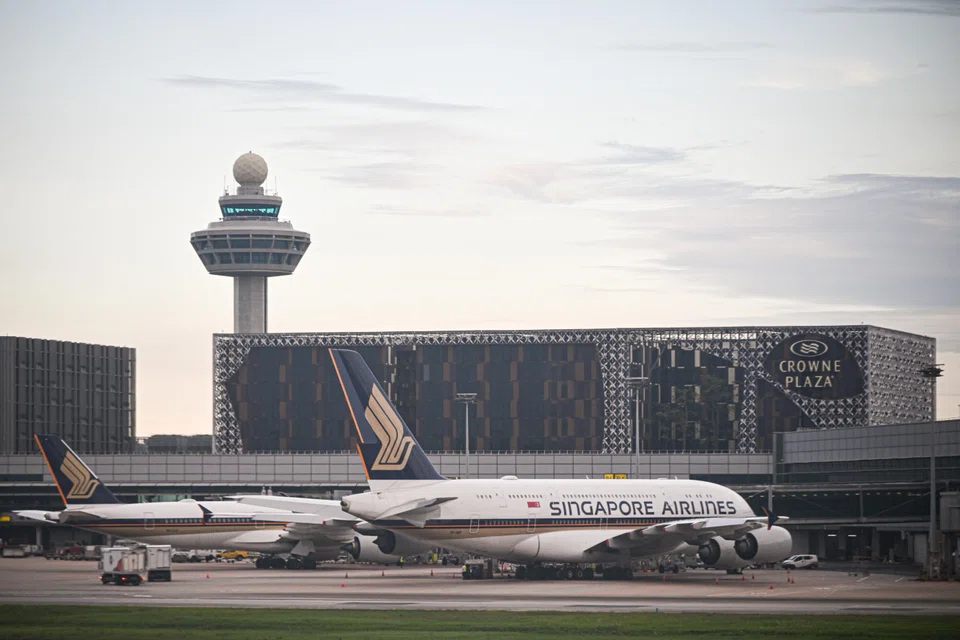
THIS month, on Jun 24, Singapore Airlines (SIA) will redeem the last of the mandatory convertible bonds (MCBs) it issued to ride through the pandemic.
SIA on May 15 said that holders of these remaining MCBs will receive just over S$1.74 billion – 112.616 per cent of the principal amount they stumped up in 2021.
The full gross proceeds SIA received from the issue of these MCBs of S$1.55 billion will be used to fund the redemption.
This will mark the end of an interesting chapter of SIA’s history that holds a number of lessons for market watchers.
Among them is that a deep-pocketed and supportive controlling shareholder can be an enormous competitive advantage in the midst of a crisis, and that investors in the local market are not as apathetic as they are often made out to be.
At the onset of the pandemic in 2020, SIA unveiled plans to tap its shareholders for as much as S$15 billion in order to sustain itself. Nearly two-thirds of this amount came from the issue of MCBs.
Flush with long-term capital during the pandemic, SIA not only survived but was able to quickly reinstate its services as soon as international borders reopened and revenge travellers took to the skies.
Benefiting from elevated air fares, SIA didn’t just swing back to the black during its financial year ended Mar 31, 2023 – it achieved record revenue of S$17.8 billion, and its highest-ever net profit of S$2.16 billion.
Last month, the group said that its revenue for FY2024 increased a further 7 per cent to a new record of S$19 billion. Its net profit increased 24 per cent, to a new high of S$2.67 billion.
SIA also said that it will pay a total dividend of S$0.48 per share for FY2024, up from S$0.38 per share for FY2023.
It is worth noting that SIA achieved these blowout numbers even as its employees received bumper bonuses. For FY2024, it reportedly paid eligible employees a profit-sharing bonus of 7.94 months.
For FY2023, its employees were reportedly given a profit-sharing bonus of 6.65 months and a maximum ex-gratia bonus of 1.5 months.
Exciting pandemic-era stock
This sharp turnaround in profitability – made possible by the huge amount of capital SIA raised – was well-anticipated by investors in the local market.
SIA’s shares came off their lows in late 2020 and climbed strongly over the next three years.
Even the prospect of having to make hefty payouts to passengers injured last month when Flight SQ321 encountered “sudden extreme turbulence” has failed to dent its share price.
Looking back now, SIA has arguably been one of the most exciting stocks of the pandemic era. Since the beginning of 2020, the company’s shares have delivered a total return of 13.6 per cent.
This lagged the Straits Times Index’s (STI) total return of 24.4 per cent, but it was enough to make SIA the ninth best-performing stock within the index.
Among the STI stocks with returns that ranked ahead of SIA were Sembcorp Industries and Keppel Corp, which benefited from big value-unlocking initiatives, and the three local banks – DBS, OCBC and UOB – which enjoyed a surge in net interest income as a result of higher interest rates following the pandemic.
SIA’s performance through the pandemic was also remarkable given the usually tough economics of the airline business.
During the five years leading up to the beginning of 2020, SIA’s shares delivered a total return of minus 8.8 per cent – which made it the fifth worst-performing component of the STI during the period.
Backing from Temasek
In June last year, as bullish speculation pushed SIA’s shares above the S$7 mark, news broke that Temasek had made arrangements to trim its controlling stake in the group.
A subsequent filing showed a unit of Temasek had sold 55 million SIA shares on Jul 4, 2023, for nearly S$394.6 million, or more than S$7.17 per share. The sale reduced Temasek’s stake in SIA from 55.42 per cent to 53.57 per cent.
In hindsight, this was a prescient move by SIA’s controlling shareholder – the stock subsequently rolled back below the S$7 mark.
SIA had tapped Temasek and its other shareholders for a total of S$15 billion during the pandemic – S$5.3 billion through the issue of 1.78 billion new shares, and S$9.7 billion through the issue of the MCBs.
The MCBs were structured to support the airline group through a potentially long period of restrictions on international travel. They were zero-coupon instruments and only redeemable at the option of SIA, at prices calculated to deliver an annual yield-to-call of 4 to 6 per cent per annum. They were also treated as equity in SIA’s books, but mandatorily convertible into new shares only in June 2030.
These features made the MCBs rather unattractive to many investors, though. While the new shares issued by SIA – at a deeply discounted price of S$3 per share – were fully taken up, the MCBs were widely shunned.
Temasek ended up having to mop up more than 95 per cent of these instruments. This left the investor with greater exposure to SIA’s MCBs than its shares.
As SIA now prepares to redeem its last remaining MCBs, the group appears to be in good financial shape. As at Mar 31, it had total shareholders’ equity of S$16.3 billion, total debt balances of S$13.4 billion, and total cash balances of S$11.3 billion. SIA generated net cash of S$5.1 billion from its operations for FY2024.
Looking ahead, it seems more than likely that SIA’s profitability will gradually wane – as the post-pandemic surge in demand for travel eases and other carriers add capacity. The big question is whether this softening outlook is adequately reflected in its share price.
SIA closed on Wednesday (Jun 12) at S$6.73, which puts its market capitalisation at just over S$20 billion – or about 7.5 times the group’s earnings for FY2024.
TRENDING NOW

Once staunchly pro-China, Malaysian Chinese businesses are now distancing themselves from Beijing

Britain’s mansion tax shows the difficulty of targeting wealth

Three hats, one goal: How Ng Kian Swan runs sustainability at NUHS

COE review: The gap between luxury and mass-market cars isn’t the only one worth bridging

