Sias, SGX’s testing of IFA verdict in privatisation of Global Palm Resources a positive development
Besides having to ensure their work stands up to scrutiny, IFAs may also have to come up with more convincing ways of assessing similar deals

THE Securities Investors Association (Singapore) or Sias sparked questions this past week about whether the independent financial adviser (IFA) appointed to assess the privatisation offer for Global Palm Resources was right to have declared the deal to be “fair and reasonable”.
The scrutiny ought to be welcomed by all participants in the Singapore market. The opinion of an appointed IFA should neither be just another checkbox to tick in a privatisation offer, nor an unassailable justification for these deals.
It is also crucial that IFAs are not seen to be controlled or influenced by the boards of companies that appoint them.
Having to regularly respond to questions from investors and regulators may well strengthen the professional independence of IFAs, and bolster confidence that they are acting in the interests of minority investors.
Last Monday (May 8), Sias issued a statement calling for minority shareholders of Global Palm Resources to reject the offer for the company at S$0.25 per share. Sias said it disagreed with Provenance Capital – the IFA appointed by Global Palm Resources – that the deal is “fair and reasonable”.
Specifically, Sias took issue with the IFA setting “an arbitrary market cap limit of S$500 million” when it selected other palm oil-related companies against which to benchmark the offer for Global Palm Resources.
Sias noted the market cap limit resulted in there being only two “comparable companies” listed on the Singapore Exchange (SGX), and eight listed in Indonesia. “Sias acknowledges this is a judgement call but urges shareholders to ask themselves whether it really is appropriate not to consider firms listed on the home market in favour of several in an overseas market when arriving at valuation metrics.”
Sias went on to say the offer for Global Palm Resources was not attractive versus the 13 precedent privatisation transactions selected by the IFA.
For instance, the offer for Global Palm Resources values the company at 10 times its 2022 earnings. Only one of the 13 precedent privatisation transactions was done at a lower earnings multiple. The mean price-to-earnings (P/E) ratio of the 13 precedent deals was 13.5 times.
On the other hand, the offer price for Global Palm Resources is 0.85 times its net asset value (NAV) as at Dec 31, and 0.78 times its revalued NAV (RNAV). The 13 precedent privatisation deals were done at a mean price-to-NAV (or price-to-RNAV where applicable) ratio of 1.07 times.
SGX takes up the cudgels
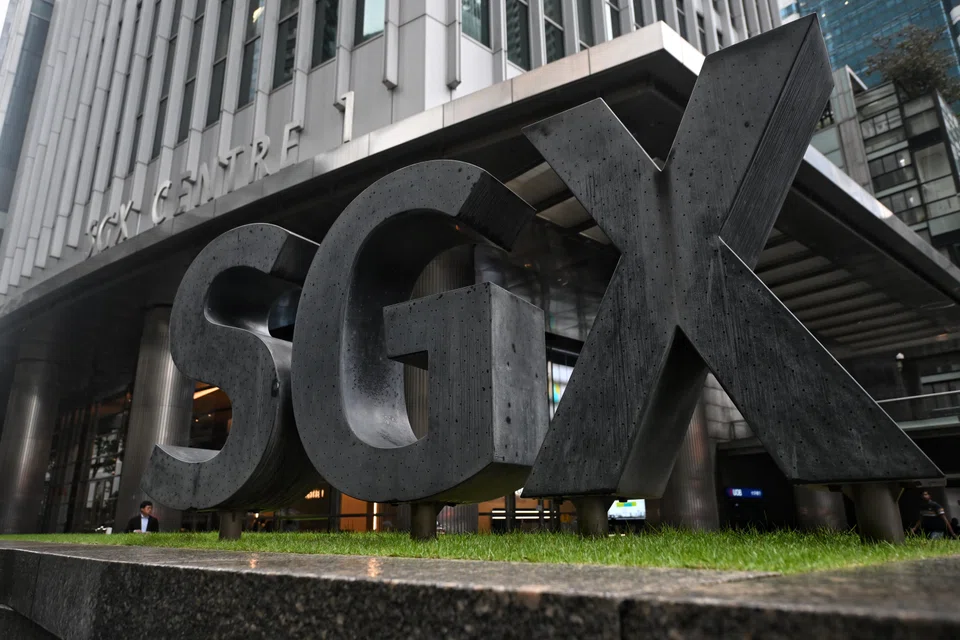
The questions raised by Sias drew the attention of SGX. On May 11, Global Palm Resources said SGX had asked whether there would have been any change in the IFA’s assessment of the offer if locally listed palm oil companies with market caps of more than S$500 million had been selected as “comparable companies”.
SGX also asked whether the IFA had considered the seemingly low P/E and price-to-NAV (or price-to-RNAV) ratios implied by the offer compared to the 13 precedent transactions, and if this had any implications for the IFA’s assessment of the offer.
The IFA’s response to the first query was unequivocal. If the “comparable companies” consisted only of locally listed companies, including those with market caps of more than S$500 million, their mean P/E ratio would have been 5.8 times while their mean price-to-NAV ratio would have been 0.81 times.
The mean P/E and price-to-NAV ratios of the “comparable companies” the IFA actually used in its assessment of the offer were higher – at 6.8 times and 0.87 times, respectively.
In other words, selecting heavyweight locally listed palm oil companies as comparable companies would have flattered the terms of the offer.
Responding to the second query from SGX, the IFA said it believed Sias made its comments based on the bare statistics of 13 precedent privatisation transactions. But the 13 companies involved in those precedent transactions are not necessarily comparable with Global Palm Resources – indeed, none of them were in the palm oil business.
The IFA said it had provided an analysis in its letter to Global Palm Resources of the differences between these 13 companies and the valuations they garnered when they were taken private.
For instance, the IFA had noted in that analysis that three of the 13 companies were in the medical healthcare space and had relatively high P/E and price-to-NAV ratios. On the other hand, four of the companies were in property-oriented businesses – where lumpy earnings result in varied P/E ratios and asset-laden balance sheets make price-to-NAV metrics very relevant.
Meanwhile, two of the 13 companies were loss-making, which made their P/E ratios meaningless.
So, how were the 13 precedent privatisation transactions used in the IFA’s assessment?
The IFA said the P/E of 10 times implied by the offer price for Global Palm Resources was comparable to those of two specific companies – electronics component trader Excelpoint and water treatment company Moya Holdings. These two companies had P/Es of 6.8 times and 10.1 times, respectively; or an average P/E of 8.5 times.
The IFA also said the price-to-NAV ratio of 0.85 times implied by the offer price for Global Palm Resources was comparable to the four property-oriented companies – Hwa Hong Corp, Chip Eng Seng, Memories Group and Global Dragon. The four companies had price-to-NAV ratios ranging from 0.56 times to 1.02 times, and averaging 0.78 times.
Rising stakes for IFAs
At this point, it seems very unlikely that the controlling shareholder of Global Palm Resources will fail to take the company private. As at 6pm on Friday, the offeror – a special-purpose vehicle controlled by the Adijanto family called ATH Holdings – had already obtained 89.4 per cent of the company’s shares.
The offeror will be able to invoke the power of compulsory acquisition once it crosses the 90 per cent threshold.
Nevertheless, the questions raised by Sias and the follow-through from SGX might have raised the stakes for IFAs appointed to assess these sorts of transactions in the future. Besides having to ensure their work stands up to scrutiny, IFAs may also have to come up with new and more convincing ways of evaluating privatisation offers.
In the case of Global Palm Resources, it seems strange to me that the IFA chose to consider only some of the 13 precedent privatisation deals. Given that the 13 companies involved in the precedent deals were not directly comparable to Global Palm Resources or even to one another, the IFA should either have used all of them or none of them.
It is also arguably flawed to compare the P/E and price-to-NAV ratios implied by the offer for Global Palm Resources with those of other palm oil companies that are not going private. The generally low valuations that palm oil companies are garnering is a sign none of them belong in the public market.
In my view, the offer for Global Palm Resources ought to have been priced at close to its RNAV of S$0.32 per share. This is nearly 30 per cent more than the offer price of S$0.25 per share, but it would not have cost the offeror much more in absolute terms.
The Adijanto family provided ATH Holdings with an irrevocable undertaking to accept the offer with respect to the nearly 206.9 million shares in Global Palm Resources that they owned – which was equivalent to nearly 83 per cent of the company’s shares. They also waived their right to receive any consideration, as they own the special-purpose vehicle.
Consequently, ATH Holdings would only have to come up with about S$10.6 million to purchase the remaining 42.2 million shares in Global Palm Resources. Setting the offer price at S$0.32 per share would only have cost the offeror an additional S$3 million.
Surely, that would not have been too much to ask.