Silent kingmakers: Market index providers are driving public investors into SpaceX and Big AI
This may sustain demand for AI hardware powering the best performing Asian markets, and perhaps lift some of the worst laggards too

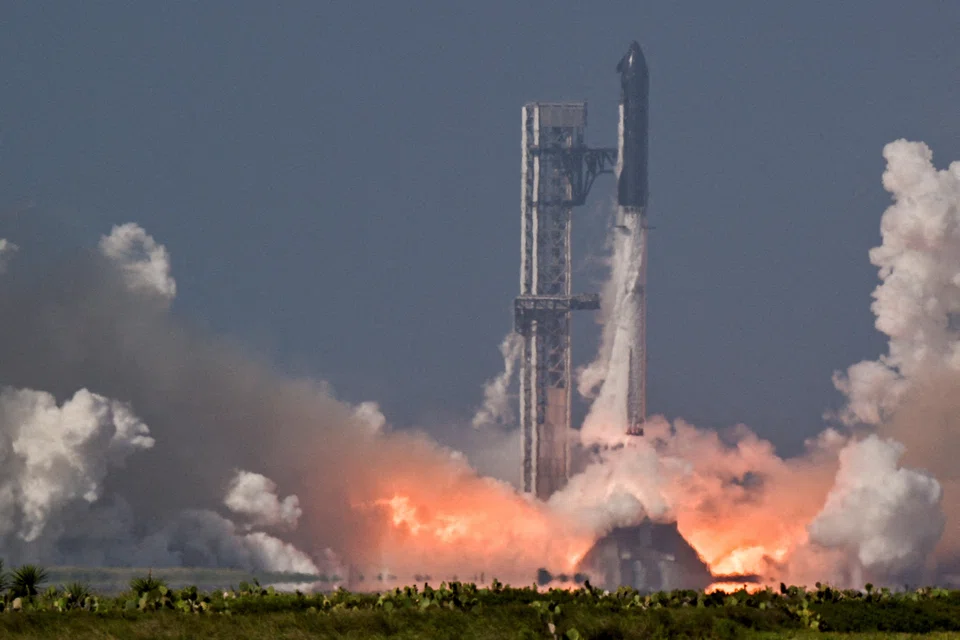
[SINGAPORE] There was no apparent shortage of investors eager to pile into SpaceX last week.
The space economy cum artificial intelligence company’s US$75 billion initial public offering was reportedly more than four times subscribed. Its shares ended their first trading session on Friday (Jun 12) at US$160.95 – more than 19.2 per cent above its IPO price of US$135 per share.
With a market capitalisation of US$2.1 trillion, it will probably not be long before SpaceX also finds its way into the portfolios of many investors who are not particularly interested in owning it.
Last month, FTSE Russell and Nasdaq introduced “fast entry” rules that allow large companies to be added to their indices after just five trading days and 15 trading days, respectively.
Meanwhile, MSCI said it will apply its rules for fast-track inclusion for large companies that have been in place since 2007. These rules allow large companies to be added to its indices after 10 trading days.
With companies gaining much larger operational scale and higher valuations than ever before ahead of their public listings, their inclusion in major market indices is being expedited to ensure these benchmarks do not become misaligned with the total investible market.
Yet, the fast-track inclusion of SpaceX – as well as potentially OpenAI and Anthropic, when they list – has sparked concern that funds tracking some major market indices will be forced to allocate billions of dollars to these large companies soon after their richly priced IPOs.
Some index providers have resisted bending their rules for these big companies. Early this month, S&P Dow Jones Indices said it will not shorten the 12-month “seasoning” period of newly listed companies, or waive any existing profitability and public-float requirements based on a company’s size.
The influence that the various index providers may have over the trajectory of SpaceX’s share price in the coming weeks could turn attention to their role as kingmakers in the market, and what that might mean for bourses vying globally for investment flows.
Power of index providers
While SpaceX might be kept aloft by its inclusion in some market indices, the Indonesia market has taken a beating this year at least partly because of pressure from index providers.
In January, MSCI triggered a plunge in Jakarta-listed stocks when it raised concerns about “fundamental investability issues” related to opaque shareholding structures and possible coordinated trading behaviour that might undermine proper price formation.
The index provider froze all additions to its indices for Indonesia, and threatened a downgrade from “emerging” to “frontier” market status if the problems were not addressed.
The authorities in Indonesia responded quickly, announcing enhanced disclosure requirements for shareholdings above 1 per cent, and a plan to double the minimum free float requirement to 15 per cent, among other things.
While this appears to have staved off the dreaded downgrade, MSCI and FTSE Russell have recently culled some prominent Indonesian stocks from their benchmarks, including Barito Renewables Energy, Dian Swastatika Sentosa and GoTo.
Since the beginning of the year, the Jakarta Composite Index has tumbled 30.5 per cent, reflecting doubts about Indonesia’s economic policies and growing domestic unrest as well as concerns about the investability of its market.
Clearly, to engineer a lasting turnaround, Indonesia does not just need better and more coherent economic policies but market reforms that will satisfy the index providers.
Recycling capital in public markets
The weak performance of the Indonesia market stands in sharp contrast to the very strong performance of the Taiwan and South Korea markets.
Since the beginning of the year, the Taiex has climbed 52.5 per cent while the Kospi has soared 92.8 per cent. These gains were the result of very strong AI-driven performance of semiconductor companies that dominate these indices.
Goldman Sachs said in a note last month that it is forecasting earnings growth of 300 per cent for constituents of the Kospi in 2026.
“Korea is benefitting from a supercycle in semiconductor memory, in which record supply shortfalls for memory chips and accelerating demand from hyperscale cloud investment and AI-related compute are pushing memory prices sharply higher,” the research house said.
“Since memory producers carry high operating leverage, those price gains translate into outsized bottom-line growth.”
Goldman Sachs said in the same note that it is forecasting earnings growth of 45 per cent for Taiwan stocks, which is slightly higher than the consensus of 38 per cent.
The expanding earnings of these big Asian chip players are the mirror image of the massive spending by the hyperscalers and generative AI players – which is now being recycled through the public equity market.
Over the past fortnight, Alphabet said it will raise nearly US$85 billion through the issue of new shares, while Meta Platforms was reported to be considering raising “tens of billions of dollars”. SpaceX’s US$75 billion IPO last week could also soon be followed by early investors cashing out billions of dollars more as their lock-ups expire.
The way I see it, the fast-track inclusion of mega-cap stocks in key market indices will support this tide of capital recycling – by forcing passive funds to absorb the shares finding their way into the public market.
More flows to Asian markets?
Worrying as this sounds, it could be the key to sustaining the strong demand for AI hardware powering some of the best performing markets in this region.
The three most prominent companies in Taiwan and South Korea riding the AI boom – TSMC, Samsung Electronics and SK Hynix – had a combined weighting of 28.8 per cent in the MSCI Emerging Markets Index at the end of last month.
TSMC alone accounted for 54.8 per cent of the MSCI Taiwan Index, while Samsung Electronics and SK Hynix had a combined weighting of 62.4 per cent in the MSCI Korea Index.
The IPOs of SpaceX, OpenAI and Anthropic would also unlock hundreds of billions of dollars of private capital. Some of this may be redeployed into new AI-linked ventures, which could keep the technology supply chains running through this region humming.
Some of the newly liquid capital may also rotate into diversified portfolios seeking income as well as value-oriented prospects – perhaps in laggard markets such as Indonesia.
This could be an opportunity for Singapore too. With the slew of measures to revitalise the market, and a renewed focus on shareholder value at many companies, investor interest in the local market has clearly improved and broadened out from the banks and real estate investment trusts.
During the 12-month period up to the end of last month, the Straits Times Index returned 35.3 per cent – led by City Developments (83.5 per cent), UOL (82 per cent), Yangzijiang Shipbuilding (80 per cent) and Venture (71.3 per cent).
The iEdge Singapore Next 50 Index returned 31.6 per cent – led by CSE Global (308.5 per cent), UMS (208.3 per cent), Hong Leong Asia (193.4 per cent), Frencken (189 per cent), and China Aviation Oil (135.5 per cent).
If Singapore companies continue growing, and maintain their investability to the satisfaction of the big index providers, the market should get its fair share of global capital flows.