

The ‘silicon shock’: When AI demand broke the supply chain
The crisis is just getting started – and could escalate quickly
IN THE early 2000s, the world of fine spirits broke. Demand for aged whiskey and fine wine exploded with new wealth, new buyers and a global culture shift. Everyone could see it happening.
But supply could not respond because supply had been “decided” years earlier, when the barrels were filled. No amount of money could speed up a calendar. The result was violent. Prices did not just rise; they decoupled from reality.
Today, we are walking into the exact same trap. But this time, it is not about luxury consumables. It is about the fundamental substrate of the modern economy: silicon.
We are witnessing a “silicon shock”. It is happening now – at a scale that makes the whiskey crisis look like a rounding error. Unlike the 1970s oil shocks, which were driven by supply embargoes, this crisis is driven by a ferocious, unyielding explosion in demand. The world has suddenly realised it needs to convert sand into “intelligence” at a rate that defies physics.
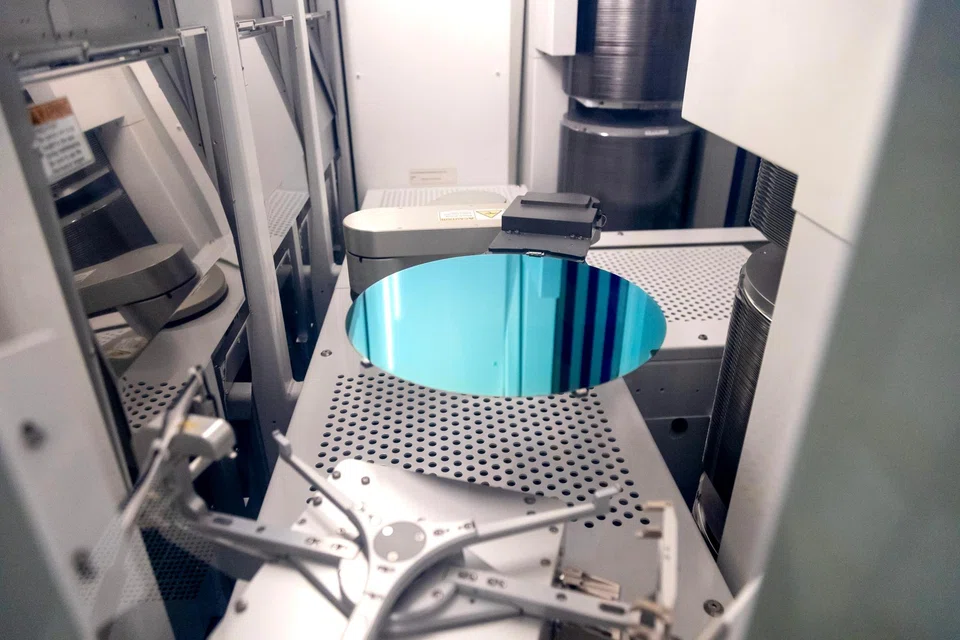
Advanced silicon, or semiconductors, are manufactured at the frontier of science, where transistors are now smaller than a virus. Globally, only about five companies can make chips – whether logic or memory – so advanced.
The demand for compute, specifically the high-performance silicon required to process artificial intelligence (AI) tokens, has not increased by 50 per cent or 100 per cent. Depending on how you measure the fundamental unit of AI thought, demand has exploded by anywhere from 40 to 100 times in the last 18 months.
Even if you cut the headline numbers and use a conservative blend, you still land in the range of 40 to 60 times growth.
The supply chain cannot hold. It is breaking. Building a new fabrication plant takes three to five years. Expanding high-bandwidth memory production takes two to three years. Adding advanced packaging capacity takes 18 to 24 months. After exhausting spare capacity and drawing down inventories to crisis levels, the world has reached a point where the bottlenecks are multiplying.
The primary reason the market has miscalculated the severity of this shock is a fundamental misunderstanding of what is consuming the silicon. For most of 2023 and 2024, the mental model for AI demand was “human-speed” interaction: a user types a prompt into a chatbot, the chatbot replies, and the transaction ends.

That era is over. In late 2025, the nature of the workload shifted fundamentally.
We moved from chatbots to agents, and from pattern-matching to reasoning. The new dominant workload is agentic AI. These systems do not wait for a prompt. They run in continuous, autonomous loops while planning, executing, checking and correcting. A single instruction from a human can trigger a cascade of thousands of internal inference steps running 24 hours a day, invisible to the user but punishing to the hardware.
Simultaneously, the integration of AI into “default” surfaces has converted billions of trivial interactions into heavy inference tasks. When Google switched its Search AI Overviews to reasoning-enhanced models, it applied compute-intensive inference to more than four billion daily queries.
A single decision converted low-cost keyword lookups into high-cost generative tasks. Multiply this across Microsoft’s Copilot, Meta’s WhatsApp and Tencent’s WeChat, and the aggregate demand becomes astronomical.
Some observers may dismiss the silicon shock as the frothy excess of an AI bubble. This critique misunderstands the nature of the demand. This shortage is not a speculative buildout of empty data centres financed cheaply.
It is an operational inference load from real users generating real tokens in real applications. AI is not a product that will be abandoned when funding tightens; it is becoming infrastructure.
The most insidious part of the silicon shock is the “cascade effect”. Because AI demand is effectively infinite and price-inelastic, the semiconductor industry has rationalised its entire production line to serve AI. Samsung and SK Hynix are actively converting production lines away from standard consumer memory to make High Bandwidth Memory for AI accelerators.
And this is the “vampire effect”: AI is sucking the lifeblood out of the rest of the electronics market. The result is a shortage of the “boring” chips used in laptops, phones and cars. Prices for standard random access memory are skyrocketing because the wafers are being used for AI instead.
Industry memory inventory levels fell from roughly 15 weeks in late 2024 to just two to four weeks by October 2025. There is no cushion remaining.
In the last eight weeks alone, the whispers turned into screams. We counted executives from nearly 20 major firms, ranging from chipmakers such as TSMC and Micron to consumer giants including Dell and Xiaomi, all expressing the same alarm. They are no longer hiding the problem; they are pricing for it.
Jeff Clarke, chief operating officer of Dell, warned that it “(has) never seen memory chip costs rise this fast”, noting that demand is way ahead of supply. Sanjay Mehrotra, chief executive of Micron, stated that his company can only meet “50 per cent to two-thirds” of the demand from its main customers.
The situation is even more dire at the foundry level. CC Wei, chief executive officer of TSMC, has stated that capacity is “three times short” of demand.
Perhaps most telling is the comment from Chey Tae-won, chairman of SK Hynix. He admitted that it is receiving so many requests for memory that it is worried about how it will be able to handle it, warning that clients could face a situation where they “can’t do business at all” without supply.
A Winbond executive noted that customers are now begging for six-year supply agreements, a level of panic rarely seen in modern supply chains.
We are staring down the barrel of a supply-chain crisis that looks less like a tech cycle and more like a geopolitical resource shock. One has heard a lot about the “Power Wall” – power shortages for AI centres – in recent quarters. These are, to some degree, solvable problems with human ingenuity or regulatory changes. We cannot think of any half-decent solution for the silicon shock the world has entered into.
The factories required to solve this problem have not yet been built. What is being planned for the coming years is not remotely sufficient if demand growth remains on the same trajectory. The die is cast. The shortage is here. Just like the oil shocks of the past, the pain is about to cascade from the data centre down to your laptop, your phone and your wallet.
Silicon may or may not be the new oil, but the silicon shock has the potential to be a dominant macro, political and market theme of 2026.
What the silicon shock means for Asia and Singapore
We are barely getting started. While the silicon shock has so far manifested as price rises in electronic gadgets and a scramble for silicon capacity among AI and cutting-edge tech players, this could escalate rapidly across all tech products and supply chains in the coming months. This carries consequences for the availability of critical hardware and consumer inflation across Asia.
For a tech-dominant society such as Singapore, monitoring this vulnerability matters more than panic. Server and advanced component capacity may become constrained within quarters. It might be prudent not to jump the gun too quickly for now, but keeping constant vigil on this is important.
That said, there is a silver lining: as pricing power returns to the electronics supply chain, Singapore’s deep integration into global hardware networks positions it to capture value as the tide turns. The country could emerge as one of the biggest winners from returning investments in these segments.
The writer is CEO at GenInnov
This is an adaptation of an article first published on https://www.geninnov.ai/blog/
Decoding Asia newsletter: your guide to navigating Asia in a new global order. Sign up here to get Decoding Asia newsletter. Delivered to your inbox. Free.
Share with us your feedback on BT's products and services
TRENDING NOW

Once staunchly pro-China, Malaysian Chinese businesses are now distancing themselves from Beijing

Looking beyond looming CEO succession, should UOB potentially pursue a transformative merger?

Could stablecoins be the future of money?

Grab CEO’s wife Chloe Tong on life with Anthony Tan and finding her purpose

