Silicon Valley’s loss will be China’s gain
This is where the trade war meets the tech war
THERE are no winners from a prolonged trade war. But if this drags on, President Donald Trump could see China’s tech sector weather the blows much better than Silicon Valley.
While US companies are working to navigate the multilateral tariff battle instigated by Washington, Beijing will no doubt seize the opportunity to gain an edge in key technologies such as artificial intelligence (AI), and end up setting global standards for its use.
Global tech stocks on both sides of the Pacific have taken a beating since last week’s “Liberation Day” blitz and China’s response of 34 per cent reciprocal duties. As Trump threatens further retaliation, China has vowed to “fight to the end”. The uncertainty is hard on both investors and business leaders, and has already inflicted lasting damage to industry ambitions.
But if you compare the risks to America’s most valuable tech company, the uniquely vulnerable Apple, with China’s Tencent Holdings, there is a stark division of fate. The Chinese titan’s stock has been dragged down by the markets, but its domestic focus largely insulates it from the worst of the trade disruptions.
The earnings outlook for Tencent, and its Internet peers in China, remains largely unchanged, Bloomberg Intelligence analysts said. Investors, meanwhile, have been rushing to do rough calculations on the damage this could inflict on Apple’s earnings outlook, while the variables seem to change every day.
The longer-term ramifications go far beyond just the biggest tech companies in both nations. Markets in China have had a knee-jerk reaction to the tariff escalation, but the reality is its domestic tech giants – apart from the e-commerce units – have limited exposure to the US. And online shopping firms have found ways to keep their price advantage in America even in the face of initial tariffs, likely due to a combination of government aid and cost-cutting.
It suggests that Beijing is more ready and willing to offer support to its firms, and reveals that Trump is likely underestimating how much his attacks on China will galvanise both the government and citizens. Policymakers are already reportedly discussing accelerating stimulus plans to boost consumption, something that Americans likely are not holding out hope for.
Chinese social media were flooded this week with AI-generated memes roasting the US and its trade policies, with even state-backed news outlets sharing them. A trending topic included a hashtag that translated to: “Focus on Doing Your Own Thing”. The rise in anti-American sentiments will only feed into Beijing’s push to become a world leader in technology, and double down on home-grown advancements.
The Chinese tech sector faces its own unique headwinds, only recently emerging from a government crackdown and contending with a frugal consumer base. But it has witnessed a remarkable revitalisation this year, propelled by fresh exuberance over AI development.
The domestic AI sector has since been buoyed by top-down support, and was already flooded with free-to-use products. The trade war may add uncertainty around efforts to enter the US market or monetise these products, but it will not slow down the current momentum. And unlike Silicon Valley AI peers, many industry watchers have credited startup DeepSeek’s breakthroughs on its explicit focus on research over revenue.
In the US, the impact of tariffs on AI efforts will be much more pronounced. US business models are built on gobbling up enormous amounts of resources. China’s competition adds an entirely new layer of uncertainty and expense to costly data centre projects and American efforts to onshore chipmaking.
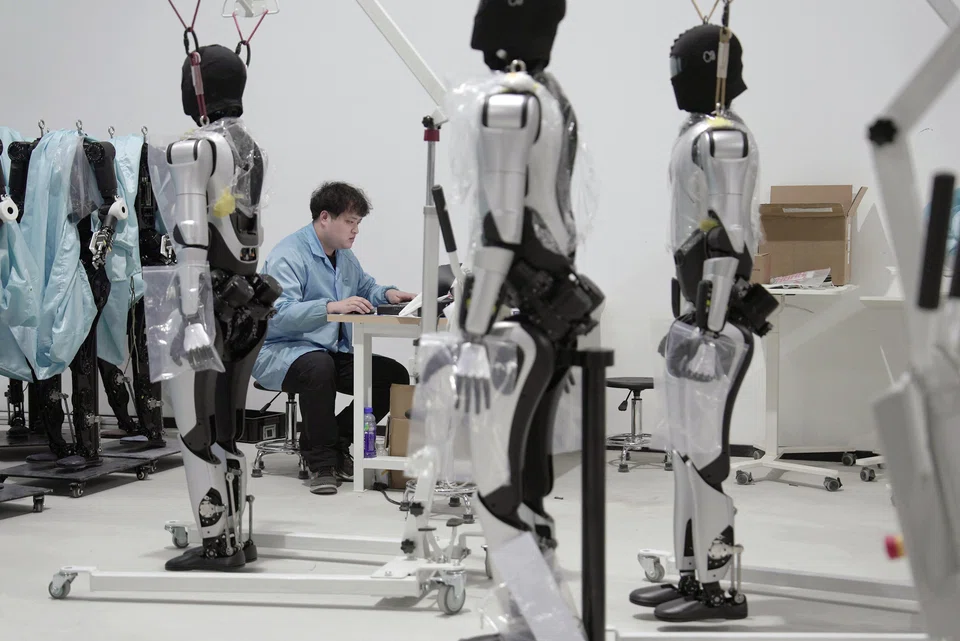
The required materials and components rely on vast global supply chains, many anchored in Asia. In contrast, Chinese buildouts were already supported by government incentives. And analysts have noted that domestic semiconductor companies are expected to benefit from the 34 per cent counter-tariffs on US imports, further nudging the drive for self-sufficiency.
China’s hardware sector is also growing rapidly in markets like South-east Asia and Latin America. Even if shunned from American markets, the trade war will only further its tech foothold in these regions.
The thinking that blanket tariffs, broadly implemented on allies and foes, will spur an advanced US manufacturing ecosystem are misguided. Trade levies will not fill America’s gaping engineer or Stem (science, technology, engineering and mathematics) talent shortages. They will eat revenue that could be used for research and development, and innovation. As prominent analyst Dan Ives wrote, “It would set the US tech world back a decade.”
It is impossible for Silicon Valley to fight a trade war and a win a tech war at the same time. The stock market has just hammered Chinese tech firms. But as the dust settles, Washington should worry that the tariffs do not hit Silicon Valley with a wrecking ball. BLOOMBERG