Singapore at 60: Embracing openness amid global challenges
Geoeconomic fragmentation poses a significant threat to the nation’s economic future
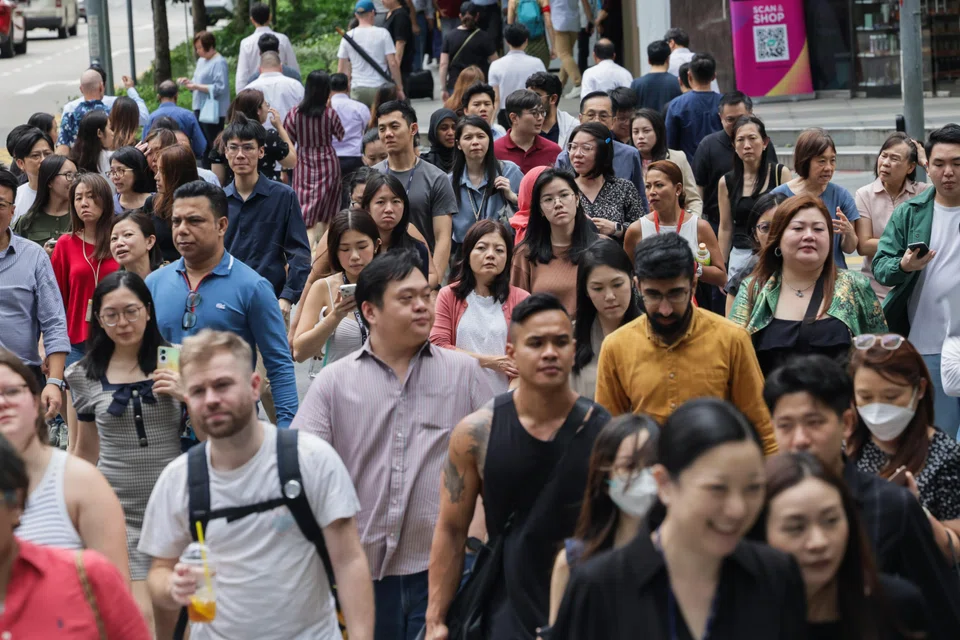
SINGAPORE has transformed rapidly in the 60 years since its independence, thanks largely to the prudent economic management of its government. The Budget statement to be unveiled on Tuesday (Feb 18) will serve as the next step in that management, at a time of geopolitical change.
As a small nation with unique location challenges, human capital makes all the difference in Singapore. By continuing to invest in people and fostering a dynamic and innovative economy, the country can maintain its high living standards and relevance on the global stage.
With free trade perhaps facing its biggest threat in decades, embracing openness may be the only way for Singapore to thrive.
In 2025, Singapore celebrates its 60th anniversary, marking a remarkable transformation from a developing to a first-world country despite its lack of hinterland and natural resources.
Singapore’s gross domestic product per capita has skyrocketed from a mere US$520 in 1965 to an estimated US$89,000 today, reflecting the nation’s resilience and strategic vision.
However, the future is not without its challenges. Geoeconomic fragmentation poses a significant threat to Singapore’s economic future. The nation’s heavy reliance on trade and investment, with its trade to GDP ratio for 2023 at over 300 per cent, makes Singapore one of the most trade-dependent economies in the world.
Domestic issues
Domestically, the country faces its own set of issues, including an ageing population, cost pressures facing households and businesses, and the need to remain competitive in an increasingly digital and green economy.
The 2025 Budget is being delivered against a strong fiscal backdrop, with revenue growth exceeding forecast, thanks to a buoyant economy that grew by 4.4 per cent in 2024. With the primary balance likely nearing a surplus, this gives the government considerable flexibility in how to allocate the net investment returns contribution, which averaged S$20 billion or around 3.4 per cent of GDP in the last five years.
The government has been methodical in the way it has sought to support older generations, one cohort at a time, starting with the S$9 billion Pioneer Generation Package in Budget 2014 (for those born between 1945 and 1949), followed by the S$8 billion Merdeka Generation Package in Budget 2019 (those born in the 1950s) and the S$8.2 billion Majulah Package in Budget 2024 (those born in 1973 or earlier).
Direct assistance to households in the form of one-off cash payments and Community Development Council vouchers to help with cost-of-living pressures will likely be extended in this year’s Budget.
New and enhanced initiatives to help businesses, especially small and medium enterprises (SMEs), cope with rising costs and build a competitive edge have been introduced in the last few Budgets. We can expect more support for businesses in Budget 2025.
While it is important to lend households and businesses a hand, especially when there is ample fiscal space to do so, there is also a need to confront the structural challenges facing the country and acknowledge the difficult tradeoffs that need to be made.
Singapore’s population is still growing, but the resident working age population has been static since 2016. The country’s fertility rate fell below one for the first time in 2023, well below the 2.1 replacement rate. This is despite pro-nativist policies that have been gradually enhanced over the years. Further state intervention is unlikely to reverse the trend. Since a tightening of the immigration framework in 2009, the population of permanent residents has been kept stable at around half a million. Immigration can be a contentious issue, but it is one policy lever that can ensure the demographic profile does not deteriorate.
While it is understandable Singaporeans want to ensure they are not displaced by foreign talent, the best way of preventing that is to make sure their skills stay relevant in a fast-changing world. The reality is advances in artificial intelligence will change the labour market in ways that are not yet apparent. If the local labour force cannot adapt fast enough, Singapore will lose its competitive edge.
But a mindset shift is also required. Singaporeans are competing in a global labour market. Simply shielding them from foreign competition risks doing longer-term harm. Singapore is the regional headquarters for 4,200 multinational firms. According to the Ministry of Manpower, around 20 per cent of firms in Singapore are foreign owned, and they employ 60 per cent of residents in the top decile of the income distribution. Unlike countries with large populations where local knowledge is important, multinationals in Singapore value regional or global expertise.
Helping workers to adapt
The government is trying to do its part to help Singaporeans upskill by providing enhanced support to mid-career workers in the 2024 Budget, with the SkillsFuture Level-Up Programme for those aged 40 and above. A new jobseeker support scheme will also come into effect from April 2025 for those who have lost their jobs. Further policies to help workers adapt can be expected.
Expanding into overseas markets is crucial for Singapore’s SMEs due to the limited size of the domestic market.
The government offers various grants and programmes, such as the Market Readiness Assistance Grant and the Enterprise Development Grant, to help SMEs with market promotion, business development, and productivity improvements. In the 2024 Budget, the new Overseas Markets Immersion Programme was created to provide financial support for Singapore companies to send employees abroad to be trained for global or regional roles.
Further support for businesses to expand overseas and invest in productivity improvements is likely to be a feature in the coming Budget.
Singapore’s success over the past 60 years is something worth celebrating. But amid the celebrations, it is crucial to remain vigilant, and not become complacent about the challenges that lie ahead.
The writer is head of Asia research at ANZ