

Singapore businesses brace for Johor challenge as Causeway competition heats up
From dental clinics and opticians to HR firms, companies here are adapting in different ways as JB’s pull grows stronger


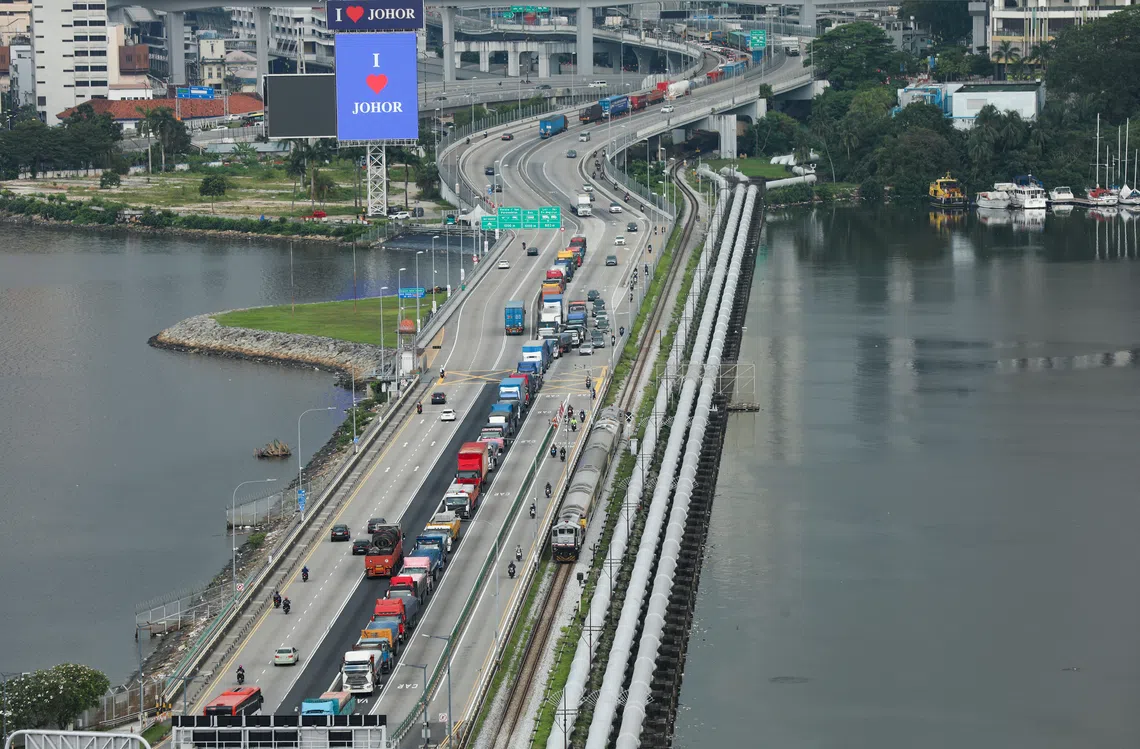
[SINGAPORE] Snaking queues, petrol fumes and impassive immigration officers – that’s the typical experience of crossing the border into Johor Bahru.
In the coming years, this is set to become more seamless as long-planned infrastructure projects such as the Rapid Transit System (RTS) Link and the expansion of the Woodlands Checkpoint – one of two land crossings between Singapore and Malaysia – come online.
In 2024, daily traveller volume at Woodlands Checkpoint rose 22 per cent year on year to 327,000, from 269,000 in 2023. Average daily numbers are projected to reach 400,000 by 2050.
Much has been said about Singaporeans crossing the border to eat, shop, and seek services such as car washes and massages, as well as the impact this has had on businesses in Singapore’s north.
Think lower sales, tighter margins. Why spend S$100 on a zi char dinner in Woodlands, when the same meal costs RM100 (S$30.59) just across the Causeway – with cheaper groceries and other services thrown in?
Less discussed are the steps that Singapore-based companies – particularly those near the border – are taking to mitigate or even profit from this shift.
From expanding across the Causeway to capturing demand from a different angle, firms are applying different salves – and firing different salvos – at the problem.
“It’s probably true that border towns are immediately impacted by the cross-border flows as consumers chase cheaper goods and services in JB,” says OCBC chief economist Selena Ling.
She notes that there is no standard playbook for firms expanding across the Causeway, as strategies differ depending on sector, risk appetite and familiarity with venturing abroad.
Some firms may see early expansion as a chance to capture market share or test new business models, while others in more regulated sectors may prefer to “wait and see” until there are clearer rules and steady demand patterns.
“There is no right or wrong,” says Ling.
Tackling the challenge head-on
The numbers make it clear that it can no longer be business as usual for Singapore enterprises in Woodlands, especially as more people flock across the Causeway for good deals.
From January to April this year, Malaysia registered 13.4 million visitor arrivals, of which 6.5 million came from Singapore. This was up 28.5 per cent year on year, official Malaysian government data shows.
Visitor arrivals cover both tourists, who stay overnight, and excursionists, who return on the same day. Excursionists from Singapore made up three-quarters of all such travellers to Malaysia in the period, at 3.8 million – up 53.7 per cent year on year.
Of the total five million excursionists logged in the period, 4.3 million entered Malaysia via the land checkpoints at Woodlands and Tuas, and the rail checkpoint at Woodlands Train Checkpoint.
The RTS Link, set to start passenger service in December 2026, will further ease travel, with the capacity to carry up to 10,000 passengers per hour per direction.
At the same time, Singapore’s authorities are redeveloping Woodlands Checkpoint in phases over the next 10 to 15 years.
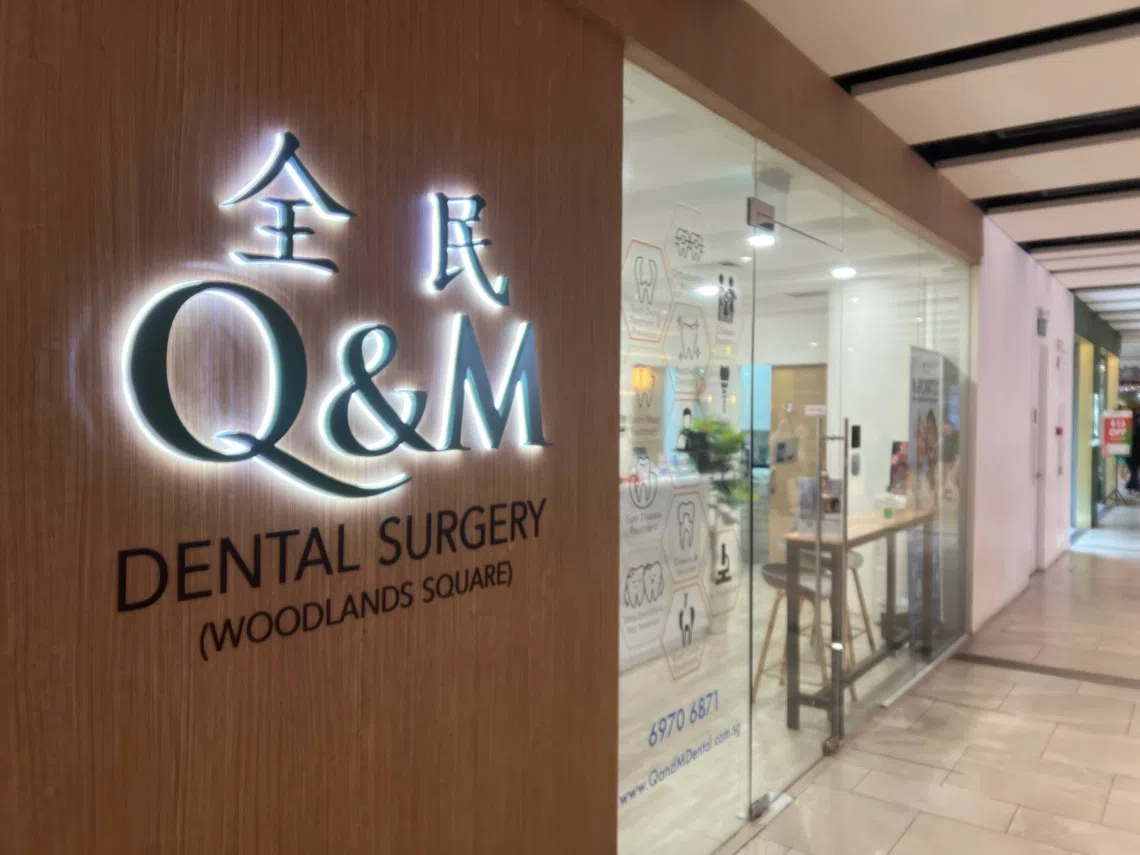
One company that is taking steps to prepare for the changes ahead is Q&M Dental Group.
The dental chain – Singapore’s largest – runs more than 100 clinics in the Republic, including four near Woodlands Checkpoint.
While more Singaporeans are heading to Malaysia for basic dental procedures, sales at the clinics near the border remain on par with those elsewhere, chief operating officer Raymond Ang tells The Business Times.
This is mainly due to the area’s high population density, he notes. Woodlands is one of five planning areas in Singapore – along with Tampines, Bedok, Sengkang and Jurong West – that each house more than 250,000 residents.
The proportion of basic procedures performed in the four clinics has dipped slightly, but the sheer population volume has kept overall revenue stable, he explains.
Government schemes such as the Community Health Assist Scheme (Chas) also help with “stickiness” – ensuring that Singaporean residents continue to seek treatment locally.
For patients eligible for enhanced Chas dental subsidies – set to kick in from October following Budget 2025 – a scaling and polishing can cost about the same in Singapore as in JB, erasing the price advantage, says Dr Ang.
Basic procedures include scaling, polishing and simple tooth extractions, while complex ones involve surgical treatments such as implants and wisdom teeth removal.
It is common for Singaporeans to go to JB for basic work, as prices can be 30 to 50 per cent cheaper, says Dr Ang. But he adds that, for more complex procedures, Singaporeans generally prefer to have these done locally.
This is borne out in Q&M’s JB operations, where it runs 16 clinics. About 40 to 50 per cent of patients there are Singaporeans, mostly seeking basic procedures, says Dr Ang.
The price gap stems largely from lower rentals and manpower costs.
Malaysia has an “ample” supply of dental professionals, Dr Ang says, with more than 10 dental schools compared to one in Singapore, and a wider recognition of foreign qualifications.
Asked whether the group prefers to serve Singaporeans at home or in Malaysia, Dr Ang says that despite higher costs, Singapore offers a better bottom line.
“You can’t escape from the currency; it’s more than three to one,” he says.
To capitalise on upcoming upgrades such as the RTS Link, Q&M is “actively” seeking acquisition opportunities in JB, says Dr Ang – in large part to continue serving Singaporeans across the Causeway.
“Better to serve them in JB, than lose them entirely,” he quips.
Taking a cautious approach
Not all businesses with islandwide operations have managed to hold sales steady in Singapore’s north.
Daniel Tan, who runs 18 hawker stalls, has seen takings at his Marsiling and Woodlands stalls slip about 15 per cent over the past two years. Sixteen of his stalls come under the OK Chicken Rice & Humfull Laksa brand, and the remaining two are Ah Huat Hokkien Prawn Mee outlets.
He attributes the decline to more customers choosing to dine in JB.
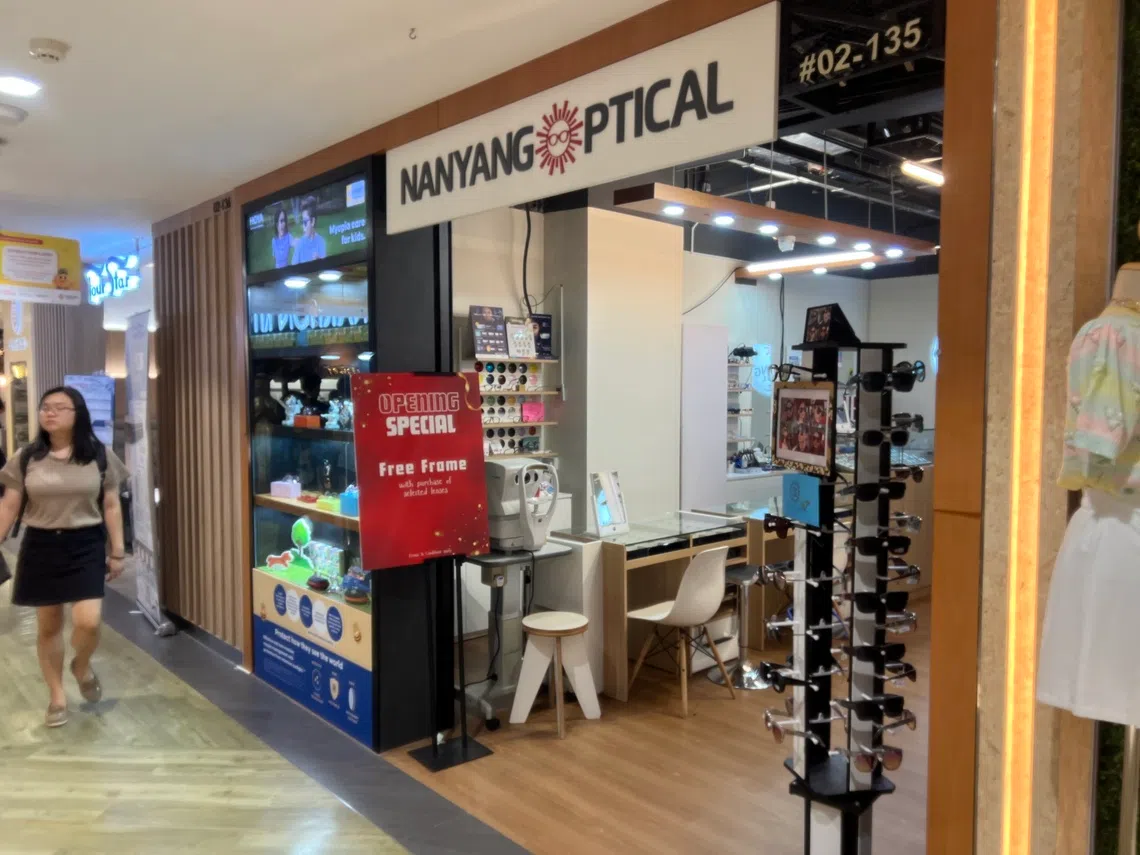
For optician Nanyang Optical, the strategy is more “wait and see”. The company, which operates six outlets in Singapore, closed its Woodlands Causeway Point outlet in May after its three-year lease expired.
Owner Bernard Yang chose not to renew, citing a 12 to 13 per cent rise in monthly rental that would have pushed the outlet into the red for some months. Instead, he opened a store at nearby Northpoint City in Yishun.
In 2024, revenue at the now-shuttered Woodlands outlet slipped by a single-digit percentage year on year, even as group sales held steady. A key reason was weaker contact lens sales.
Yang observed that customers in Woodlands were more likely to buy contact lenses and related products in JB, where prices are 25 to 30 per cent lower for the same products, mainly due to cheaper rentals and manpower.
As a result, contact lenses contributed about 15 per cent of sales at the Woodlands outlet, compared with around 20 per cent across the group.
This came despite rising footfall in the area, as Woodlands has grown into a transport hub and a terminus station for the Thomson-East Coast Line.
Expanding into JB has crossed Yang’s mind, but the logistics – and potential conflicts – are unresolved.
“Is it really a strategy we want to do? Because opening in JB means making regular trips across to look at and manage the store,” he says. “Also, how do we explain to customers that, in JB, you’re buying at this (lower) price, but in Singapore, you’re paying a higher price? That’s also been our concern.”
For now, the focus is on boosting customer “stickiness”, especially among groups less likely to make weekend trips across the Causeway, such as children and the elderly.
To this end, Yang has built an internal social media team of three, including himself. The team produces online content with the help of retail staff, tapping platforms to better engage customers and keep them loyal.
Building across the border
In a newly leased office five minutes from the Bangunan Sultan Iskandar customs and immigration complex in JB, a fresh space is quietly taking shape.
Carpeting has been laid, chairs are being assembled, and all that remains is to switch on the Wi-Fi and utilities.
The 2,300-square-foot office, leased by Singaporean human resources (HR) firm Emplifi, will house 66 seats and serve multiple functions, says founder Juliet Tan.
The core role is to support offshoring operations, where the firm helps Singapore-based clients move some back-office work to JB to cut costs.
A second function will be as a “co-working space” of sorts, allowing clients to base their own employees there for a fee, without setting up an office themselves.
A third use is to convert underutilised spaces such as meeting rooms into mini-showrooms, which Singapore firms can rent to showcase their offerings to Malaysian customers.
“I’ll give them an area where they can display their (products), and as and when their customers come in, they can then send their salespeople in to service them,” says Tan.
Beyond monetising excess space, the aim is also to encourage businesses – particularly small and medium-sized enterprises (SMEs) – to take the first step abroad.
Such a “test waters” approach is especially useful for businesses that want to expand overseas but may lack the resources or know-how to do so on their own, says Tan.
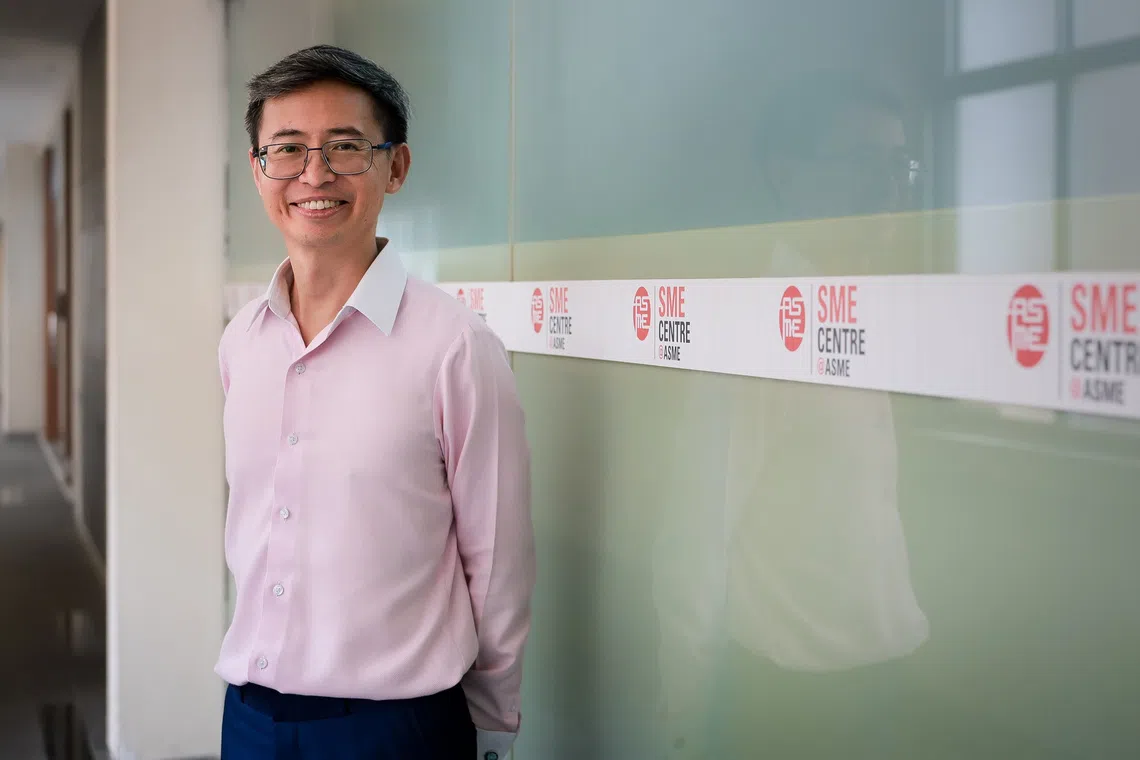
Ang Yuit, president of the Association of Small and Medium Enterprises (Asme) in Singapore, notes that for other companies, expansion abroad goes beyond simply exporting products or services.
“The trend is that there will be continued erosion in our ability for us to hold consumers within Singapore,” he says.
“From a consumer perspective, it makes sense to shop at a lower cost,” he explains. “But of course, the question is, how we can try to help our businesses in the north transit and evolve to a different model – or to a model that works better?”
One option is to offshore back-office functions such as accounting, IT, and HR to lower-cost locations like Malaysia, he says.
Interest among Asme’s members in venturing into JB spiked at the start of the year, when details of the Johor-Singapore Special Economic Zone (JS-SEZ) were unveiled, with about half considering such a move.
Yet “considering is very different from really taking action, and those taking action and really landing on something may be only 5 per cent at this point”, says Ang.
For SMEs, current JS-SEZ policies – which largely target large-scale projects by large enterprises – do not have much relevance, he notes.
“What I tell the SMEs is: ‘Don’t look at the SEZ and the current policies’,” he says. “Instead, you have to look at what makes sense for your business immediately. Is it cost reduction? Then go for it. If you want to try opening new markets, (then) let’s try to do that.”
To that end, Asme has launched a series of study trips to JB with its members to fact-find and build networks.
The goal, Ang explains, is to provide members with guidance on where to go, who to contact, and how to proceed if they wish to offshore or expand to JB.
For Singapore-based businesses, offshoring or expanding operations across the Causeway can deliver significant cost savings.
Take manpower costs, for example. An HR executive with three to five years’ experience commands about S$4,000 a month in Singapore – closer to S$5,000 once employer pension contributions are included, notes Tan. At current exchange rates, this works out to more than RM16,000 per month.
In JB, however, a monthly wage of RM7,000 is enough to hire “somebody who’s very qualified and experienced”, says Tan.
Even after factoring in Emplifi’s fees – the firm helps recruit and manage offshore employees – the total monthly cost still comes in under RM10,000, or about 40 to 50 per cent less than hiring in Singapore.
Rent is also far cheaper. Tan’s office in JB costs about S$2,000 a month. A similarly sized space along Singapore’s Middle Road – roughly comparable in location – would cost five to six times more, she notes.
Dr Ang of Q&M makes a similar point. He says S$2,000 to S$3,000 is enough to secure a clinic space in JB, often in heritage shophouses. In Singapore, depending on the location, an equivalent space would also be five to six times costlier.
But regardless of what move companies choose to make, the choice is clear: Adapt to the coming changes, or watch revenue drain even further across the Causeway.
As travel flows continue to intensify, Singapore businesses which are able to turn this challenge at the border to an opportunity will likely be the ones to thrive.






