

Singapore needs more play – not to escape life, but to live it well
Rediscovering play may be one of the simplest yet most powerful ways to boost mental well-being, strengthen social bonds and help us age well
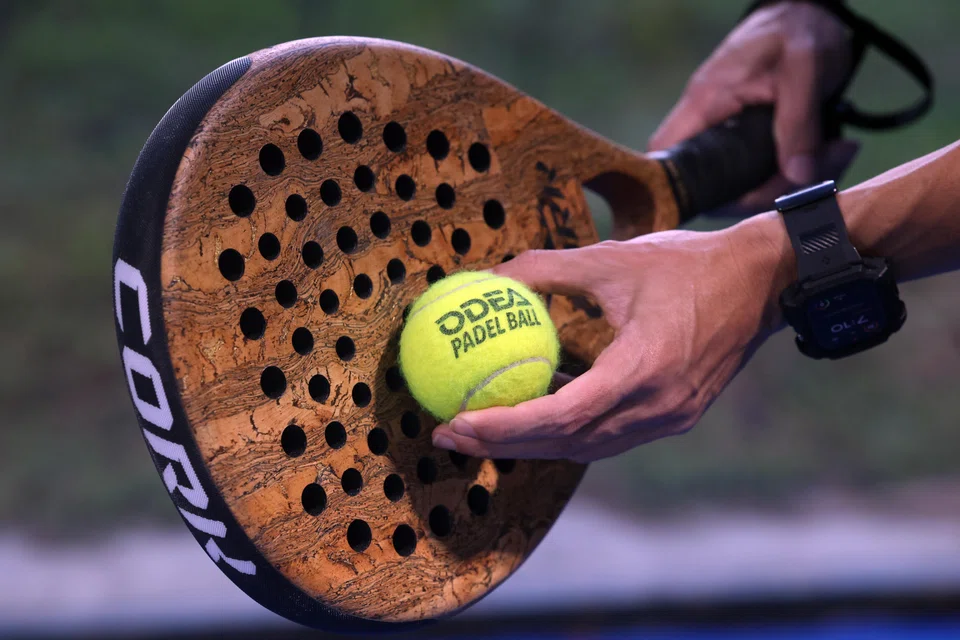
ONE afternoon on a hectic workday, I picked up a squeezable conference-freebie stress ball and tossed it lightly into the air.
For a few seconds, the noise in my mind fell away. Deadlines, messages and e-mails receded. All that filled my awareness was the small arc of that ball rising and falling.
It was a fleeting moment. Yet, the clarity that followed lingered: how rarely adults in Singapore allow ourselves to do something for no purpose other than the doing itself.
We exercise to meet fitness goals. We take up hobbies only to optimise and measure them. Even our leisure becomes a project. I have friends who started playing pickleball “just for fun”, only to find themselves tracking league rankings months later.
Ambition and improvement have their place. They have built much of Singapore’s success. But when every activity must justify itself with utility or output, something human and essential slips quietly away.
The science behind something that appears frivolous
We tend to dismiss play as childish or trivial – possibly even a waste of time. But decades of research point in the opposite direction.
Psychologists Edward Deci and Richard Ryan, pioneers of self-determination theory, show that humans thrive when driven by intrinsic motivation – doing things simply because they bring enjoyment.
Activities chosen freely for pleasure meet three core psychological needs: autonomy, competence and relatedness.
Neuroscience echoes this. Studies led by cognitive scientist Giuseppe Di Domenico reveal that intrinsic motivation lights up the brain’s reward circuits. Dopamine increases not because we have achieved something impressive, but because we are absorbed, curious and open.


Neuroscientist Jaak Panksepp’s work further shows that play reduces cortisol and boosts endorphins, creating mental buoyancy that passive rest alone cannot provide.
Put simply, a nap may restore the body, but play refreshes the mind.
Why play matters now, especially for a rapidly ageing society
The case for rediscovering play becomes more urgent when viewed against Singapore’s demographic trajectory. Ours is one of the fastest-ageing societies in the world, and with that comes rising loneliness.
A large-scale study by the Centre for Ageing Research and Education at Duke-NUS found that 34 per cent of older Singaporeans experience loneliness, with rates crossing 40 per cent among those aged 80 and above.
Another major study, the Singapore Chinese Health Study, found that about 6 per cent of seniors were socially disconnected, despite nearly 79 per cent living with family.
Loneliness is not a mere emotional discomfort; it is associated with poorer health, faster cognitive decline and shorter life expectancy.
Here, play has surprising potency. Global research consistently links adult playfulness with stronger social ties, better mental health and improved cognitive flexibility.
For seniors, low-stakes communal activities – line dancing groups, ukulele circles, chess clubs, community singing – stimulate the brain, build confidence and encourage social belonging.
A 2024 study by the Singapore University of Technology and Design found that seniors who engaged in bilingual gameplay experienced sharper cognitive gains than those using a single language. This suggests that playful forms of bilingual use may be particularly meaningful in our multilingual society.
Play is not merely entertainment. It is a quiet, accessible form of preventive health.
But if play is so beneficial, why do so few adults give themselves permission to engage in it?
The obstacle is not a shortage of time or resources. It is mindset.
We live in a culture that prizes utility and efficiency. We track steps, count reps, measure progress and optimise everything. That orientation has served Singapore well. But it also narrows space for activities that have value simply because they offer joy.
Play requires looseness. It requires the absence of evaluation. Ironically, the moment it becomes another tool for self-improvement, its restorative power evaporates.
When adults play, we model something important for younger Singaporeans: that adulthood is not defined solely by obligation, but also by lightness, curiosity and presence.
A case for play
In a city that prizes speed, productivity and constant forward motion, choosing to play may feel almost indulgent. But it may in fact be one of the most grounded acts of self-awareness we can offer ourselves.
The deeper question is this: What kind of society do we want to be as we age?
A society where people feel compressed (pressured) by duty, or one where small joys are recognised as part of living well?
A society where seniors retreat into solitary corners, or one where play keeps them connected, curious and confident?
A society where children grow up feeling that every moment of their time must be accounted for, or one where they see adults practising grace, spontaneity and delight?
Reclaiming play is not frivolous. In many ways, it is a civic gesture. It signals what we value, how we care and how we live our lives.
Play reminds us that beyond effort and achievement, life is also about laughter, connection and unguarded moments – letting our proverbial hair down to have fun for the sake of fun.
The point of play is not to escape life. It is more: to return to living life more fully.
And in the rush and rigour of Singapore living, giving ourselves permission to play may be one of the most impactful – and generous – things we can do.
Not only for our community, but more importantly, for ourselves.
The writer is the group general counsel and chief sustainability officer of Jardine Cycle & Carriage. A senior accredited director of the Singapore Institute of Directors, he serves on various commercial boards, including the Global Guiding Council of One Mind At Work and SGListCos.
Decoding Asia newsletter: your guide to navigating Asia in a new global order. Sign up here to get Decoding Asia newsletter. Delivered to your inbox. Free.
Share with us your feedback on BT's products and services
TRENDING NOW

Grab CEO’s wife Chloe Tong on life with Anthony Tan and finding her purpose

Hwa Seng Builder, two China companies win S$1.2 billion Tuas Road Viaduct phase two contracts

Deal between tycoon friends sparks scrutiny of Philippine power sector

Canada is upping oil flows to Asia, but South-east Asia’s refineries aren’t ready to handle them yet

