

Singapore opportunities could shine in Hongkong Land’s remaking
The group should consider listing a Singapore office Reit, or developing the Jurong Lake District white site

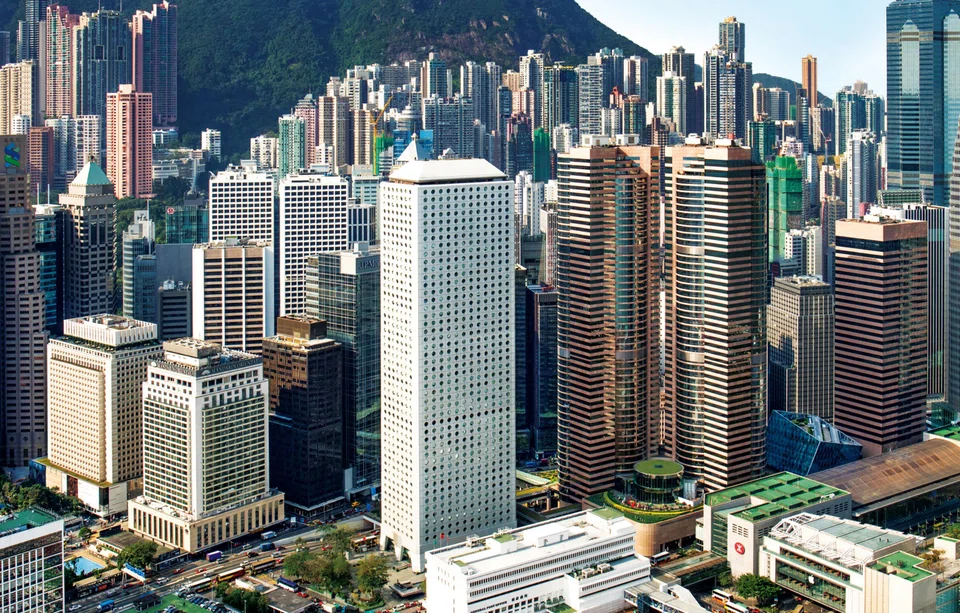
SEVEN months into the job, chief executive Michael Smith is stirring things up at Jardine Matheson Group’s 135-year-old Hongkong Land .
Under its new strategy, Hongkong Land will focus on investment properties in key Asian gateway cities. It will no longer invest in the build-to-sell segment, and will instead recycle capital from this segment into new integrated commercial property opportunities.
The group will work with third-party capital to expand its investment property assets under management (AUM) from US$40 billion to US$100 billion by 2035 through capital partnerships, private funds and real estate investment trusts (Reits).
By 2025, the group targets to recycle up to US$10 billion of capital, and double its profit before interest and tax as well as dividends per share.
Opportunities in Singapore can play a major role in Hongkong Land’s plans, even as the Hong Kong-centric group winds down its residential development activities, which are carried out here through MCL Land.
Smith is familiar with Singapore, having worked here for many years. He was previously with Temasek-owned Mapletree Investments and spent much of his earlier career in investment banking.
Singapore office Reit
Hongkong Land could notch a near-term win in unlocking value by launching a Singapore-listed Reit comprising its office-centric property portfolio here.
The group’s Singapore office portfolio was valued at US$3.6 billion as at end-June, or around S$4.8 billion. Some units in the said Reit can be potentially distributed in specie to Hongkong Land’s shareholders.
Singapore’s office buildings have fared well compared with those in many major cities after the Covid pandemic. While some companies have right-sized due to hybrid working arrangements and economic uncertainties linger, flight to quality among users could drive outperformance of Hongkong Land’s premium spaces – Marina Bay Financial Centre, One Raffles Quay and One Raffles Link. The group wholly owns One Raffles Link plus its retail component CityLink Mall, and 33 per cent in the other two properties.
Assuming the potential Singapore Reit has no borrowings and that the annual net property income yield is 3.2 per cent, the Reit may need to trade at a 32 per cent discount to net asset value (NAV) to offer a distribution per unit (DPU) yield of 4.7 per cent – around 200 basis points above the five-year government bond yield as at Oct 30.
Hongkong Land’s discount to end-June NAV per share of US$13.82 was 68 per cent based on its Nov 1 closing share price on the local bourse. The group’s shareholders can gain from the potential Reit trading at much narrower NAV discount.
If interest rates fall, the said Reit’s discount to NAV could tighten as the trust might borrow to boost DPU and investors may require a lower DPU yield.
Crucially, launching a Reit will help Hongkong Land grow a track record in property fund management, thereby positioning it to better attract third-party capital to grow its AUM.
Integrated development opportunities
Other Singapore opportunities that Hongkong Land can explore include working with tycoon Ong Beng Seng’s Hotel Properties Limited (HPL) to redevelop Forum The Shopping Mall, voco Orchard Singapore and HPL House.
HPL has received provisional permission from the Urban Redevelopment Authority (URA) for a mixed development comprising hotel, retail, office and residential components with total gross floor area of approximately 1.23 million square feet (sq ft) that could be a focal point in the north-west of Orchard Road.
Leveraging its proven track record of curating ecosystems, Hongkong Land can also work with partners to develop the 6.5 hectare Jurong Lake District (JLD) white site that URA did not award to a five-party consortium whose shortlisted proposal’s tender price of about S$640 per square foot (psf) per plot ratio was deemed to be too low.
When completed, the JLD development can yield at least 1.5 million sq ft of office space, up to 1,700 homes, and close to 800,000 sq ft of space for other uses such as retail as well as food and beverage.
With this project, Hongkong Land can demonstrate its place-making capabilities and create sustainable top-grade office and retail spaces that contribute to long-term recurring income.
Hong Kong and China woes
Hongkong Land’s share price rallied strongly after announcing its strategy update on the evening of Oct 29. However, investors should be mindful of the challenges facing the group.
For one, Hongkong Land has large exposure to Hong Kong and China real estate. While sentiment has improved with China’s recent stimulus measures, huge uncertainties loom over China’s housing market as well as Hong Kong’s position as a leading financial hub.
Hongkong Land’s NAV per share has been declining due to property market woes in Hong Kong and China. As at end-June, it had fallen 4.6 per cent from end-2023 and 15.7 per cent from end-2019.
The investment properties segment accounted for the bulk of Hongkong Land’s underlying profit in the first six months of 2024. Hong Kong office spaces contributed about 50 per cent to the attributable gross rental income, with Hong Kong retail spaces providing 15 per cent, Singapore office spaces bringing in 12 per cent and China retail spaces, 9 per cent.
Hongkong Land’s crown jewel is its ownership of 12 interconnected buildings that provide more than 450,000 square metres of prime office and retail space in the heart of Hong Kong’s central business district.
For the first half of 2024, Hongkong Land posted a loss attributable to shareholders of US$833 million. The group booked revaluation losses for its Hong Kong’s office portfolio. Amid weak leasing demand, the Hong Kong office portfolio’s average monthly net rent fell to HK$103 (S$17.53) psf in H1 2024, versus HK$107 psf in H1 2023 and HK$112 psf in H1 2022.
Hong Kong’s prime office rents and capital values are high by global standards. Should Hong Kong decline as a financial and business hub, Hongkong Land’s premium office spaces in Central could suffer from steeper rental and capital-value falls.
In H1 2024, the group also booked a non-cash provision of US$295 million in its China development properties segment. Are further provisions needed for China development projects?
Ultimately, achieving Hongkong Land’s bold ambitions depends on execution and market conditions. Meanwhile, its strategy update should prompt leading listed Singapore property players to work on giving the market clear road maps, including financial targets, on growing their businesses.
TRENDING NOW
Green fuels, autonomous ships: How Singapore is future-proofing its shipping industry

US trade chief to consider trade deal tariff caps in excess capacity probe

Grab CEO’s wife Chloe Tong on life with Anthony Tan and finding her purpose

Deal between tycoon friends sparks scrutiny of Philippine power sector

