Singapore pre-loved luxury dealers ride price jumps in Hermes, Chanel

Jessie Lim
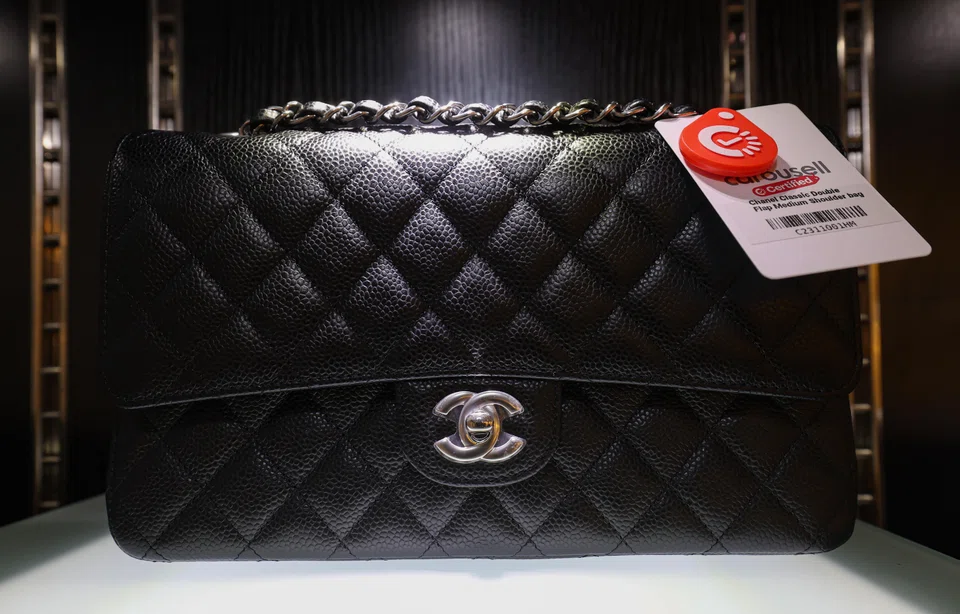
IN 2019, a small Chanel Classic Flap handbag would have sold for S$7,100 at the brand’s retail stores in Singapore. Four years on, in 2023, the same bag almost doubled in price, going for S$13,960 at Chanel stores.
The astronomical increase in price, which the French luxury brand put down to “currency fluctuations and inflation”, was accompanied by sharp cuts in production and worldwide supply. Together, the strategic moves brought on a surge in demand for the suddenly more expensive (read: exclusive) and unavailable goods, leading fans of the instantly recognisable quilted handbags to hunt in second-hand markets.
Chanel is not alone among luxury brands in raising prices year on year. Hermes, which sits at the apex of the luxury bag pyramid, is also known to increase retail prices regularly and controls both production and sales – one cannot walk into the store and buy a Birkin or a Kelly bag off the shelf.
The soaring boutique prices are sending both regular customers and a new wave of luxury buyers to Singapore second-hand sellers, whose business surged in the last two years.
Elaine Fung, founder of pre-loved luxury boutique Loveholic, says: “In the past, people may have thought that at the price range then, they can afford brand new (bags).
“After three or four years of massive price increases, these bags have become less affordable.”
While second-hand prices for brands such as Chanel may be lower than retail, resale prices have also adjusted upwards with recent demand.
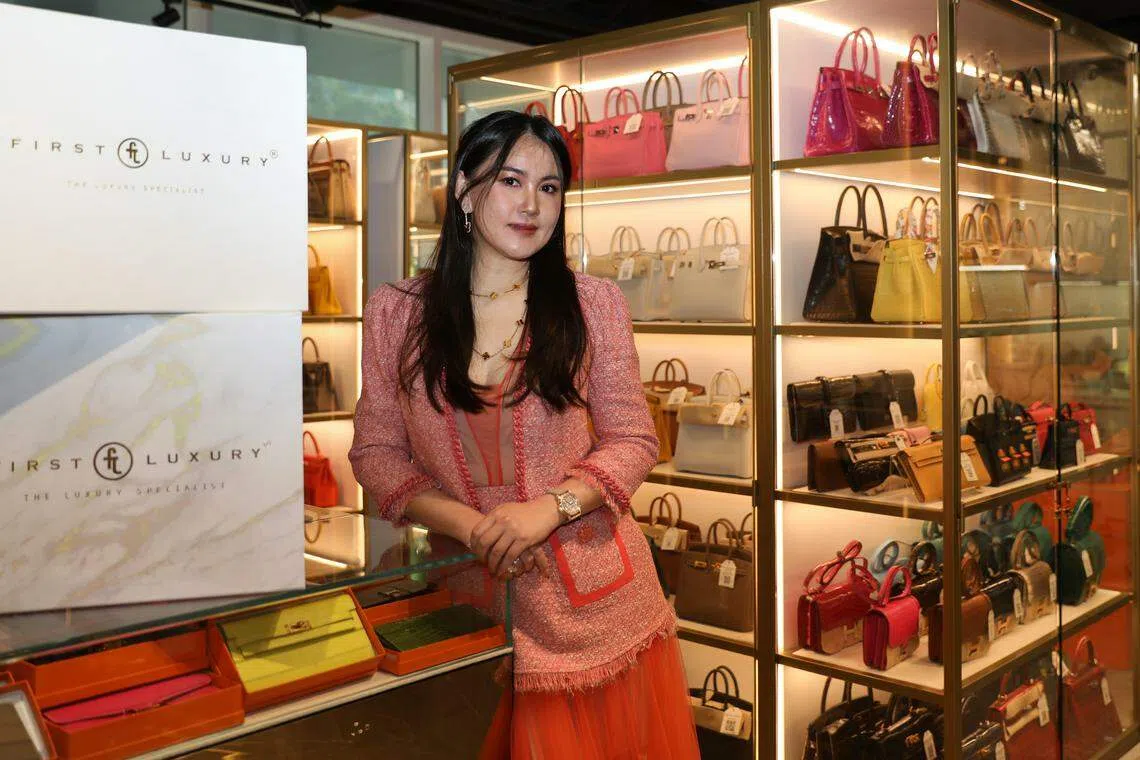
Susan Yin, First Luxury’s founder, says a used medium Chanel Classic Flap was sold by her company in 2019 for S$5,800. In 2023, a piece of the same model sold for S$12,800.
The reseller’s revenue has risen in line with this. In 2023, First Luxury clocked S$22 million in revenue, up from S$15 million the year before, says Yin, who attributes most of the increase to sales transacted on its mobile app.
Fung says: “Classic designs that are either in pristine or new condition… often hold their value well and will appreciate over time.”
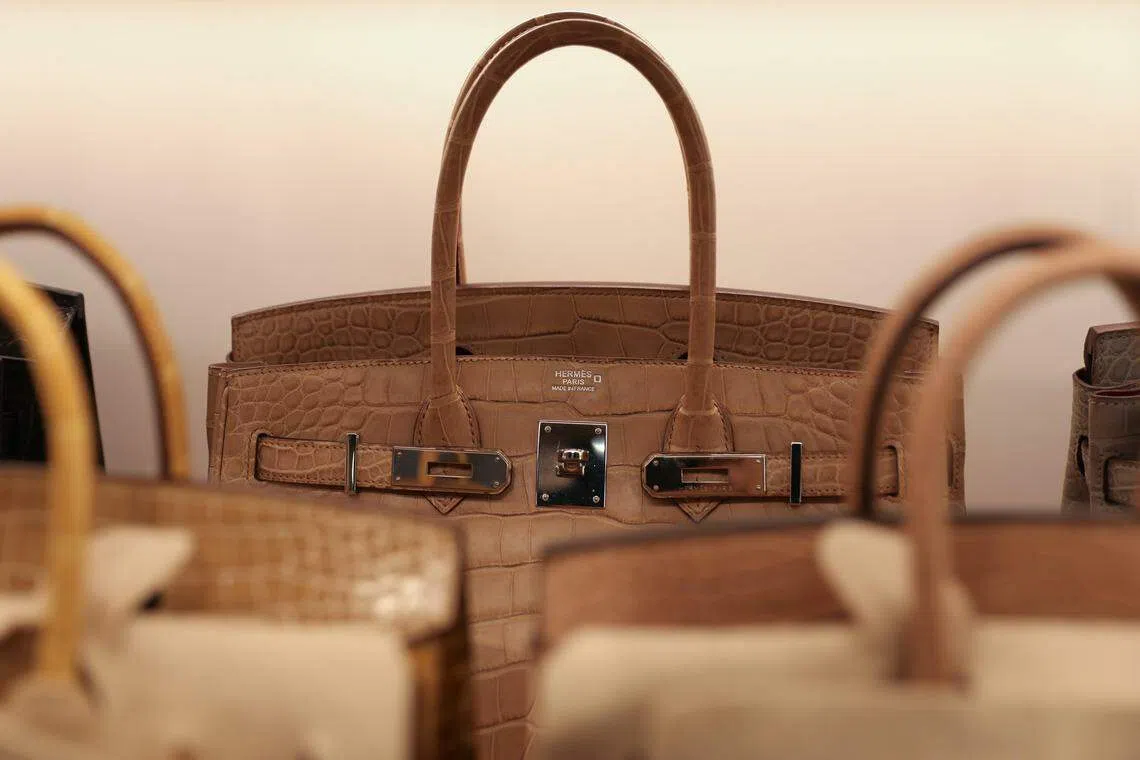
A brand-new Hermes Birkin 30, the most commonly toted size, fetched S$22,000 on the secondary market in 2019. The same model sold for S$33,000 in 2023, according to First Luxury.
Hermes styles command hefty premiums on resale, due to the brand’s tight hold over retail. Customers are only “offered” a Birkin or Kelly after they have chalked up a purchase history said to be at least S$30,000 in an Hermes store.
Says one lawyer, a regular luxury buyer who declined to be named: “Vanilla Birkin and Kelly bags from second-hand sellers are typically double the store price. But a second-hand seller would mark up a very sought-after piece, like the Hermes Mini Kelly Teddy bag, by 10 times!”
Customers have also been known to bring a store-fresh Birkin to a second-hand seller and “flip it for twice the price”.
New audience, fresh growth
While the recent surge in retail prices has sent more customers into second-hand stores, luxury brands are also gaining in cachet among younger buyers.
A recent report on luxury by Bain & Company and Fondazione Altagamma, an Italian luxury goods manufacturers’ industry body, found the global second-hand luxury goods market grew 28 per cent in 2022 to reach 43 billion euros (S$62.6 billion). This was 1.3 times of the growth observed in the brand-new luxury market in the same year.
An expanding consumer base of Gen Z buyers is one of the key factors that will drive demand for personal luxury goods through 2030, the Bain report said.
“Young consumers incorporate vintage and classic luxury as part of their style. Millennials and Gen Z are becoming increasingly conscious of sustainable consumption and luxury buying is starting at younger ages,” says Sulian Tan-Wijaya, Savills’ retail and lifestyle executive director.
Social media has also pushed brand awareness higher in the minds of younger buyers, says Ena Foo, founder of Instagram-based reseller Diamond Quilting.
“Many K-pop artists have become global ambassadors of luxury brands. They have a huge fanbase of Gen Zs who may be influenced to dress like them,” she says.
To appeal to younger buyers, LuxLexicon started accepting consignments of Chanel, Dior, and all major European brand names in 2019, says founder Florence Low. Before that, the reseller sold only Hermes handbags.
“Our idea was to connect with younger consumers who were placing a great deal of importance on sustainability,” says Low.
“We also see a growing number of Gen Zs starting their luxury handbag journey with us by first buying lower-tier luxury brands with friendly price points.”
The pandemic market
Singapore, in particular, has been a lucrative market for the second-hand luxury trade. According to global marketplace Vestiaire Collective, listings from Singapore sellers have grown three times year on year, making it the fastest growing country in the Asia-Pacific region for the company.
The Covid-19 pandemic cracked open windows of opportunity for many luxury resellers. Five of the eight retailers The Business Times spoke to started their businesses between 2020 and 2021 as they saw a demand for both the sale and purchase of second-hand luxury items.
With travel restrictions firmly in place for most countries, consumers weren’t able to travel, driving them to spend domestically, says Tresor Tan, chief operating officer at online luxury marketplace Huntstreet Singapore.
“We saw a huge spike in consumer demand for luxury items,” she says.
Further, “the prolonged lockdown and widely implemented work-from-home policy also meant that people realised the need for their homes to really serve as a sanctuary. Decluttering and wardrobe organising became the top ‘to-do’ activity”.
Standing out in a saturated market
Apart from physical stores, new channels are up online, both at home and globally. Some Singapore resellers have set up shop on platforms such as Carousell. And major auction houses Sotheby’s and Christie’s hold regular luxury bag auctions, with inventory also offered for sale outside of the auction events.
In 2023, several new local businesses entered the resale market, says Loveholic’s Fung. “Competition encourages innovation, we can learn from each other to create a better experience for consumers.”
Over the years, Loveholic has expanded its services beyond selling luxury bags to consignment, authentication as a service, and even bag sourcing in May 2022.
Says Fung: “This idea came from our clients. Popular designs often get sold quickly after we share on our social media. So we have extended our service to source vintage and rare collector’s items from major luxury brands.”
As the second-hand luxury market in Singapore matures, sellers are specialising in brands and even designs.
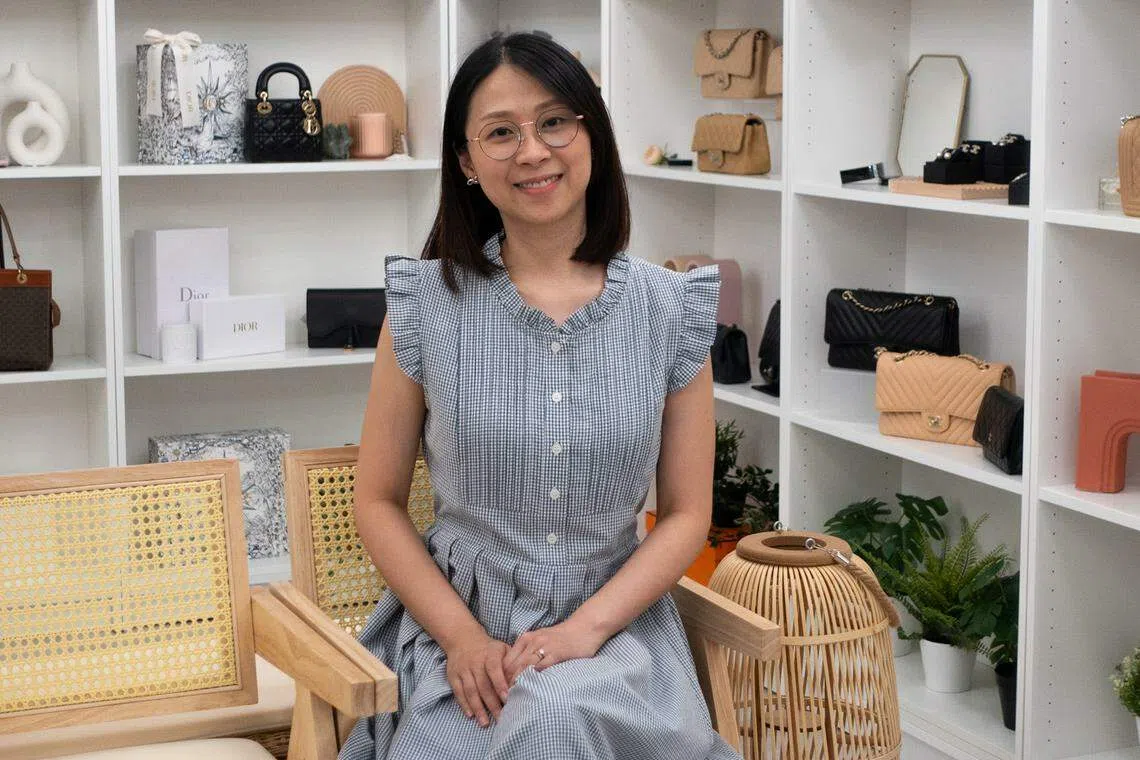
Bagaunicorn, founded in 2020, is known for its stock of pastel Chanel and Hermes bags. These colours tend to be more difficult to find than black or beige ones, says Merlyn Lim, who owns the business.
Adding a personal touch to service has become more important, with sellers exploring novel ways of selling and throwing in free services.
Some seek to capture the attention of buyers through livestreaming. In 2022, Lovelotsluxury made waves online for selling a S$29,900 Hermes Birkin bag in six seconds, in a livestream hosted in partnership with Singaporean actor Terence Cao’s livestreaming company Sibay Shiok.
Diamond Quilting’s Foo says: “With live interaction, there is closer connection between both sellers and buyers, as well as between buyers, making the purchase feel more personal. Buyers can also see how a bag looks when it is worn on different people.”
While she does not sell via livestream, Foo goes the extra mile by providing a bag organiser for classic Chanel bags that customers purchase from her, and a chain shortener for single-chain bags.
For bags that are consigned with First Luxury, customers can ask for a limousine pick-up service to drop off bags at its Mandarin Gallery store.
As a means to stay ahead, First Luxury, which was founded in 2015, developed a mobile application to diversify its sales channels. It began the process of building the app in 2020 when Covid-19 disrupted store operations.
The mobile app allows buyers to browse and purchase or bid for First Luxury’s inventory 24/7. Previously, Yin and her team had to personally communicate with customers and issue invoices physically.
“With the mobile app, it allows us to scale,” she says. “When you do things manually, you can only do so much.”
New and old challenges
Even as Covid-19 led to many brick-and-mortar stores downsizing or closing, First Luxury chose to expand its store at Mandarin Gallery, which is now about thrice the size it was before.
“During Covid-19, I took a very calculated risk to expand our store to make clients who come to my shop very comfortable,” says Yin. “Our neighbour left, and we took that opportunity to negotiate our rents.”
Singapore’s retail rents rose in the last year and are coming off pandemic lows. Yet, luxury resellers still see having a physical shopfront as a worthwhile investment.
Online marketplace Carousell opened a showroom at its headquarters in Ayer Rajah Crescent last year, where shoppers can make an appointment to view luxury bags in its inventory under its Certified Luxury programme.
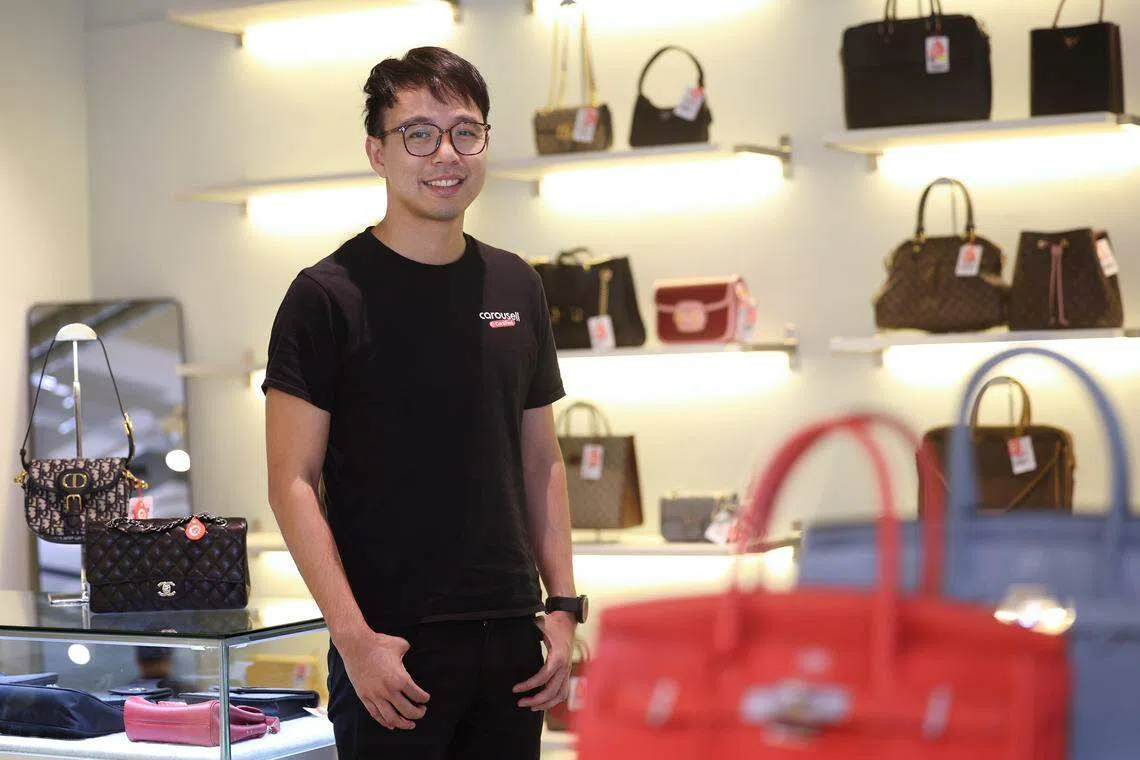
Carousell co-founder Marcus Tan says: “Customers want to see the bag before buying. We also host sellers there and there is an opportunity to improve the experience and get to know the customers.”
Certified Luxury was launched in April 2023. For bags, there is a 14-step verification process where Carousell’s authenticators inspect details such as the stitching, hardware, interior lining, and serial number of the bags under the programme.
These bags also come with a seven-day money-back guarantee if the buyer can prove it is fake, says Tan.
“People want peace of mind when purchasing a big-ticket item. The rise in online scams and the trend of super-fakes make this even more complicated and stressful for the average person.”
Super-fakes are counterfeit goods that are almost identical to genuine luxury items and extremely difficult for those without specialised knowledge of the brand to identify.
Bagaunicorn’s Lim says: “With the significant price increase across some luxury brands over the years, some buyers simply switched to purchasing super-fakes to satisfy their thirst for luxury products, as they are able to get similar items at a much lower price.
“That said, I feel that there is still a larger group of people looking for authentic luxury products, as many of them are loyal supporters of the respective brands.”