

Singapore is showing why cooling is the next investment asset
As heat threatens to lower South-east Asia’s GDP, cooling is becoming a billion-dollar market
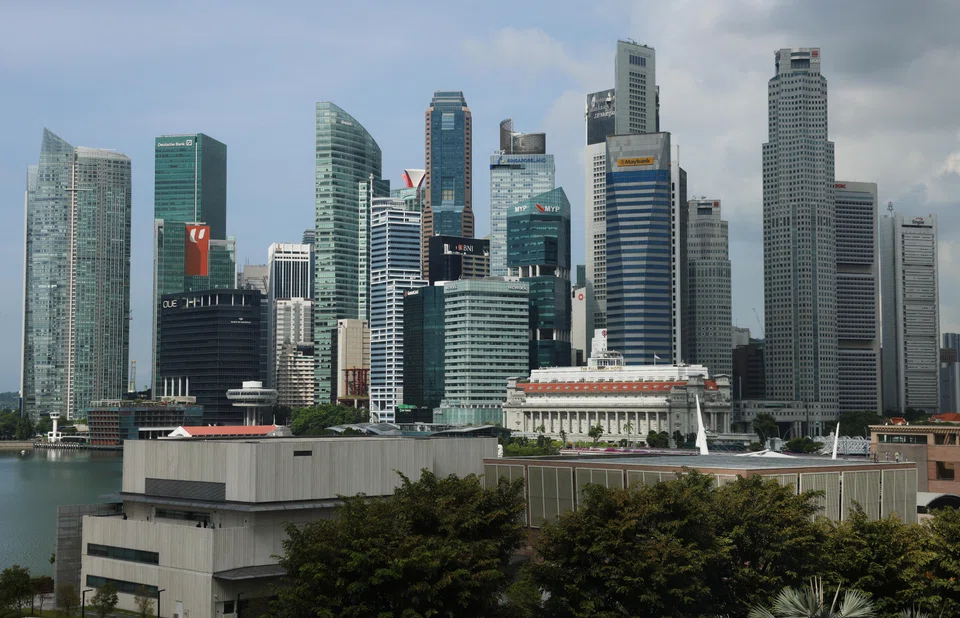
A COUNTRY that has only summer year-round might know a thing or two about heat.
For decades, Singapore’s relationship with the mercury was defined by Lee Kuan Yew’s famous assertion that air-conditioning was the greatest invention of the 20th century. He argued that air-conditioning was crucial for Singapore’s development, allowing for productive, year-round work in the tropics, and “was key to public efficiency”.
But as we navigate the record-breaking temperatures across South-east Asia, the narrative is shifting.
We are moving past the era of mere “thermal comfort” and entering the era where lowering the temperature is big business. Singapore, far from being a victim of its tropical geography, is positioning itself as the world’s premier laboratory for cooling technologies.
Indeed, for astute investors and CEOs, heat is being recontextualised into a new financial and investment frontier, a shift echoed at the Milken Institute’s 2025 Asia Summit roundtable and report on extreme heat resilience.
The rapid expansion of artificial intelligence and data centres across Asia is accelerating this shift.
Despite their immense power demand and heat output, the race to build AI capacity is unlikely to slow. In a hotter world, cooling is no longer just an operational cost, but a strategic asset underpinning digital infrastructure, industrial productivity and urban resilience.
The heat haircut
The numbers are, quite literally, blistering.
Under a 1.5-degree-Celsius warming scenario, the gross domestic product of some South-east Asian countries could be reduced by more than 5 per cent in 2030, projected the International Labour Organisation.
Moreover, 3.7 per cent of working hours could be lost to heat stress – the equivalent of 13 million full-time jobs.
Historically, companies viewed heat as a “soft” operational risk.
That changed when the losses became measurable. In sectors like construction, logistics and manufacturing, heat-linked productivity declines are now being quantified and, more importantly, monetised.
Companies that future-proof their supply chains and workforce against rising temperature are starting to see a measurable competitive edge.
Markets are shifting from reactive recovery to proactive risk pricing. This is most evident in the surge of parametric insurance products. These tools move away from lengthy claims processes, instead offering rapid payouts triggered automatically when predefined temperature thresholds are breached.
When heat becomes a quantifiable financial variable, it becomes an investable one.
The new investable markets
As the world warms, the demand for thermal resilience is skyrocketing.
According to a joint report by the International Finance Corporation and the UN Environment Programme, the global sustainable cooling market is projected to grow to at least US$600 billion in annual demand by 2050.
This isn’t just about selling more air-con units; it is about a fundamental redesign of urban living.
Three distinct investable pillars are emerging.
First, cooling tech and materials innovation. They include district cooling networks that achieve massive economies of scale, passive cooling materials and “super-reflective” surfaces that turn buildings into thermal shields.
Second, heat-resilient infrastructure. This involves the redesign of logistics hubs and urban corridors to minimise the “urban heat island” effect, in which cities experience higher temperatures than rural areas.
Third, workforce adaptation solutions. There is now a burgeoning market for wearable cooling tech, biometric monitoring for outdoor workers and AI-driven scheduling platforms that optimise labour for thermal windows.
According to the New World Resources Institute’s latest analysis, every US$1 invested in preparing for climate-caused health risks can yield up to US$68 in benefits for communities in Africa, Asia, Latin America and the Caribbean, and the Middle East.
For capital allocators, those aren’t just “green” returns; they are fundamental operational efficiencies.
Exporting tropical intelligence
The Singapore government is already signalling where the capital will flow.
To underscore climate adaptation as a national priority, the Ministry of Sustainability and the Environment has designated 2026 as the Year of Climate Adaptation, backed by the S$40 million “Adapting to Heat Impacts” fund mobilised under the RIE2030 (Research, Innovation, and Enterprise) plan.
When Singapore tightens its building codes or introduces new heat-mitigation standards for migrant workers, it not only raises the compliance bar, but also fosters the development of high-value intellectual property.
The resulting innovations, ranging from high-efficiency district cooling systems to urban thermal modelling software, are highly scalable solutions.
Through various heat mitigation and adaptation strategies, Singapore is effectively translating its decades of equatorial experience into investment confidence, long-term demand for heat-resilience solutions and a competitive export for the global tropics.
We must also look towards our peers in Scandinavia and Western Europe for a glimpse of the regulatory future.
Governments there are already taxing “waste heat”, the surplus thermal energy pumped into the atmosphere by industrial facilities and data centres.
By 2026, this is increasingly framed as a “heat-reuse” mandate. Companies are no longer allowed to simply dump heat; they are expected to feed it back into circular energy networks for district heating or face stiff penalties.
For Singapore’s industrial and data centre sectors, the message is clear: heat is a resource. Learning to capture and recycle it is the next step in industrial efficiency.
Resilience as a competitive edge
The grim reality remains that approximately one heat-related death occurs every minute globally, according to the 2025 Lancet Countdown report.
The human cost is staggering, and as we approach record-high temperatures that continue to trend upwards, it’s urgent that we take action.
For the business community, the most effective way to drive change is to recognise that resilience is no longer a defensive posture. It is a way to lower the cost of capital and to do business in a warming world.
Curtis Chin is chair of Senior Fellows and senior adviser for global markets for the Milken Institute, and a former US ambassador to the Asian Development Bank. Ella Tan is associate director for policy and programs, Milken Institute.






