

Singapore’s digital banks not the game changer they promise to be

Benjamin Cher
DIGITAL banks appeared poised to shake Singapore’s financial scene up in 2022. But their entry has turned out to be underwhelming, with limited utility for the average consumer.
The Monetary Authority of Singapore (MAS) had in 2020 given out four digital bank licences to add diversity to and strengthen Singapore’s banking system. The new players would have “innovative business models” and cater to underserved segments, MAS had said in its initial announcement in 2019.
A consortium comprising on-demand services provider Grab and telco Singtel was awarded one digital full bank licence, while another was awarded to a unit of gaming and e-commerce group Sea.
Two digital wholesale bank licences were also awarded – one to a unit of China’s tech conglomerate Ant Group, and another to a consortium comprising Greenland Financial Holdings Group, Linklogis Hong Kong and Beijing Co-operative Equity Investment Fund Management.
All four have commenced operations this year, but the impact – at least from the two digital full banks targeting retail customers – appears to be limited.
Grab and Singtel’s GXS Bank is taking deposits only from a select group of employees and customers. MariBank is available only to employees of its parent company, Sea.
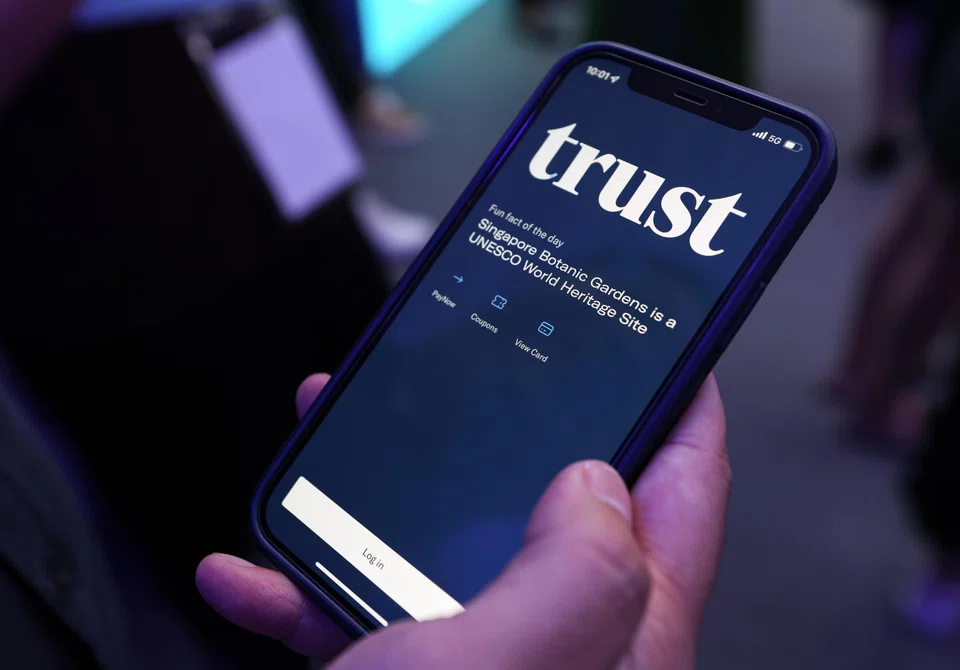
The biggest splash in the digital banking space ended up coming from an entity that didn’t win a new digital bank licence. Trust Bank, a partnership between Standard Chartered and grocery retailer FairPrice Group, began taking deposits from the public in September.
Trust Bank said in a blog post on Dec 27 that it had signed up 400,000 customers.
Unlike GXS and MariBank, Trust Bank has been able to operate without restrictions from the start because it can take advantage of StanChart’s full banking licence.
MAS’ rules for digital bank licensees limit GXS and MariBank to a total of S$50 million in deposits in the initial phase, with a cap of S$75,000 per depositor.
When GXS first launched to Grab and Singtel employees, it limited deposits to S$5,000 in order to get more customers while still keeping within the licence limitations.
With such limited reach, it is understandable that neither GXS nor MariBank has made much of an impression.
At the same time, evidence of innovation or services for an underserved segment is limited.
Trust Bank customers are served almost exclusively online, but that is increasingly less of a novelty as incumbent banks also push their customers to do more via banking apps and websites. The services Trust Bank offers, meanwhile, are similar to what is already on offer elsewhere: tiered interest rates based on spending, and a partnership with a loyalty programme.
Taking a page out of the standard digital bank entry handbook, GXS and Trust Bank both rolled out interest rates that were higher than those on offer at the incumbents. Trust launched with a 1 per cent interest rate, while GXS launched with savings pockets that offered 1.58 per cent.
But in a rising interest rate environment, these rates soon proved to be too low.
The incumbents soon upped their game, pushing further rate hikes from both digital bank players. Competition, so far, has been heavier on the pricing front.
The trouble, perhaps, is that Singapore’s digital banks are somewhat late to the game. The incumbent banks have significantly improved their digital offerings in the two years since the impending digital banking licences were first announced.
Perhaps this was done in preparation for the competition. Or, perhaps the banks were merely taking advantage of new technologies that became available.
But innovations that excited users when launched by new digital banks in other markets – such as financial planning and cheaper foreign exchange transactions – are by now almost standard fare.
Meanwhile, Singapore’s digital banks are showing their vulnerability in a market that is still relatively reliant on cash.
Digital bank licence restrictions mean that GXS and MariBank do not have access to the ATM networks of other banks.
When queried about this at a media conference, GXS chief executive Charles Wong suggested customers transfer money to their other bank account and withdraw cash that way.
The promise of 2022 being the year of the digital bank has not quite been fulfilled. As to 2023, here’s to hoping for more from them.
TRENDING NOW

Ex-Nvidia CEO Jensen Huang carried a secret for more than a year. It led to his downfall

South-east Asia has lost Nvidia’s best salesman

Demand, tech capabilities position Apac and AI as Skyscanner’s next growth frontiers: CEO Bryan Batista

Jensen Huang discusses comeback as Nvidia CEO with allies: report

