Singapore’s feathered tourists and their economic value
Migratory birds’ ‘tourism receipts’ include ecological benefits and birdwatching dollars

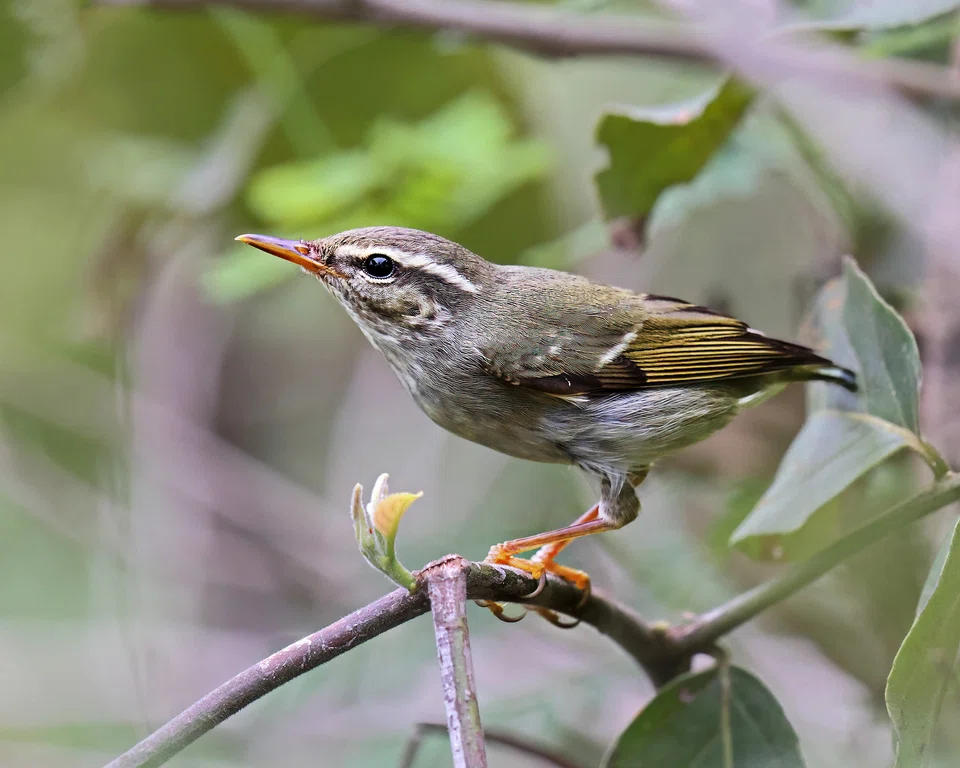
THE Arctic warbler may be Singapore’s smallest and most underrated tourist. This fluffy songbird weighs just 10 grams, but endures the toughest of journeys: it flies thousands of miles from the taiga forests of Europe, Russia and Alaska to get here.
Arctic warblers are often hiding in plain sight. Between September and April, these hardy travellers can be found flitting among the trees in gardens, nature reserves and even in car parks.
“There were three Arctic warblers in my car park, so there must’ve been some in yours,” says conservation biologist Dr Yong Ding Li, estimating that several thousands of these birds spend the winter here.
The Arctic warbler is just one of the 120-odd bird species that regularly visit or transit through Singapore. The city-state is a “constriction point” for migratory birds in the same way that it is for international travel, says Dr Yong.
Singapore serves two important “flyways” – “super highways” in the sky that hundreds of bird species fly along for their annual migrations.
One is the East Asian-Australasian Flyway (EEAF), which stretches from Alaska to South-east Asia, Australia and New Zealand. Some 600 bird species fly in this zone, spanning 37 countries.
The other is the Central Asian Flyway (CAF), which also serves 600 bird species and covers diverse landscapes across 30 countries – from the harsh cold of Siberia to the balmy Maldives.
“Singapore sits at the tip of the Malay Peninsula, and many migratory birds move along the peninsula. For many species that want to migrate to, say, Indonesia or Australia, they have to pass through Singapore,” says Dr Yong, who is a regional flyway coordinator for conservation outfit BirdLife International.
Singapore’s status as an aviation hub has certainly brought it plenty of economic value. But how about its status as an “avian hub” – surely there is economic value to that too?
Economic ornithology
A quick Google search for “economic value of birds” introduces me to the now-defunct field of “economic ornithology”. Between the 1890s and 1930s, economic ornithologists computed the dollar value of birds as a form of pest control for farmers, according to Bloomberg’s Odd Lots podcast.
For instance, if a mouse eats two cents worth of grain, and a hawk eats 1,000 mice in a year, the hawk saves farmers $20 worth of grain.
Such crude calculations eventually became unnecessary with the invention of pesticides, and economic ornithology fizzled out.
But perhaps the field can again be relevant in a new way: recognising the economic value that birds contribute.
For one, migratory birds are of ecological importance to our key nature sites. The Sungei Buloh Wetland Reserve, for instance, is where many migratory shorebirds feed and roost – a fact that was highlighted in the 1980s by bird enthusiasts from the Nature Society Singapore (NSS).
These birds are of great ecological value. They maintain ecosystems such as mangroves, which in turn has economic value as a coastal protection barrier and a carbon sink, and in sustaining the aquatic life that fisheries depend on.
Bird migrations also bring us tourist dollars, with Singapore a popular pit stop for bird lovers visiting South-east Asia.
“Most of these tourists who are here for birdwatching, they’re actually also going to Indonesia... When they transit here, they may take a day or two to go to the (Singapore) Botanic Gardens or elsewhere. That also adds up to the birdwatching economy,” says Dr Yong.
It is not hard to see why these birds are a tourist magnet. Their physical grit is incredible, and they are a great visual spectacle.
Many of these birds “endure long arduous journeys braving the weather elements, facing perils such as habitat loss, illegal hunting and building collision to find safe havens”, says Veronica Foo, who chairs the NSS’ bird group.
And upon arriving, some species such as shorebirds put on a “dynamic and spectacular” show of aerial flight formations, she adds.
While these birds may be of dull colours when they land in Singapore – brown, grey or white, this cleverly serves as the “perfect camouflage” when they roost on mudflats and sandy beaches, notes Foo. And when spring comes around, the male birds’ plumages transform into vibrant colours like red and orange.
Migratory birds are assets worth protecting. Perhaps quantifying their economic value – and what we lose when their habitats are destroyed – could direct more investments towards protecting the birds and flyways.
There are many bird conservation efforts worth supporting. In 2021, a regional initiative was launched to raise US$3 billion over a decade to protect wetlands along the EEAF. In April this year, another project was unveiled to protect the CAF.
Of course, economic value is not the end-all. The actual value of migratory birds extends beyond hard dollar figures to include intangible value as well, like the joy of seeing a cute bird and how it brings people together.
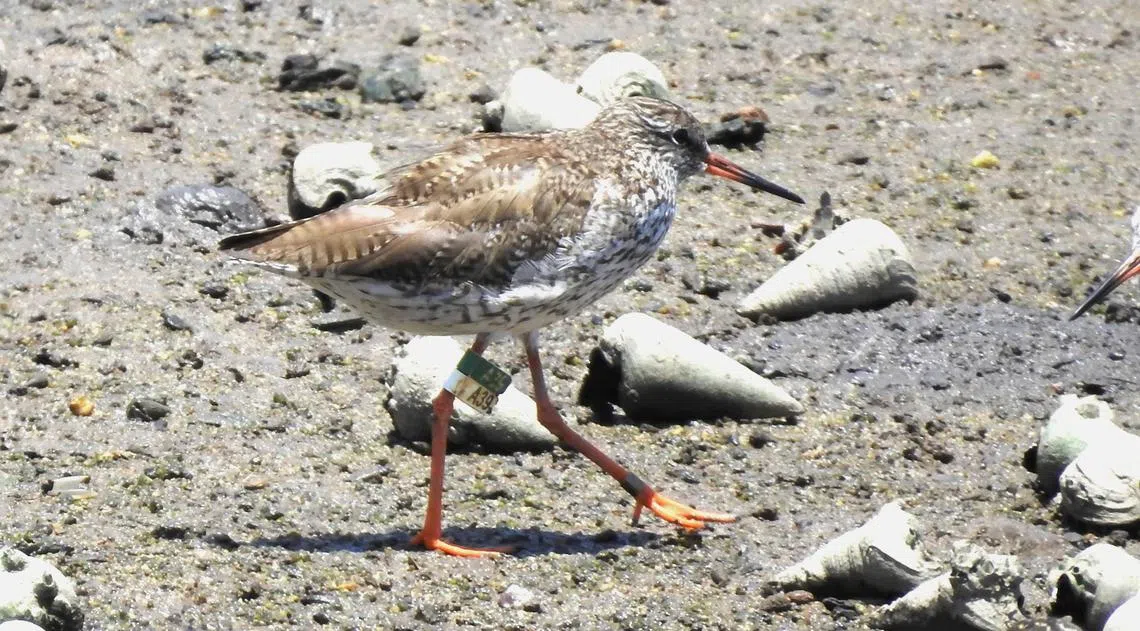
Foo of the NSS highlights how special it is to spot birds carrying little green-and-white flags tied to their legs. This is an indicator that the bird was tagged in Singapore with a tracking device to study its route. In other countries, birds are similarly tagged with distinctly coloured flags.
“Seeing a returning Singapore-flagged bird, or a foreign-flagged bird, is like welcoming the safe return and visit of avian friends,” she says.
Bird migrations and economic ornithology are just some of many weird and wonderful phenomena out there. This column flies off tangent from the news and pecks at curiosities in various fields, from finance and economics to science and psychology, or even beyond.