Singapore’s strategic response to Trump tariffs

By leveraging its established diplomatic channels, diversifying trade, enhancing competitiveness and building alliances, the Republic can mitigate risks and sustain its position as a global trade hub
Summarise
    • In response to Trump's tariffs, Singapore must adopt a multi-pronged strategy, digging deep into its toolkit of relationships, connections and contacts.
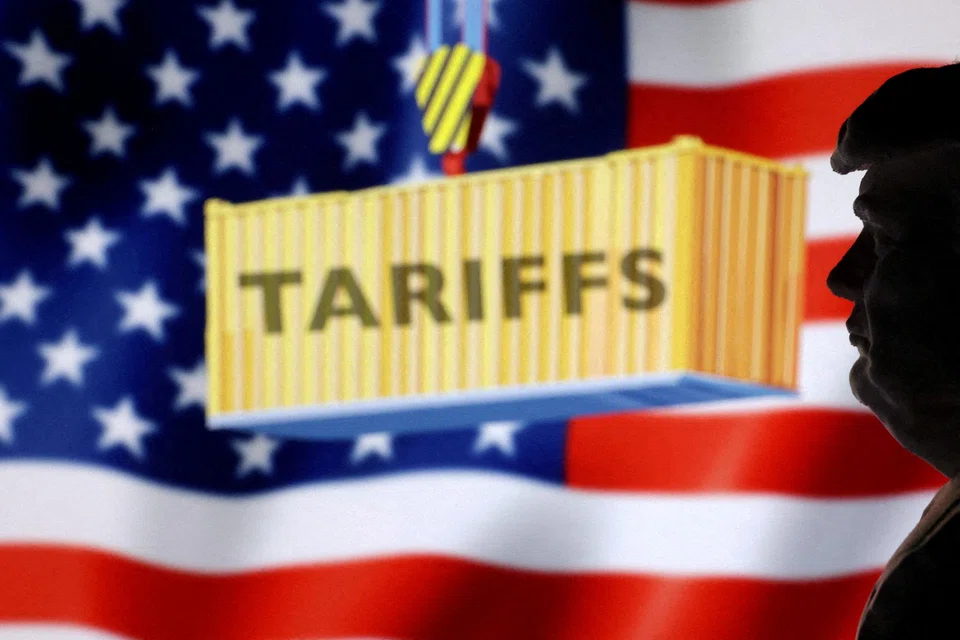
    • In response to Trump's tariffs, Singapore must adopt a multi-pronged strategy, digging deep into its toolkit of relationships, connections and contacts. PHOTO: REUTERS
    Published Mon, Apr 7, 2025 · 06:00 AM

    LAST week, the Trump administration announced its “Liberation Day” measures through the imposition of tariffs on various countries – particularly China, the European Union and other major trading partners – threatening the multilateral rules-based trading system, disrupting global trade dynamics, risking retaliatory tit-for-tat reactions and unleashing unprecedented uncertainty on the global trading system.

    Singapore has not been spared from these tariffs.

    As a small, open, trade-dependent economy, Singapore must carefully weigh its options and navigate these protectionist measures to safeguard its economic interests, the viability of the businesses that are based here and the livelihoods of the people who call this Little Red Dot home. This will involve having a resilient mindset and a gumption for shrewdness, spirited initiative and resourcefulness.


    As Deputy Prime Minister Gan Kim Yong has insightfully (and helpfully) observed, “Singaporeans and businesses should be psychologically prepared for rough weather ahead.” As with all challenges, overcoming them begins with the mind coupled with a steely resolve.

    Understanding the impact

    Singapore’s economy thrives on free trade. In 2023, the World Bank reported that exports accounted for over 170 per cent of the country’s gross domestic product. While the US is not Singapore’s largest trading partner (China and Asean hold the top positions), American tariffs still pose risks to the country: Singapore’s role as a global trade hub means disruptions in US-China trade will affect transshipment and manufacturing supply chains.

    Sectoral vulnerabilities in electronics, machinery and chemical exports could also face higher costs if US tariffs expand. Likewise, US protectionism may deter foreign direct investment in trade-reliant economies like ours.

    Given these risks, Singapore must adopt a multi-pronged strategy, digging deep into our toolkit of relationships, connections and contacts – all of which are at the heart of business that ensures success.

    It is important to remind ourselves that Singapore enjoys strong bilateral ties with the US, reinforced by the US-Singapore Free Trade Agreement (USSFTA) that was signed in 2004.

    To mitigate the tariff risks, Singapore can focus our efforts in lobbying for exemptions. This can involve advocating for Singapore exports to be excluded from US tariffs, emphasising the mutually beneficial nature of the USSFTA. There is also the potential to strengthen our economic diplomacy, working with US business councils and policymakers to highlight Singapore’s role in supporting American companies in Asia.

    It is relevant to note that the issue of trade deficits and the ambitions of “making America great again” need not be a zero-sum game where one party wins at the cost of one’s trading partners.

    As with trading and commercial-driven relationships, there are existing multilateral infrastructures in place and, in this regard, we are reminded of the call of the International Chamber of Commerce (made in its statement on the imposition of increased tariffs) for governments to take action to safeguard the multilateral system.

    Among others, there is an urgent need to accelerate the reform of the World Trade Organization-led dispute resolution process to counter unilateral tariffs and align with like-minded nations in advocating for free trade, instead of resorting to the blunt instrument of the “jungle rules” of tariffs. That would be succumbing to the proverbial “an eye for an eye” in the tariff realm – which, in this case, will lead to an unnecessary (and unjustified) outcome of a “blinded” global economy that shrinks – leading to no one’s benefit.

    Diversification and partnerships

    In some respects, trade is like an investment portfolio. One needs to be intentional in reducing over-reliance on any single market.

    For Singapore, this will mean reducing dependency on US-centric trade by deepening trade ties with alternative markets. This could be through strengthening Asean and regional partnerships; accelerating the Asean Economic Community to enhance intra-regional trade; and maximising benefits from agreements like the Regional Comprehensive Economic Partnership, the world’s largest trade bloc, which includes China, Japan and Australia.

    Expanding trade with China through the China-Singapore Free Trade Agreement and digital economy collaborations is yet another alternative that can yield a counterbalance to the reliance on the US.

    Opportunities also lie in exploring markets such as India, leveraging on the India-Singapore Comprehensive Economic Cooperation Agreement and deepening engagement, particularly in the sectors of technology and services.

    Similarly, regions such as the Middle East and Africa present growing demands in Dubai, Saudi Arabia and East Africa for Singapore exports that can be further developed and optimised.

    These new market opportunities will require Singapore and Singapore-based businesses to display a sense of adventure, boldness and a willingness to explore new trading frontiers – not necessarily by themselves, but possibly in collaboration with other like-minded economies looking for new market opportunities.

    As we have seen in the animal kingdom, there are advantages to pack hunting. In this regard, chambers of commerce and business associations like the Singapore International Chamber of Commerce can play a meaningful role.

    Future-proofing our trade and enterprises

    It goes without saying that to withstand global trade volatility, Singapore must bolster its economic resilience. This can come in the form of trade financing schemes with expanded grants for small and medium-sized enterprises affected by tariffs (for example, Enterprise Singapore’s Market Readiness Assistance grant). Other forms of support can be targeted at building supply chain resilience – encouraging firms to diversify suppliers beyond China into South-east Asia and India.

    Other possibilities include local businesses investing in high-value industries such as advanced manufacturing – promoting Industry 4.0 adoption in areas like robotics and artificial intelligence to maintain Singapore’s competitiveness. There are also opportunities such as the further development of the green economy, where Singapore can be positioned as a leader in sustainable trade, attracting ESG-conscious investors.

    Suffice to say, Singapore cannot withstand US tariffs alone. It should continue to advocate and promote free trade norms, leveraging trade partnerships like the Comprehensive and Progressive Agreement for Trans-Pacific Partnership; form coalitions; and partner with the EU, Japan and Canada to lobby against and educate on the lose-lose outcomes arising from any form of trade tariffs and protectionism.

    We would be remiss if we do not prepare for the longer-term geoeconomic shifts that have only just begun with Liberation Day.

    The US-China rivalry will persist beyond the Trump era, and Singapore needs to be pragmatic even as it remains neutral, avoiding taking sides with either bloc while securing the country’s economic interests. There will be a need to future-proof trade policies that anticipate further US or Chinese tariffs, and adjust our strategies accordingly.

    Singapore’s response to Trump-era tariffs should be proactive and multifaceted. By leveraging our established diplomatic channels, diversifying trade, enhancing competitiveness and building alliances, Singapore can mitigate risks and sustain its position as a global trade hub.

    The key lies in our agility – adapting to an increasingly fragmented trade landscape while upholding the principles of free trade that underpin our country’s continuing prosperity.

    Jeffery Tan is a director of the Singapore International Chamber of Commerce (SICC) and chair of its nominating committee. Dawn Tan is the chairwoman of the SICC.