Singapore’s take on the changing nature of employment
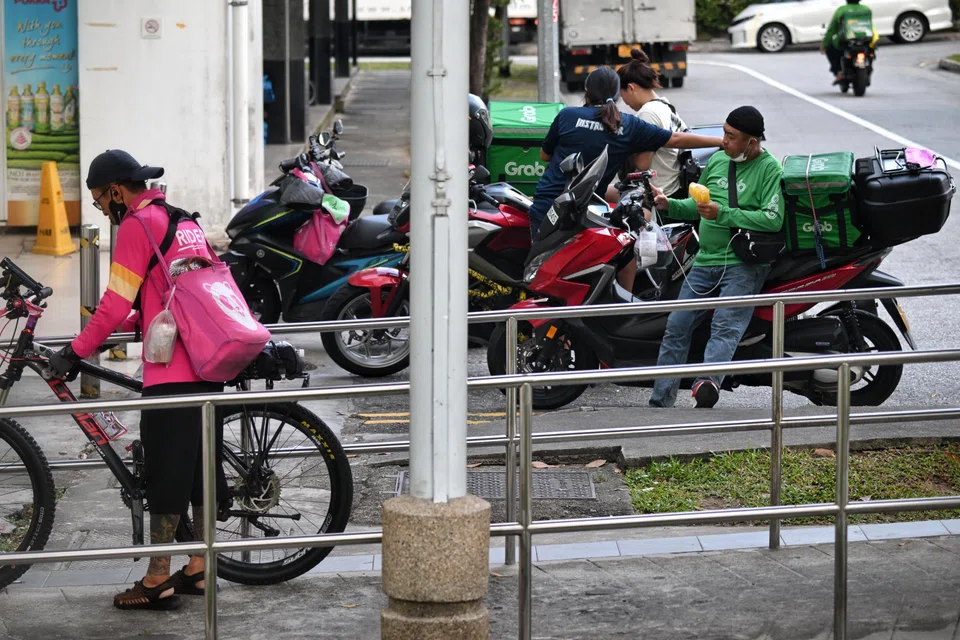
THE nature of employment has changed irrevocably. Three years into the pandemic – marked by a profusion of lockdowns, quarantine protocols and economic disruptions – it would be strange if it hadn’t.
Ride-hailing and food-delivery companies like Grab, foodpanda and Deliveroo have flourished in this environment. A survey conducted in March by these three companies found that 60 per cent of food delivery riders entered the gig economy (for the first time) during the pandemic.
Participation in the gig economy used to mean earning a little extra on the side or having the flexibility to determine your own working hours. But now for many Singaporeans temporary, short-term or contract work is no longer just a side hustle; it’s their main source of income.
How have these changing trends impacted employment in Singapore?
Going fulltime gig
According to the Manpower Ministry’s annual Labour Force in Singapore report, from July 2020 to June 2021, there were 248,500 people engaged in “own account work” as regular employment, up from 228,200 the previous 12 months. More are opting to work fulltime as gig economy workers rather than engaging in traditional employment.
This has inevitably opened a debate over work benefit inequalities, and the sustainability of this arrangement in the long term. In response to concerns for the ride-hailing and food-delivery drivers (who make up 3 per cent of the workforce), the Singapore government convened the Advisory Committee on Platform Workers in 2021 to consider enhanced protection for gig workers.
The committee was led by Goh Swee Chen, chairperson of the Institute for Human Resource Professionals, and brought together representatives from the government, labour movement, industry and academia
In November, the government accepted all 12 recommendations made by the advisory committee, which include workplace injury insurance, housing and retirement benefits, and increased representation.
Classification of gig workers
The government’s acceptance of the recommendations makes clear Singapore’s position that gig economy workers are not employees, giving employers a level of reassurance that they will not be tied up in complex future employment status claims.
However, the language is important. The government hasn’t said – nor did the advisory committee recommend – that gig economy workers be classified as independent contractors. This leaves open the door for the emergence of a third category in Singapore, that of a “worker” status, similar to the United Kingdom.
This is consistent with the remaining advisory committee recommendations. They are intended to provide a greater level of protection for gig economy workers, separating them from traditional independent contractors but not quite giving them the same protections as traditional employees.
For now, the protection is limited to workplace injury compensation, housing and retirement benefits and increased representation.
The first of these will be a cost, but of less practical concern for most employers; the second and third, however, will make many businesses pause and consider whether their reliance on gig economy workers will continue to be feasible in the long term.
Workplace injury compensation
Work Injury Compensation Act (Wica) claims are currently available to all employees – regardless of salary. The claims usually cover wages lost during any medical leave period, medical expenses and compensation for permanent incapacity and death.
Businesses will usually have in place insurance to cover Wica claims. This is already mandatory for manual workers and those earning less than S$2,600 a month. It is not yet clear whether all gig economy workers will be covered, or only those engaged in manual labour and earning less than S$2,600 a month. In practical terms, the cost of using gig economy workers will now increase by the amount required to cover them under any existing Wica insurance scheme.
Housing and retirement benefits
The advisory committee also sought to improve the “housing and retirement adequacy of platform workers”. This is a real concern in Singapore where the cost of living – and retiring – frequently sits at the top end of global “most expensive” lists.
With a perceived view that progression opportunities are limited within the gig economy, and therefore wage progression restricted, ensuring that gig economy workers earn and save enough for retirement is understandably a key concern for the government.
This brings us to the most significant (and hotly contested) of the recommendations to be adopted – the mandatory Central Provident Fund (CPF) contribution.
Not only will employers have to manage the additional administrative load of salary deductions and making CPF payments for their gig economy workers, but the employer contribution means the cost of engagement has just risen by 17 per cent.
For gig economy workers, this means their take home pay will drop by 20 per cent. While some may have been making voluntary CPF contributions anyway, for many the drop in disposable income will have a significant impact and may make the whole arrangement less attractive.
Increased representation
The final key change is in the enhanced representation for platform workers. The details are few and far between. But given union representation has been creeping in its reach over the last few years, it’s no surprise that the trade unions have gig economy workers in their sights.
While the uniquely Singaporean model of tripartism between the unions, employers and the government has meant that unions in Singapore do not play an aggressive role in workplace relations, many employers will be concerned at the prospect of gig economy workers being able to collectively bargain on what look, feel and smell like traditional employment rights.
Reference point
Globally, there has been a push to level the playing field across all forms of work – by guaranteeing minimum protections all workers must receive. Singapore has taken its first steps towards this.
There is now a reference point for employers, providing an opportunity to evolve existing frameworks for measuring working conditions that sits more comfortably with our evolving work environment.
Fatim Jumabhoy is managing partner of Herbert Smith Freehills, Singapore, and also head of its employment, pensions and incentives (Asia) team. Herbert Smith Freehills is an international law firm, which provides access to Singapore law advice through its formal law alliance with Prolegis.