

SingPost should quickly cut borrowings by divesting its non-core properties now
Over the past two years, the group has shuttered 12 post offices, leaving another 44 that are located at SLA properties, ground floors of HDB shophouses and other commercial setups such as malls

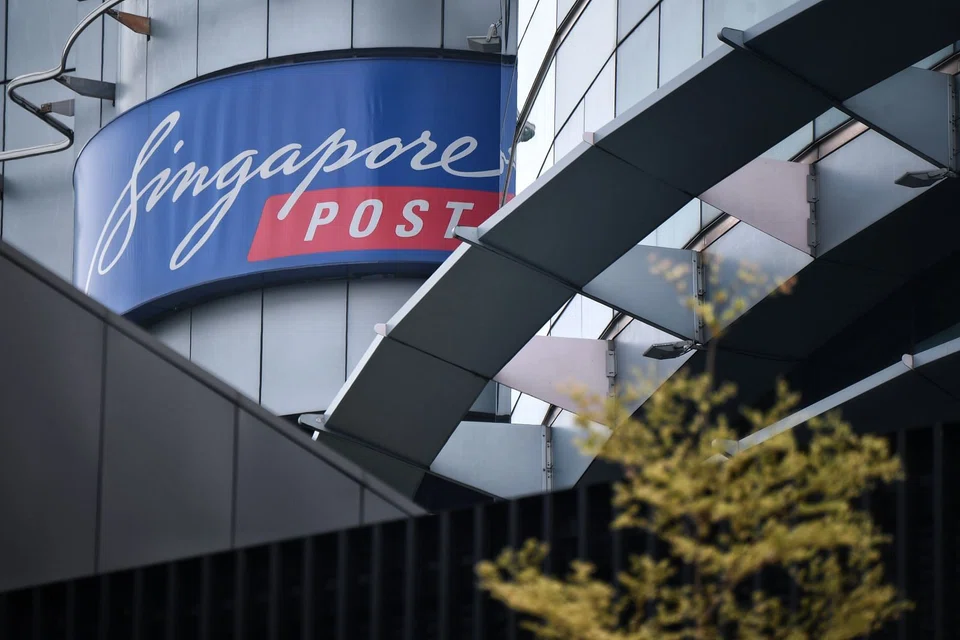
ON THE face of it, national postal service provider SINGAPORE Post (SingPost) delivered an impressive improvement to its bottom line for the first half ended September.
For its H1 FY2025, the group posted earnings of S$22.6 million – up 97.3 per cent.
But on closer inspection, SingPost could have reported a much higher profit, if not for the S$24.6 million it forked out in finance expenses.
The company’s earnings were similarly eroded the year before. In H1 FY2024, it incurred finance expenses of S$14.5 million, which left only S$11.5 million at the bottom line.
SingPost’s borrowing costs had rocketed as a result of the additional loans taken out for its Australian business – the acquisitions of Border Express and an additional stake in Freight Management Holdings.
Those loans were acquired through Australian dollar onshore borrowings Down Under at an interest rate of over 5 per cent.
The group’s non-current borrowings totalled about S$886.2 million as at end-September, while total liabilities were slightly under S$1.2 billion.
It also has S$250 million of perpetual securities – not considered a debt in accounting terms – which distributes over S$10.8 million in payment annually at an interest rate of 4.35 per cent.
Notably, the group had S$428.4 million in cash as at end-September.
In March, the group said that it would divest non-core assets and businesses, including the retail-commercial mixed development SingPost Centre, which was valued S$1.1 billion as at September 2023.
Over the past two years, the group has shuttered 12 post offices, leaving another 44 that are located at properties formerly owned by Singapore Land Authority (SLA), ground floors of Housing and Development Board (HDB) shophouses and other commercial setups such as malls. (see clarification note)
Of these, the group owns more than half – all of those housed at former SLA premises and the majority of the HDB shophouses – and carry most of them under property, plant and equipment, and generally at cost in its book.
Vincent Phang, group chief executive of SingPost, had said at a recent analyst briefing that he expects the number of post office branches to be “significantly smaller” after finalising the operating model with the authority.
Many of those SLA properties are designated for postal use, and conversion of use may not be granted or would require payment of a land betterment charge. (see clarification note)
However, the HDB properties are for commercial uses and are readily available for sale.
This means the group would likely be able to record profits from the valuation uplift and cash inflows upon divesting the real estate, especially those at the HDB shophouses.
Interest rates are unlikely to drop drastically in the near future. In view of the amount it has to fork out to make interest payments, SingPost should expedite its divestment of these non-core properties, and use the proceeds to quickly bring down its high debt level.
To be fair, Phang had said that the “first order of the day would be to pare down” borrowings. But it appears that the group is waiting for the strategic review of its Australian business to finish.
Its management has cautioned that no decision has been made as the review has not been concluded, in response to media reports that there was interest to acquire all of the Australian business.
Vincent Yik, group chief financial officer, had told analysts that by using the same currency proceeds to pare down the Australian debt, SingPost would be able to enjoy zero foreign exchange loss. There would also be tax savings, given the tax rate is significantly higher there compared to in Singapore.
But are these benefits enough to offset the rise in finance expenses?
The group has classified the Australian investment – which contributed to 59 per cent of its operating profit in H1 FY2025 – as one of its three key pillars.
Thus, divestment of anything other than a minority stake makes one question the importance SingPost has placed on that market.
It will also negate the efforts it has put in to build the business there, particularly when it had taken on additional borrowings as recently as March to buy Border Express and buy out Freight Management Holdings last December.
* Clarification note: An earlier version of the story stated that the group owns all of those housed at SLA premises, based on the analyst briefing transcript published by SingPost. The SLA has clarified that the sites are owned by SingPost and are considered private land. Also, instead of a land premium for the conversion of use, a land betterment charge is payable.
TRENDING NOW

Britain’s mansion tax shows the difficulty of targeting wealth

Once staunchly pro-China, Malaysian Chinese businesses are now distancing themselves from Beijing

The only common thing in S-E Asia is that we all eat rice: Cisco’s Asean president
Singapore data centre operator DayOne opts for US IPO at likely US$20 billion valuation

