HOCK LOCK SIEW

Singtel could also be a winner as mom-and-pop investors land surprise S$6,800 windfall

For the group, the real prize is unlocking its own corporate toolkit

Summarise
Jude Chan
Published Wed, Apr 8, 2026 · 05:00 PM
    • Singtel is injecting life back into a dormant float that makes up 4.4% of its total shares.
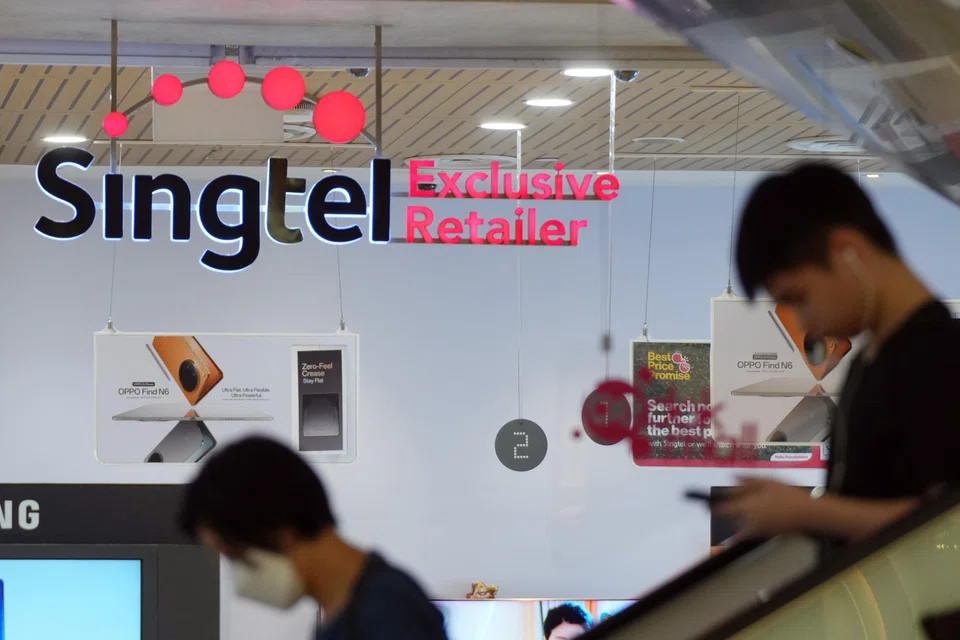
    • Singtel is injecting life back into a dormant float that makes up 4.4% of its total shares. PHOTO: BT FILE

    [SINGAPORE] The narrative being spun around Singtel’s massive Special Discounted Shares (SDS) transfer is heavy on the warm, fuzzy angles.

    It is a story about giving the Pioneer and Merdeka generations a sudden cash windfall. It is about freeing up legacy wealth and empowering the retail investor.

    ​It is, admittedly, a great story.

    For the median shareholder holding 1,360 SDS from the 1993 initial public offering, this policy change is a sudden, fully liquid S$6,800 bonus.

    More than half a million older Singaporeans can finally sell their stock and take the cash straight to the bank, completely bypassing the usual Central Provident Fund (CPF) lock-ups.

    ​But let us be brutally honest. A multinational company does not initiate a multi-year, multi-agency legal restructuring just to help you fund a holiday to Okinawa.

    Behind the public relations glow, this exercise is a massive, necessary corporate untangling. Be under no illusion: ​Singtel is doing this for Singtel – but there’s nothing wrong with that.

    ​To understand why, you have to look at how absurd the current set-up is.

    Singtel has more than 700,000 retail shareholders. But for 615,000 of them, the company is not legally allowed to speak to them directly. Because these shares were bought using CPF funds under a special 1993 scheme – back when most people did not have trading accounts – the CPF Board acts as the legal trustee.

    ​If Singtel wants to send an annual report, invite them to an annual general meeting or pay a dividend, it has to route everything through a government statutory board. It is a costly, clunky, two-step bureaucratic dance that belongs in the 1990s, not 2026.

    Today, if an elderly SDS holder wants to sell, they could do it online. The non-digital natives among them – and there are many – will likely have to walk down to a SingPost branch and fill out physical forms. Those forms are batched, sent to a broker and processed manually over several days.

    In an era where teenagers trade stocks on their phones in seconds, these retail investors are selling blind, entirely unable to lock in a live market price.

    ​Moving the shares to direct Central Depository (CDP) accounts drags these investors into the modern trading era. But for Singtel, the real prize is unlocking its own corporate toolkit.

    Unlocking more than cash

    ​When you have 615,000 shareholders locked behind a trust scheme, your hands are tied when it comes to financial engineering.

    If a normal company wants to preserve cash, it might issue a scrip dividend, paying investors in new shares instead of cash. If it wants to raise capital or reward shareholders, it might execute a rights issue or a bonus share issue.

    ​Under the legacy CPF scheme, doing any of this is logistically maddening. By transferring these shares directly to individual CDP accounts, Singtel can finally pull the same levers as any other listed company without the system melting down.

    A cleaner capitalisation table – a document that lists all shareholders and the number of shares they own, as well as the type of securities – makes future corporate actions far smoother.

    ​This clean-up is not happening in a vacuum. Singtel is actively trying to shake off its reputation as a sleepy, stable local utility. It is chasing double-digit returns and expanding heavily across South-east Asia. It is aggressively building out capital-hungry data centres alongside private-equity heavyweights such as KKR.

    ​And when you are trying to execute complex strategic moves or potentially restructure parts of your business, the last thing you want is a messy, legacy capital structure holding you back.

    ​Finally, there is the matter of market liquidity. Right now, about 4.4 per cent of Singtel’s total shares are essentially in a coma. They sit in CPF accounts, largely forgotten, generating dividends but doing absolutely nothing for the stock’s daily trading volume.

    ​Putting these shares directly into the hands of retail investors and waiving the withdrawal rules will bring life back to this dormant float.

    Whether people hold them in their active CDP accounts or sell them on the open market, it creates more liquidity. Better liquidity is generally good for a stock’s overall health and pricing.

    ​None of this is to say that retail investors are getting a bad deal. Giving people direct control over their assets and letting them keep the cash is a clear win for the public. It finally closes the loop on the grand social experiment of 1993.

    ​But as investors, we should always look at the incentives. The public might be getting a nice cash payout, but make no mistake: Singtel is the one getting its house in order.

    They are finally shedding a 30-year-old statutory board legacy so they can actually run like a modern, agile company.