

Social media consumption in the fog of war
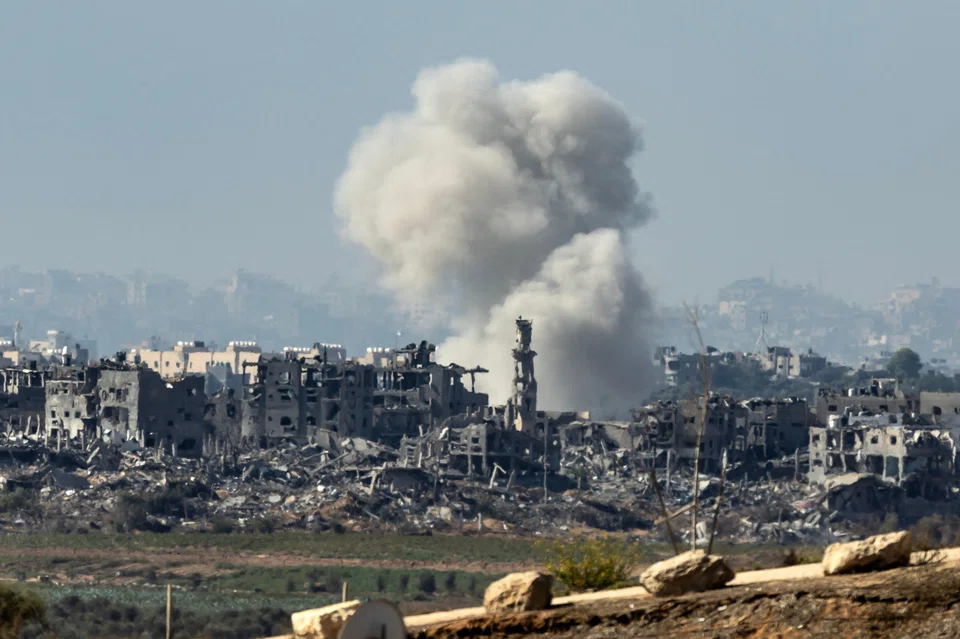
MANY people around the world, especially Gen Zs who are TikTok natives, follow developments around the world – including the ongoing Israel-Hamas war – on social media instead of reading the news. It’s not without any ramifications.
As the conflict in the Middle East rages on, social media is turning out to be as much a battleground front, where rampant misinformation and propaganda lurk in the fog of war. Amid the chaos and lack of clarity, social media seems to fill in the gap for information.
About a third of US adults under 30 regularly get their news from TikTok, according to a new study by Pew Research Centre. That’s up from a mere 2 per cent in 2020. In Singapore, a report by the Reuters Institute for the Study of Journalism found that 22 per cent of 18-24 year olds use TikTok for news.
While it is great that young adults are engaged in world affairs, the problem with social media platforms is that it rarely provides a balanced perspective. The algorithms just don’t work that way. The more you watch videos that lean towards one side on TikTok, for example, the more you will be fed clips from that point of view.
The resulting echo chambers only serve to cleave further divisions in society. In the murkiness of war, social media – once deemed a tool to democratise information – is proving to obfuscate more than it illuminates.
Outrage about the atrocities committed is not the issue in itself; it’s when this outrage leads to retaliation and violence that is the problem. Hate speech is on the rise globally, fuelled by disinformation and misinformation online, some of which spills over into real-life clashes.
In a Harvard-Harris poll, about half of those aged 18-34 believe that Hamas’ killing of 1,200 Israeli civilians on Oct 7 can be justified by the grievances of Palestinians. The poll was conducted in the US from Oct 18-19 among 2,116 registered voters.
So should the onus be on social media platforms to safeguard factual accuracy? There is little incentive on their part. Current algorithms optimise for engagement and social media platforms are reluctant content gatekeepers – they are here to make a profit, not make tough calls on moderation or become arbiters of truth. Regulations can force social media platforms to be more accountable for the content it disseminates, but the big question is to what extent.
People should be far better informed and educated on current affairs, including the historical background – that would be highly desired, but also idealistic. Fact-checking and media literacy need to be continually emphasised, even as cognitive biases lead people to believe what we want to believe. Beyond cross-checking sources, people need to be cognisant of how social media algorithms work.


Yet perhaps education on media literacy should not just be on fact verification but also the simple idea that things are not black and white. Many things can be true at the same time; the lesser of two evils is still evil.
This is not the same as sitting on a fence or avoiding conflict – it’s about holding space for nuance and learning how to resolve this tension between many realities in a way that is both meaningful and constructive before you lash out or take action.
There are no easy answers to combatting misinformation and disinformation, not least around highly polarising matters like a raging, controversial war. But the consequences for society, even those far from the battlefields, are ultimately debilitating, with social media both enabling and exacerbating the risks.
Decoding Asia newsletter: your guide to navigating Asia in a new global order. Sign up here to get Decoding Asia newsletter. Delivered to your inbox. Free.
Share with us your feedback on BT's products and services
TRENDING NOW

Government to bring forward raising of retirement age, give employers more financial support to create flexi-load jobs

If Europe goes to war, the fallout will be felt in East Asia

Indonesia stocks suffer worst plunge in nearly 30 years as MSCI proposes standalone status

Vietnam’s northern provinces, not Hanoi or Ho Chi Minh City, are powering near 10% GDP growth

