Some 700 days in, Europe must double down on Ukraine
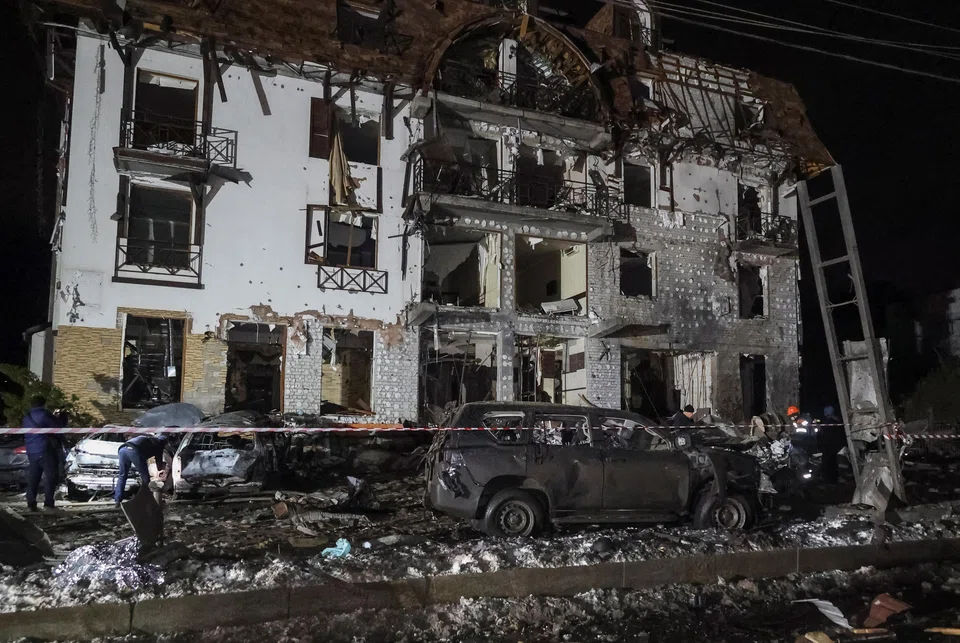
LATE 2023 and early 2024 have seen growing European concern that Moscow could yet prevail in the most serious conflict in the continent since the Second World War. Far from being the time to take the “foot off the gas pedal”, Europe must therefore now double down on the conflict.
Almost 700 days into the war, the stakes in play remain massive, and are growing. So, Europe and the wider West still have a massive strategic interest in ensuring the best possible outcome for Ukraine.
As much as the narrative around the war has turned more positive for Russia recently, it should also be remembered that President Vladimir Putin’s regime may be significantly more fragile than it seems, as last June’s Wagner mutiny showed. A growing number of Western intelligence veterans, including former British Secret Intelligence Service chief Richard Dearlove and former Central Intelligence Agency operative Jack Devine, believe that Putin could be vulnerable to a coup.
However, if Putin does remain in power for the foreseeable future, as seems likely, a potential Russian victory would only embolden Moscow and its allies across the world. Only last month, for instance, German Defence Minister Boris Pistorius warned against the possibility of further Russian aggression in Europe this decade, including possibly against Georgia and/or Moldova in the Baltics.
And it is not just security-related stakeholders making such comments. Last month too, International Monetary Fund deputy managing director Gita Gopinath warned that the world is heading towards a “new Cold War” with geopolitical and geo-economic fragmentation into two blocs: one in the West, and a Russia and China grouping in the East.
Among the stakes in play from a potential Russian victory is that Moscow would move closer to controlling around a quarter of global wheat exports. At some future stage, this could see Russia seeking to weaponise this key food stock in a way that it has sometimes done with energy before.
So it’s time, therefore, for Europe to step up to the plate further, in what may be a very difficult year ahead.
Much of the first two years of the Ukraine war saw Kyiv, unexpectedly, on the counteroffensive after repulsing the initial attacks from Russia in 2022.
Moreover, Ukraine recaptured about half of previously occupied territory in the period until autumn last year. With both sides digging in for the cold winter months, making breakthroughs may become increasingly difficult, and it is Moscow that reportedly has made some recent territorial gains.
This will do little to ease the war “fatigue” that Italian Prime Minister Giorgia Meloni said, in an unguarded moment late last year, was being experienced by some European leaders. She added that “we (are) near the moment in which everybody understands that we need a way out”. Another factor that will do little to ease this fatigue, almost two years into the war, is that sanctions may be doing as much damage to the West as to Russia. In 2023, the Russian economy grew by 2.8 per cent, while some Western counterparts flatlined.
It is perhaps unsurprising, in that context, that freshly committed Western aid to Ukraine fell nearly 90 per cent from a year earlier, according to the Kiel Institute for the World Economy. This is even before the United States and the European Union were unable last December to approve significant, new funds for Kyiv because of Republican opposition in the US Congress, and Hungary’s disagreements with Brussels. This fiscal challenge is one reason why Washington has proposed that the Italian-chaired G7 look at ways to seize US$300 billion in frozen Russian assets this year.
Yet another challenge for Ukraine is the potentially splintering political consensus behind President Volodymyr Zelensky’s leadership. While his approval rating remains high by international standards, trust in him fell to 76 per cent in October from 91 per cent last May, according to the Kyiv International Institute of Sociology.
This potentially significant change comes in a context where Moscow continues to pile huge resources into its war effort. This includes massive military manpower: Putin revealed last month that a total of 617,000 Russian troops are currently fighting in Ukraine; some 244,000 of them are soldiers who were called up to fight alongside professional military troops.
All in all, this has given rise to Western speculation that Ukraine will not achieve all of its strategic war objectives. Take the example of Peter Ricketts, a former UK ambassador and national security adviser. He believes that there is a growing possibility of a Korea-style scenario with Russia keeping control of around a fifth of pre-war Ukraine, and the remainder moving in a pro-Western direction in the years to come.
This is why it is now so imperative that Europe step up to the plate, especially amid election uncertainty in the US which may yet see Donald Trump win in November. The former US president’s apparent regard for Putin, and disdain for Zelensky, may leave a critical gap that only Europe and its allies, including Japan and Canada, can try to at least – partially – fill.
What the Brussels-based club has done, already, is start to move forward with around half the previously promised EU aid to Ukraine – 50 billion euros (S$73 billion) over the next four years. This is to give Kyiv more predictability for its strained budget.
However, much more thinking and action is needed in Europe about how the 27-member bloc and non-EU allies, such as the United Kingdom, can best contribute to the resilience of Ukraine in the medium to longer term. This includes military assistance, security guarantees, and wider economic support such as access to the EU’s massive single market.
A starting point for this forward commitment, beyond the unprecedented support that Europe has provided so far, is Brussels moving forward with accession talks for Ukraine to potentially join the EU. Beyond that, the West can also put Kyiv on a pathway to possible Nato membership.
Moreover, important commitments can be made on reconstruction. The rebuilding of Ukraine may approximate that of Western Europe’s after the Second World War, Eastern Europe’s after the Cold War, and the Western Balkans’ after the break-up of Yugoslavia. It will cost many hundreds of billions of euros, and be the most ambitious post-war reconstruction effort in the 21st century.
Taken together, 2024 is therefore the time for Europe to double down on its commitment to Ukraine. The EU and other European powers such as the UK have huge incentives to support Kyiv in a difficult 2024 that may yet see much more troubling news for Zelensky’s leadership.
The writer is an associate at LSE IDEAS at the London School of Economics