HOCK LOCK SIEW

Spacs are making a comeback on Wall Street, but Singapore should look the other way

The lessons from the Republic’s previous experiment with blank-cheque companies still hold

Summarise
Jude Chan
Published Tue, Jul 14, 2026 · 06:06 PM
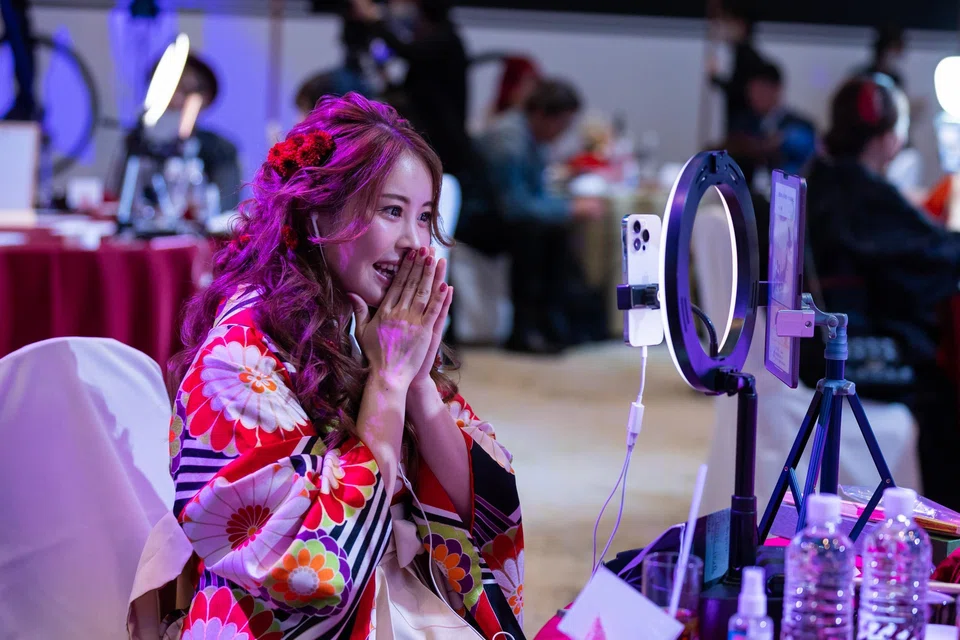
    • Live-streaming platform 17Live became Singapore’s first de-Spac transaction in December 2023, merging with VTAC to list on the SGX.
    • Live-streaming platform 17Live became Singapore’s first de-Spac transaction in December 2023, merging with VTAC to list on the SGX. PHOTO: 17LIVE

    [SINGAPORE] ​Imagine a promoter handing you a sealed cardboard box, and promising that he will venture out into the wild and find a spectacular, fast-growing tech firm to put inside it.

    You hand over a pile of cash with the hope that you might land the next regional unicorn – while praying that you do not get a struggling business with shrinking revenues.

    After two years of waiting, you might also simply get your money back, with interest but minus the administrative fees.

    ​This is the basic premise of a special purpose acquisition company (Spac). It is essentially a financial blind box.

    ​Now, Wall Street is tearing open the plastic wrapping all over again: Spacs, it appears, are making a comeback.

    A recent Reuters report highlighted that a flood of expected blockbuster initial public offerings is creating an opening for blank-cheque companies.

    With giants such as Anthropic and OpenAI gearing up for massive listings following SpaceX’s mega-IPO, smaller companies know they will be completely ignored in the traditional IPO market right now.

    Spacs are a way for these smaller players to sneak in through the side door and secure a public listing before the heavyweights soak up all the available capital.

    ​The numbers reflect this renewed frenzy.

    Data from PwC’s latest US Capital Markets Watch shows that Spac issuance in the first half of 2026 reached its highest level since 2021, with 118 Spac IPOs raising roughly US$20.9 billion.

    This is a massive jump from the 66 deals that raised US$11.8 billion during the same period in 2025.

    Former Facebook executive Chamath Palihapitiya – the so-called “Spac King” who became the public face of the Spac mania during the original boom-and-bust – has also been reported to be back in the blank-cheque game after throwing in the towel in 2022.

    Blind faith

    ​But we will do well to remember that, globally, the Spac boom of the Covid-19 pandemic era ended in disappointment.

    Arguably, the model is fundamentally flawed: It enriches the sponsors who set up the shell company, while leaving regular investors holding the bag when the acquired business fails to deliver on its lofty promises.

    Data from industry tracker Spac Analytics shows that out of 1,695 Spacs launched historically, nearly one in three failed to find a suitable target, and returned the remaining trust funds to frustrated investors.

    In Singapore, our own experiment too ended in tears.

    In late 2021, the Singapore Exchange (SGX) laid out the welcome mat for Spacs as we sought a slice of the tech action. Three entities listed in early 2022: Pegasus Asia, Novo Tellus Alpha Acquisition and Vertex Technology Acquisition Corp (VTAC).

    ​The clock ran out quickly.

    Pegasus and Novo Tellus threw in the towel, liquidated and returned the remaining funds – blaming unfavourable macroeconomic conditions and a lack of suitable acquisition targets in South-east Asia.

    VTAC managed to combine with live-streaming platform 17Live in December 2023, but the moment the new shares started trading, the price crashed.

    Since then, the platform has continued to battle shrinking revenues and falling user numbers.

    For the latest full year ended December 2025, 17Live narrowed its losses to US$0.9 million, from US$3.3 million the year before, even as revenue fell 16.8 per cent to US$158.8 million.

    ​The harsh reality is that the Singaporean market lacks the blind optimism required to sustain these vehicles.

    We are a cynical, pragmatic crowd. We like our local banks, property developers and real estate investment trusts. We demand physical assets, visible cash flows and reliable dividends hitting our accounts.

    Handing over cash for a mystery prize goes against the local financial DNA.

    Building bridges

    ​Thankfully, Singapore has moved on – and rightly so.

    We have stopped pretending we can manufacture a risk-hungry venture capital market out of thin air. Instead, the authorities are building realistic bridges.

    ​The upcoming Global Listing Board is a clear admission of where our strengths lie.

    Now, tech companies worth at least S$2 billion will be able to list on both SGX and Nasdaq simultaneously using a single set of paperwork.

    This connects regional growth companies to the deep, tech-obsessed liquidity pools in the US, while keeping a regulatory anchor in Singapore.

    ​It is a sensible pivot.

    Earlier this year, Singapore confirmed it would not outright ban toy blind boxes and trading card packs, though regulators will introduce rules to manage the obvious gambling risks.

    The irony is rather rich.

    We worry about teenagers getting addicted to buying sealed Labubu toys, yet, a few years ago, we allowed retail and institutional investors to play a similar game with millions of dollars on the local exchange.

    As Palihapitiya himself warned in a letter last year to retail investors: Stay away unless you can afford to lose your entire investment and you’re willing to embody an adage from US President Donald Trump that there can be “no crying in the casino”.

    Let Wall Street gamble on mystery boxes and blank cheques. We have already played the game, and we saw what was inside the box. We are perfectly content returning to our dividends – putting our money in what we can see.