

Special Economic Zones: One size doesn’t fit all
A proposed SEZ between Sarawak and Brunei has sparked discussions of cross-border collaboration, but it may be a long shot given the economic realities

SPECIAL economic zones (SEZs), especially those uniting two sovereign nations, are quickly becoming the talk of the town.
From buzzing tech ecosystems to manufacturing powerhouses, SEZs are now the go-to agenda to turbocharge economic growth, spawn top-tier jobs and lure foreign dollars.
Malaysia’s southern state of Johor and Singapore – two regional powerhouses with a shared history and distinct yet complementary strengths – recently launched an SEZ to harness the power of their proximity, long present but never fully nor formally tapped (till now, that is) to galvanise cross-border economic activity.
A longstanding, shining example of an SEZ that has worked is the Shenzhen-Hong Kong collaboration that was launched 40 years ago. It has resulted in Shenzhen’s transformation from a quiet town to a tech hub, with Hong Kong gaining from closer ties to China’s market and economic diversification.
Countries such as Indonesia, Vietnam and India have also carved out their own solo-act SEZs, including Batam, Hoa Lac and Kochi, each strategically tailored to attract foreign investments and invigorate development.
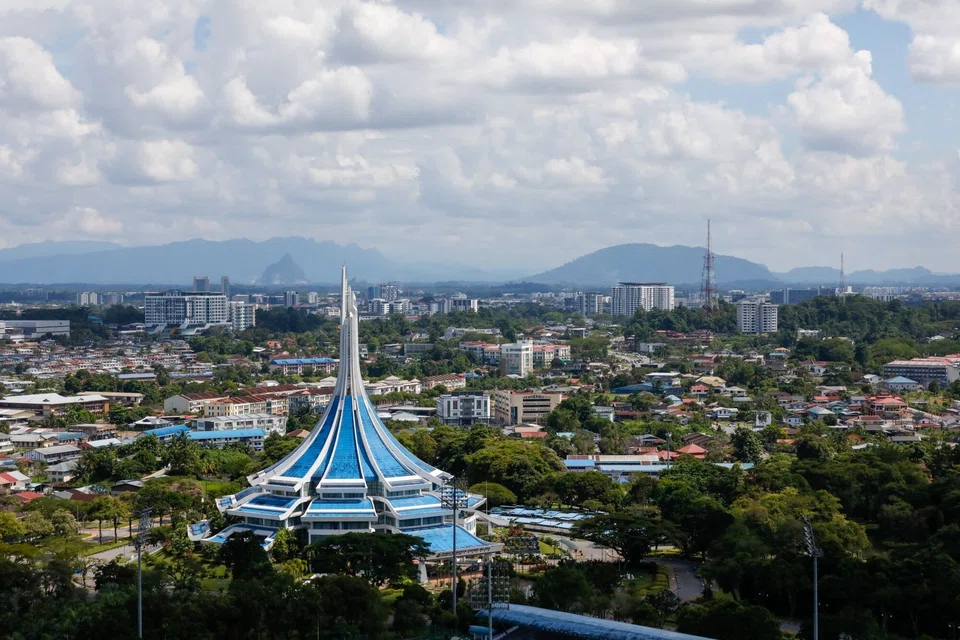
Lately, in the lesser-explored corners of South-east Asia, talk of a potential SEZ between Malaysia’s resource-blessed heartland Sarawak and Brunei, a small and low-profile sultanate – both share a border on the island of Borneo – is being bandied about.
Last month, a Malaysian delegation led by a Member of Parliament from Miri proposed a Brunei-Sarawak SEZ, inspired by the Johor-Singapore model. Focused on the “Double KB” area, it spans Kuala Baram in Miri – Sarawak’s key coastal city – and Kuala Belait in Brunei, both offering underutilised land and strategic cross-border access.
At first glance, Miri – with its 350,000 residents and famed for its jaw-dropping caves and booming timber, oil palm and tourism industries – pairs nicely with Brunei’s 440,000-strong population, forming a cross-border region brimming with potential.
Also, tens of thousands of Sarawakians, particularly from the Miri area, commute to Brunei for work, attracted by the higher wages and the advantageous exchange rate, as the Brunei dollar is pegged to the Singapore currency.
Yet, it’s hard to imagine the relatively small populations delivering the big economic punch needed for impact.
While both are resource-rich, Brunei and Sarawak have distinct economic realities.
Brunei’s economy leans heavily on oil and gas, boasting a higher GDP per capita, but it’s hitting roadblocks when it comes to diversifying.
Sarawak, meanwhile, is sitting on a treasure trove of natural resources – timber, oil and hydropower – but has found it tough to branch out beyond these sectors and build a solid tech or services base.
Also, despite its wealth of resources, Sarawak’s economic growth lags that of other Malaysian states, due primarily to its reliance on federal funding, slow infrastructure development, and fiscal dependency.
In contrast, the Johor-Singapore partnership is based on a dual power play – Singapore’s business acumen and Johor’s cost-effective manufacturing – making the motivation for their SEZ clear and compelling.
For the Sarawak-Brunei SEZ to succeed, both sides must address the region’s infrastructure gaps, move past their reliance on natural resources, and cultivate a competitive, innovation-driven business environment. Without these fundamental changes, the SEZ risks becoming little more than a pipe dream – a luxury mall in the middle of a desert.
TRENDING NOW

Once staunchly pro-China, Malaysian Chinese businesses are now distancing themselves from Beijing

AI can become superior to humans in certain aspects: TikTok’s Chew Shou Zi

DBS, OCBC, UOB face rate hike reality check

‘The market has spoken’: DBS CEO Tan Su Shan says market is repricing AI financing risks

