

A speech to watch: How will Prime Minister Lawrence Wong approach his first National Day Rally?
His speech on Sunday takes on heightened political significance as a pre-general election rally, say observers

ALL eyes will be on newly minted Prime Minister Lawrence Wong as he delivers his first National Day Rally (NDR) speech on Sunday (Aug 18) – from the topics he will broach, down to his fashion choices for the evening.
The annual televised speech usually includes both big-picture messages and key policy moves.
For instance, former PM Goh Chok Tong introduced the Baby Bonus Scheme in his 2000 NDR. Wong’s predecessor Lee Hsien Loong cut the civil service’s work week from five-and-a-half to five days in 2004, and – in his penultimate NDR in 2022 – announced the repeal of a colonial-era law banning sex between men.
Eugene Tan, associate professor of law at the Singapore Management University (SMU), says: “Given that this is a generational change of prime ministers, the question is whether we will see a generational change in how the NDR is presented.”
Establishing himself
National University of Singapore (NUS) associate professor of political science Bilveer Singh notes that Goh and Lee had long runways before taking the helm, but Wong did not – which may cause some to see Wong as “beholden” to the third-generation leadership in the Cabinet.
Wong’s challenge, says NUS associate professor of political science Chong Ja Ian, is to show why people should support him. “That means establishing himself as being distinct from his predecessor, to show why he is the leader to take Singapore into the future, and not just a continuation of the past.
“He needs to lay out where he wishes to (take) Singapore and why Singaporeans should support his plan. Singapore at this juncture needs a prime minister, a leader, not an analyst or an influencer in the top office.”
Sunday’s speech is significant not just as Wong’s first NDR, but due to its timing before the next general election.
Wong’s speech might contain more “political overtones”, as it is likely to be his only NDR before Parliament is dissolved, says Prof Tan. The next general election is due by November 2025 but expected to come sooner.
“Besides the swearing-in, this will be the first and most significant platform Wong will have (before the election). The need to leave a strong first impression adds to the whole tenor of this year’s NDR.”
Navigating geopolitical tensions
The timing of Wong’s first NDR is significant in another sense: it comes amid geopolitical and economic uncertainty, points out Woo Jun Jie, senior lecturer at the Lee Kuan Yew School of Public Policy.
Lee’s NDR speeches often opened with an overview of external affairs before pivoting to domestic ones. Wong will also have to address geopolitical tensions and Singapore’s response, note observers.
“When you consider that Singapore is taking on a higher profile internationally, it’ll be quite unusual for him not to deal with some of the geopolitical issues,” says Prof Tan. This could include the escalating Israeli-Hamas conflict, tensions between China and Taiwan, or territorial disputes in the South China Sea.
He adds: “All this is not just to give Singapore a lesson in international relations, but to drive home the point that it is critical for Singaporeans to understand these issues, and recognise that Singapore will always have to act in its best national interests.”
But Dr Chong is unsure whether Wong will cover these subjects, saying: “Wong has been so far more diagnostic about foreign and security issues and has, at any rate, not focused on them.”
Wong could use internal and external crises as a “rallying cry” to unify Singaporeans, suggests Dr Singh.
Still, the public will ultimately be more concerned with domestic policies than external relations, he adds.
Continuity over change
Dr Singh does not expect dramatic policy shifts in the short run. As the election nears and tough economic conditions persist, Wong will have to “signal continuity, rather than change”.
“He needs to reassure that under him, the government will lead and deliver the public goods which the electorate desires,” he says. This is especially as Gen Z and millennials are becoming “increasingly critical of policymakers and rising economic difficulties and disparities”.
Independent political analyst Felix Tan agrees that Wong is not in a position “where he wants to ruffle feathers or change things drastically”.
While he may make changes in time to come, his current goal is to “stabilise what he and his team can do for Singaporeans”.
Bread-and-butter issues
As for policy announcements, observers expect more measures linked to the Forward Singapore exercise, after the first such wave in Budget 2024.
Tackling inequality and mobility has been Wong’s “pet project”, notes Dr Felix Tan, adding that Singaporeans will want to hear concrete plans.
Similarly, SMU’s Prof Tan says Wong must “put the flesh on these big ideas” with a clear road map.
Beyond the big-picture ideal of refreshing the Republic’s social compact, Wong will likely address cost-of-living worries, note observers.
It is imperative for him to address “top of mind” election issues such as job security, wage stagnation, inflation and property prices, points out Prof Tan. He expects Wong to recap what has been done to alleviate these concerns, and give a preview of goodies to come in Budget 2025.
One vulnerable segment in society is gig workers, says Yeo Wan Ling, National Trades Union Congress (NTUC) assistant secretary-general and Member of Parliament for Pasir Ris-Punggol Group Representation Constituency.
She hopes Wong’s NDR will provide more support and protection for them. This is even as a new Bill was tabled in Parliament earlier in August, proposing Central Provident Fund contributions, work injury insurance and legal representation for such workers.
In his first National Day message on Aug 8, Wong said that the government will redouble efforts to keep the cost of living stable.
He also said that NDR would bring details of enhanced support for families and help for Singaporeans to rebound from employment setbacks.
The latter clearly refers to re-employment support for retrenched workers, which has been mentioned by ministers since late 2022 and will be unveiled by year-end, though details remain scant.
Prof Tan expects Wong to give a sense of the quantum and duration of support, as well as eligibility criteria for the scheme.
NTUC assistant secretary-general Patrick Tay expects the scheme to be “accessible and flexible, with parameters that ensure broad coverage across worker groups, prioritising those who are involuntarily unemployed”.
The duration of support should be “ample enough” to help workers navigate periods of unemployment, giving sufficient time to secure jobs aligned with their goals, he adds. Beyond financial support, Tay hopes the scheme will provide upskilling resources and guidance.
Family-friendly support
As Wong’s National Day message suggested, family-friendly measures are likely to feature – with Singapore’s total fertility rate at a record low.
Yeo notes that caregiving was the top concern among workers in NTUC’s #EveryWorkerMatters Conversation engagement exercise. She thinks Wong could announce more support for workers with caregiving needs, though providing more parental or childcare leave is “not sustainable”.
Rather, Singapore must “relook the way we work”, she adds. The government could do more to assist small and medium-sized enterprises looking to implement flexible work arrangements.
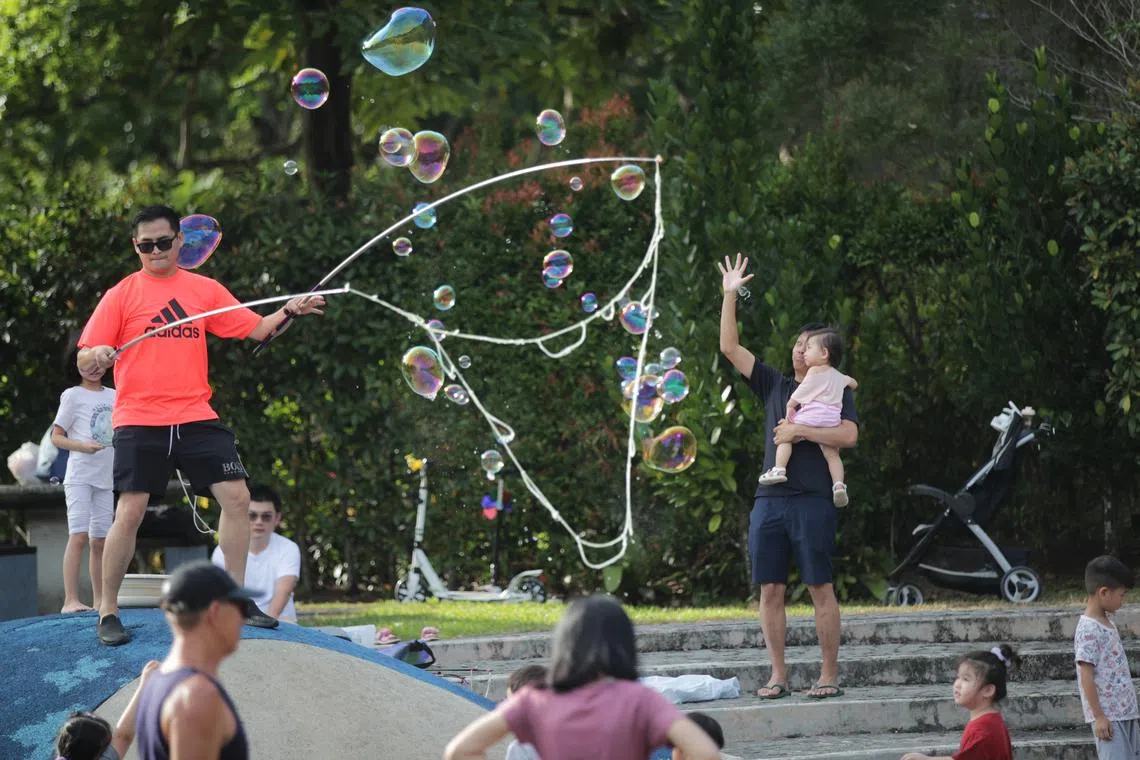
Family-friendly initiatives could help Wong win over younger Singaporeans, says Prof Tan. These could include more accessible and affordable childcare, particularly in new estates.
Young Singaporeans may face an “unspoken fear” about the future, from climate change to economic viability, he adds. “If young families are confident about the future and feel Singapore is indeed a good place to raise a child, never mind that it’s an expensive place... we might see better birth rates.”
Dr Mustafa Izzuddin, senior international affairs analyst at consultancy firm Solaris Strategies Singapore, expects Wong’s speech to balance between the needs of the older generation and engaging the young.
“His words will give hope, rather than despair, to young people – that they should have a stake in the future of their country and be part of this policymaking process, moving forward.”
Setting the tone
Most observers expect Wong to play it safe in his first NDR and not address controversial topics. But Prof Tan says the prime minister could “take the bull by its horns” and address the thorny subject of immigration.
“It is almost certain that immigration will be brought up during the election, particularly by the opposition. The question is whether he wants to prick the balloon now, rather than wait for it to be floated during the campaign trail.”
As for Wong’s tone, observers note that he has been more light-hearted than his predecessors.
Before becoming PM, Wong had developed his own style of connecting with the ground through humorous TikTok videos and social media posts. He will likely display that he is tech-savvy by filming content to be broadcast during his NDR, say observers.
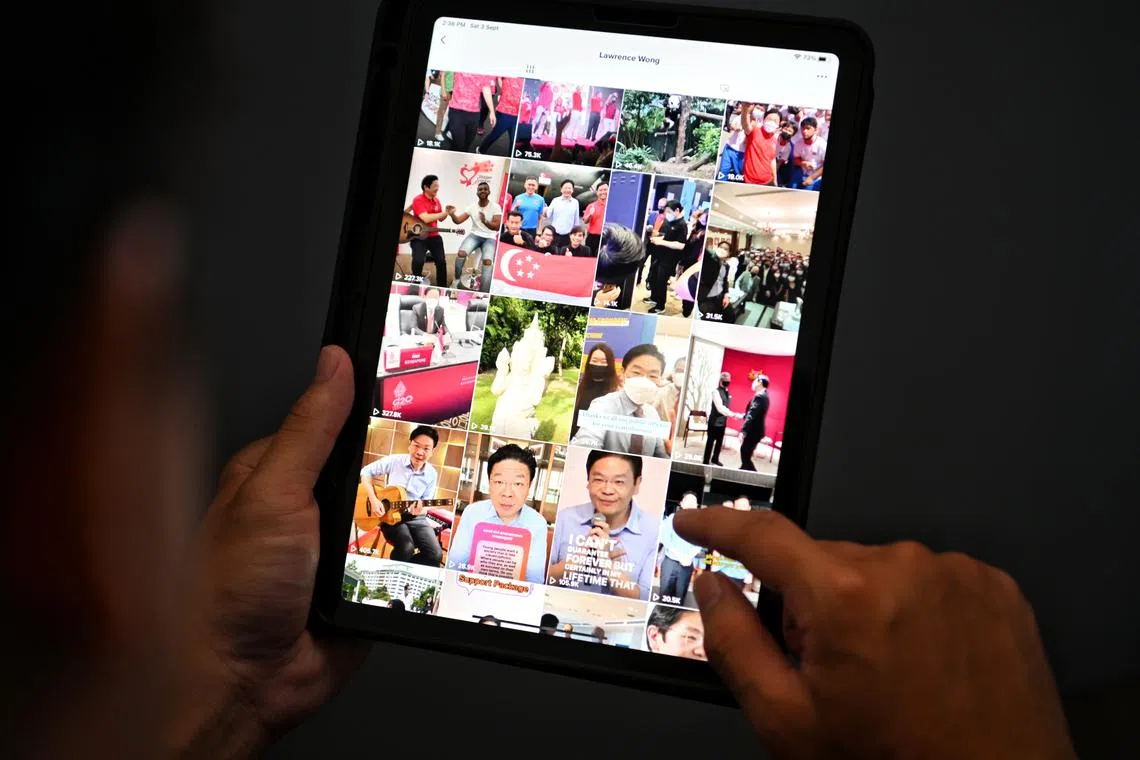
Former PM Lee had also used multimedia in his NDR speeches, from photo-filled slideshows to videos and 3D models of future infrastructure.
Wong could go further by showcasing artificial intelligence-generated content, to emphasise the pervasiveness of that technology, say Prof Tan and Dr Mustafa.
Says Prof Tan: “I do think he will want to try new things, and we can expect to be surprised.”
But Dr Chong notes that he will need to be “substantive” – particularly about geopolitical uncertainties – to avoid appearing like a lightweight.
Agreeing, Dr Singh sees a need for Wong to demonstrate “a firmness and iron” amid global challenges. “At a time of serious all-round crises and uncertainties, Singaporeans are looking for a Moses to cross the Red Sea, and not a Jerry Lewis to laugh their way to trouble.”
Wong will speak in three of the four official languages: English, Malay and Mandarin. Observers add that this is a non-negotiable – despite his comparative lack of fluency in the latter two languages – with all former PMs having done so. The late former PM Lee Kuan Yew also spoke in Hokkien.
Says Prof Tan: “Lee Hsien Loong is a hard act to follow because he is effectively trilingual. But Wong is still learning, and all he needs to do is show he is trying his level best.”
While continuing that practice, however, Wong is unlikely to adopt an accompanying one: the iconic “magic” cup that Lee first used when addressing Singapore on the Covid-19 situation.
After taking a sip from a blue porcelain cup, Lee would switch to another language. This spawned countless Internet memes, and the magic cup – or similar ones – reappeared in subsequent NDR speeches from 2021.
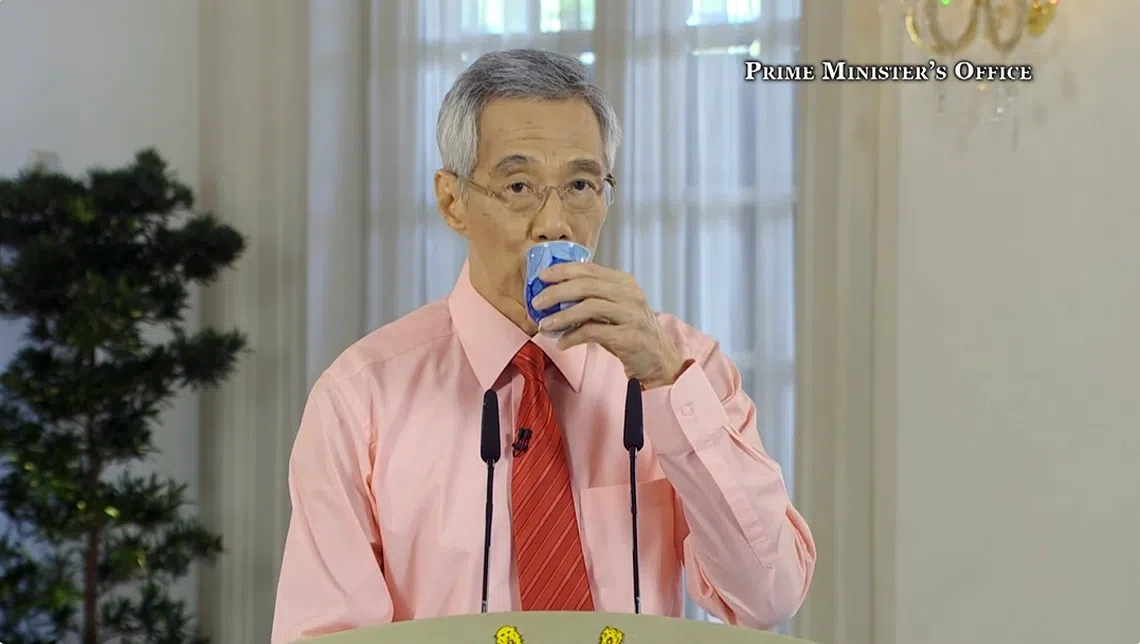
On this front, Wong is unlikely to imitate Lee, say observers.
“I don’t think he will want such things to hijack the importance of his speech or what he intends to convey,” notes Dr Mustafa. “So he will try to reduce any kind of disruptions and tone down on any gimmicks.”
Similarly, Wong will likely avoid his predecessor’s trademark pink shirts, in order to differentiate himself, say observers. They expect him to opt for a smart casual fit rather than a formal suit.
Dr Felix Tan expects light colours such as blue or white, while Prof Tan thinks he might even don a batik shirt or one with orchid motifs for a more relaxed look.
Ultimately, the NDR will be a chance for Wong to distinguish himself from his predecessors.
Says Dr Mustafa: “I think Wong is going to be his own man, where he will take the best bits of what Lee has done, and put his own imprint on it.”
A look back at Goh and Lee’s first NDRs
Goh Chok Tong: Aug 11, 1991
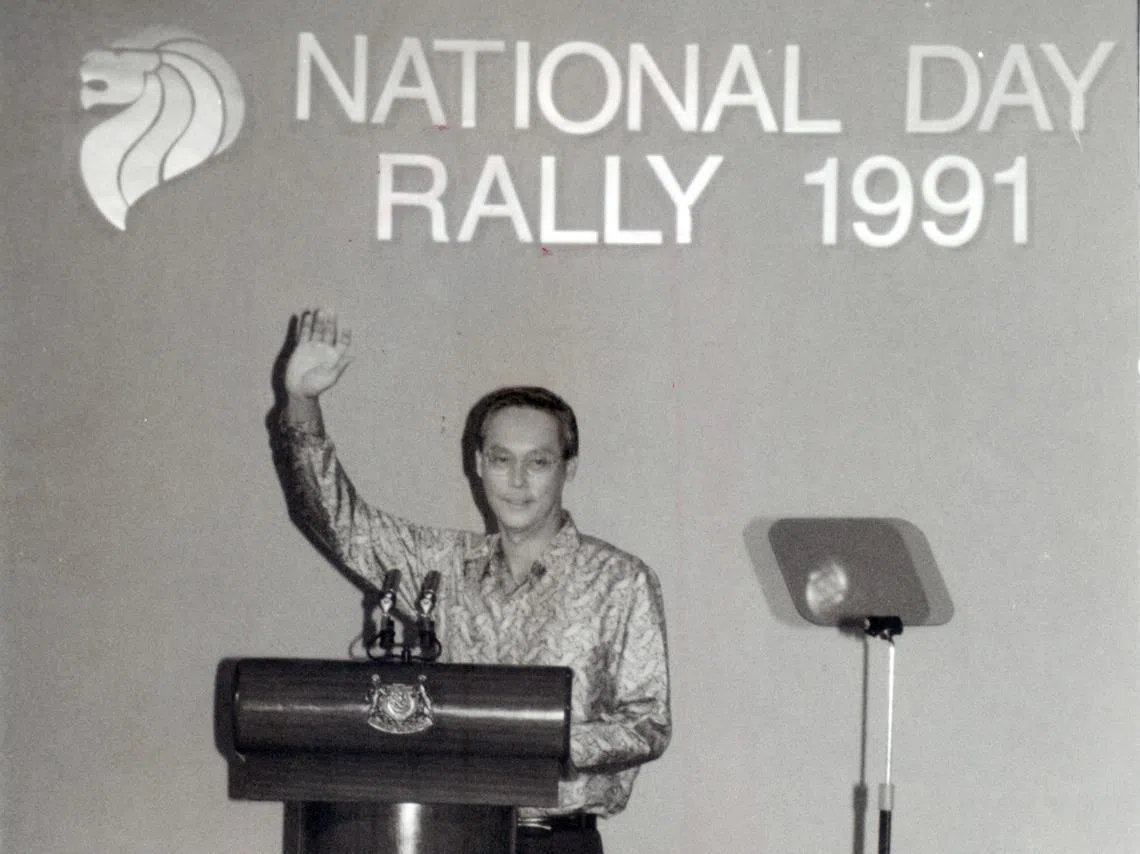
In August 1991, the Cold War was coming to an end – while Singapore’s economic growth seemed set to slow for the third straight year.
Having taken over the premiership from Singapore’s founding father Lee Kuan Yew barely nine months ago, Goh had big shoes to fill. But he asserted in his first NDR that he would “walk (his) own way”, pledging a new leadership style that would be more open and consultative.
For the country’s continued progress, Goh emphasised the need to build a strong sense of community across races; to preserve the system of meritocracy; and for every Singaporean to maximise their potential.
Major policy announcements included the S$5 billion Medifund to help the lower-income access healthcare, and the new Edusave scheme. The government would also relook public housing policies to help singles to rent or own flats, and let tenants invest in private homes.
But his biggest announcement was that he would call for a general election soon, to obtain a clear mandate from Singaporeans. Three days after the NDR, Goh called for a snap election on Aug 31, two years ahead of the deadline.
Lee Hsien Loong: Aug 22, 2004
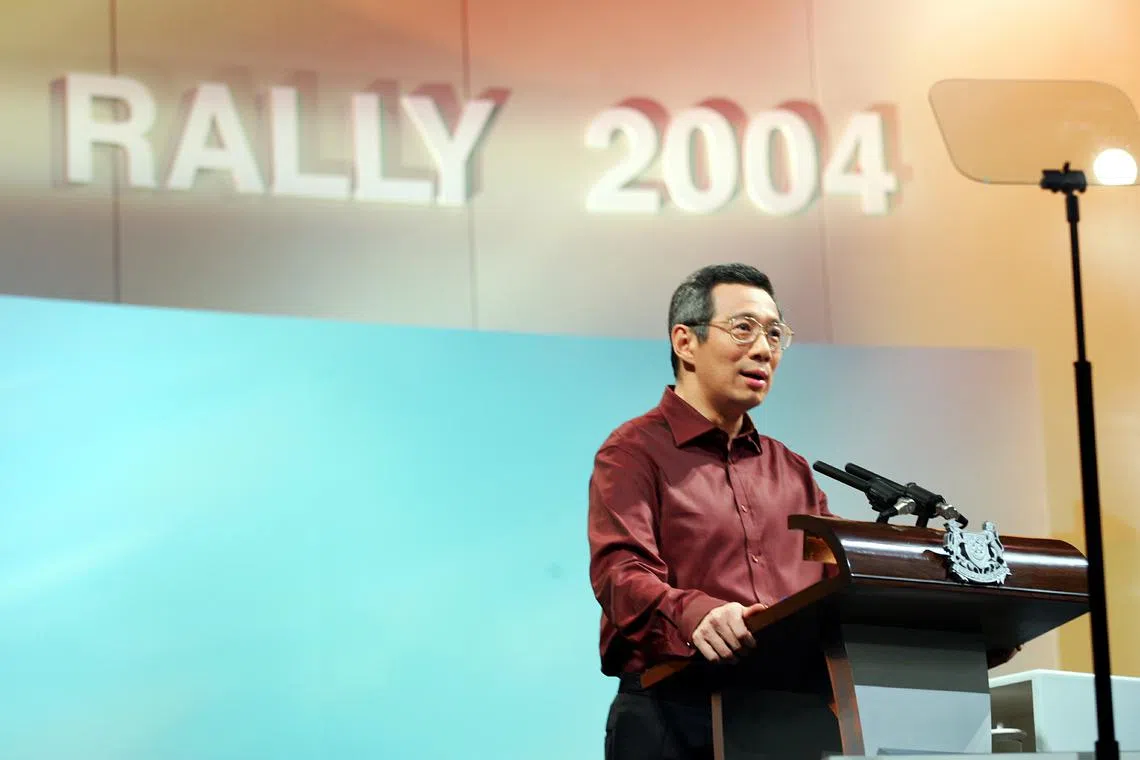
In his first NDR, Lee surprised observers by broaching controversial topics such as building a casino to boost tourism. He said the government would call for proposals and consider all views before deciding whether to proceed.
Singapore had rejected the idea of a casino for years, due to gambling’s social ills, but Lee’s argument was that the situation had changed. Singaporeans were already hopping on “more cruises to nowhere” to gamble, he said, and the Republic should not lose out on tourist spending.
Other policy announcements were the move to a five-day work week for civil servants; the equalising of medical benefits for men and women; and enhancements to the Baby Bonus scheme.
Lee noted that Singapore faced a “unique challenge”, with the nation at a crossroads in a post-Cold War world. To help the post-independence generation take Singapore forward, a “fresh and bold” approach to governance was needed, he said.






