

Speed and savings: What’s driving Singaporeans to keep luxury cars in Malaysia
Businesses to aid this are emerging, with buyers drawn by lower costs, rare models and the simple joy of being behind the wheel


[SINGAPORE] Former racing driver Ringo Chong helps Singaporeans take their cars for a spin on a former Formula 1 racetrack – but without F1-sized bills.
His company, Ringo Chong Racing & Promotions, provides storage and maintenance services for track-only cars at Sepang International Circuit near Kuala Lumpur.
He and other observers have seen a trend of more Singaporeans buying and keeping cars in Malaysia, both on and off the track.
“There has always been a small number of track enthusiasts doing this,” says Chong. “But now there are more (Singaporeans) owning not just track cars, but also road cars in Malaysia.”
As a track-only car is not registered for use on regular roads, keeping one costs far less than owning a Singapore-registered car for occasional track use.
Over the last decade, rising Certificate of Entitlement (COE) premiums and taxes have driven up the cost of owning luxury and high-performance cars in Singapore.
The same cars might cost just a third as much in Malaysia, due to the favourable exchange rate and relatively lower taxes.
Those savings are prompting more Singaporeans to buy in Malaysia – whether to own a luxury car for less, keep one for personal or investment value, or enjoy the thrill of driving.
Growing audience
There are no publicly available statistics on Singaporeans who own cars in Malaysia. The Malaysian Road Transport Department did not respond to queries from The Business Times.
But industry observers say the number has been growing, with new companies emerging to meet this demand.
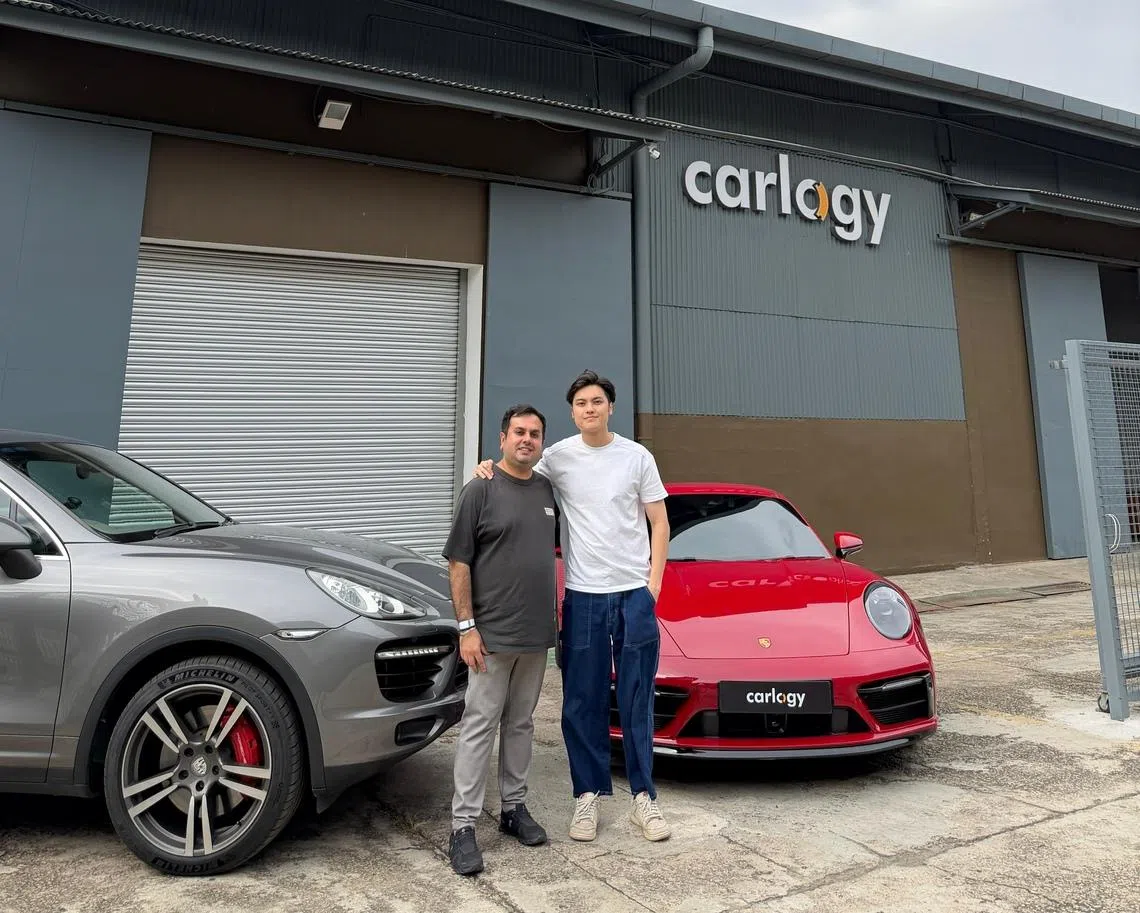
In the last year, at least two businesses have been set up to help Singapore customers buy and register cars in Malaysia: Carlogy and Consign Cars.
“What we realised is that cars are getting more expensive (in Singapore) and more enthusiasts want to own a car in Malaysia,” says Heeraj Sharma, one of Carlogy’s two Singaporean founders. “The segment will grow, and we are getting more inquiries each month.”
He and Regis Tia set up the company in April 2025, branching out from their existing businesses in car detailing and rentals.
Carlogy stores around 30 cars for Singaporean owners in JB, including mainstream sports or mid-range luxury cars, sport utility vehicles and off-roaders. The company also offers maintenance services.
Consign Cars, meanwhile, was set up in November 2024 by Malaysia-based car consignment platform Halls Motor.
The move aimed to address a growing segment and was a logical next step for Halls Motors, says Consign Cars’ Singapore business development manager Yong Soh.
“We now have a few inquiries a week and have sold on average one car a month since starting.”
Wheels and a way
Industry players say the high cost of cars in Singapore is the main factor driving purchases in Malaysia.
Carlogy’s Sharma says: “Many of our customers are those who can’t afford the car in Singapore, or they simply don’t want to pay such huge sums.”
One factor is Singapore’s Additional Registration Fee (ARF). This tiered tax rises with a car’s open market value (OMV), which is the cost when it lands in Singapore before taxes.
ARF is taxed in tiers of S$20,000. Cars in the lowest tier of S$20,000 or less – which includes most mainstream cars – are taxed at 100 per cent of their OMV, a rate that has not changed since 2013.
At every higher tier, however, rates have risen. ARF rates have gone up three times since 2013, most recently in 2022 – when the highest rate was raised – and 2023, when the number of tiers was also increased.
“Before the tax increases, the more luxurious or high-performance cars were expensive, but it was not impossible to own one,” says Chong. “Now, it’s crazy for you to pay a million-plus Singapore dollars, drive the car to Malaysia and visit the racetrack.”
Chong notes that a BMW M3 – a high-performance model popular with enthusiasts – now costs nearly double what it used to a decade ago.
On used-car portals in Singapore, the least expensive version of the BMW 3 Series luxury sedan, the 318i, was S$298,888 with COE as at February. In February 2021, the same model cost S$207,888 with COE.
Today, the least expensive equivalent in Malaysia, a BMW 320i, costs RM267,800 (S$87,175).
The BMW M3 high-performance sedan costs S$615,888 with COE. In Malaysia, it costs around RM1 million.
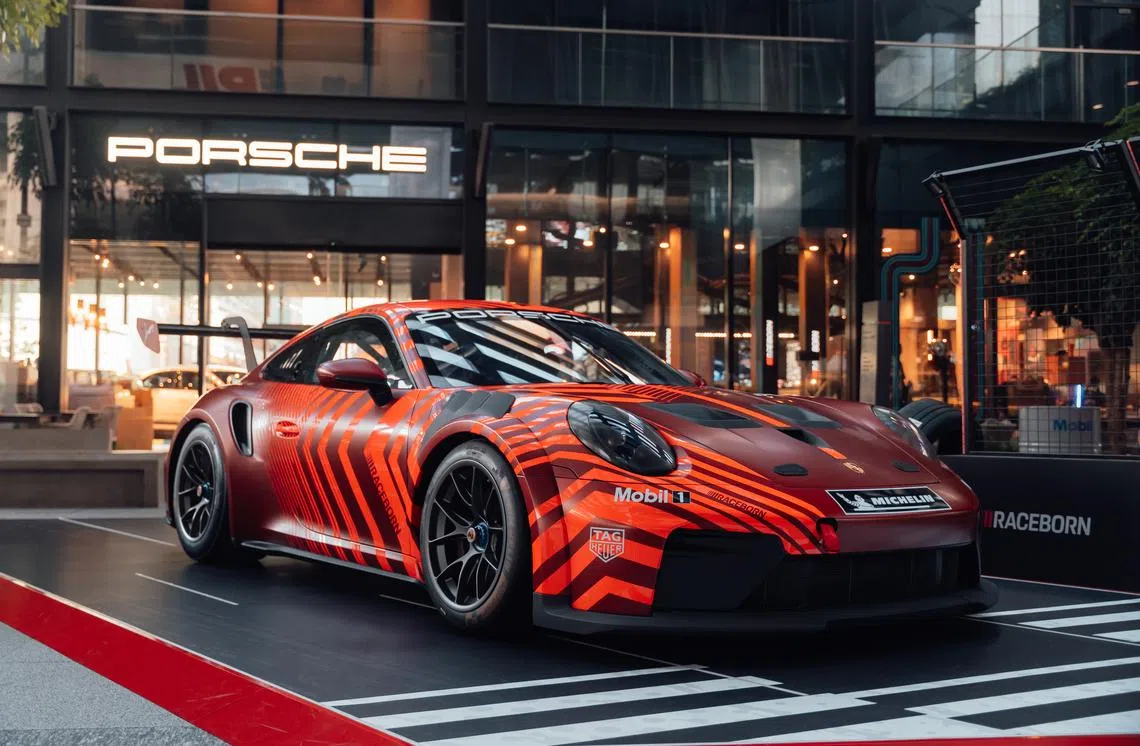
A Porsche 911 GT3 RS, a track-focused coupe, costs around S$1.2 million with a COE, compared to RM2.6 million.
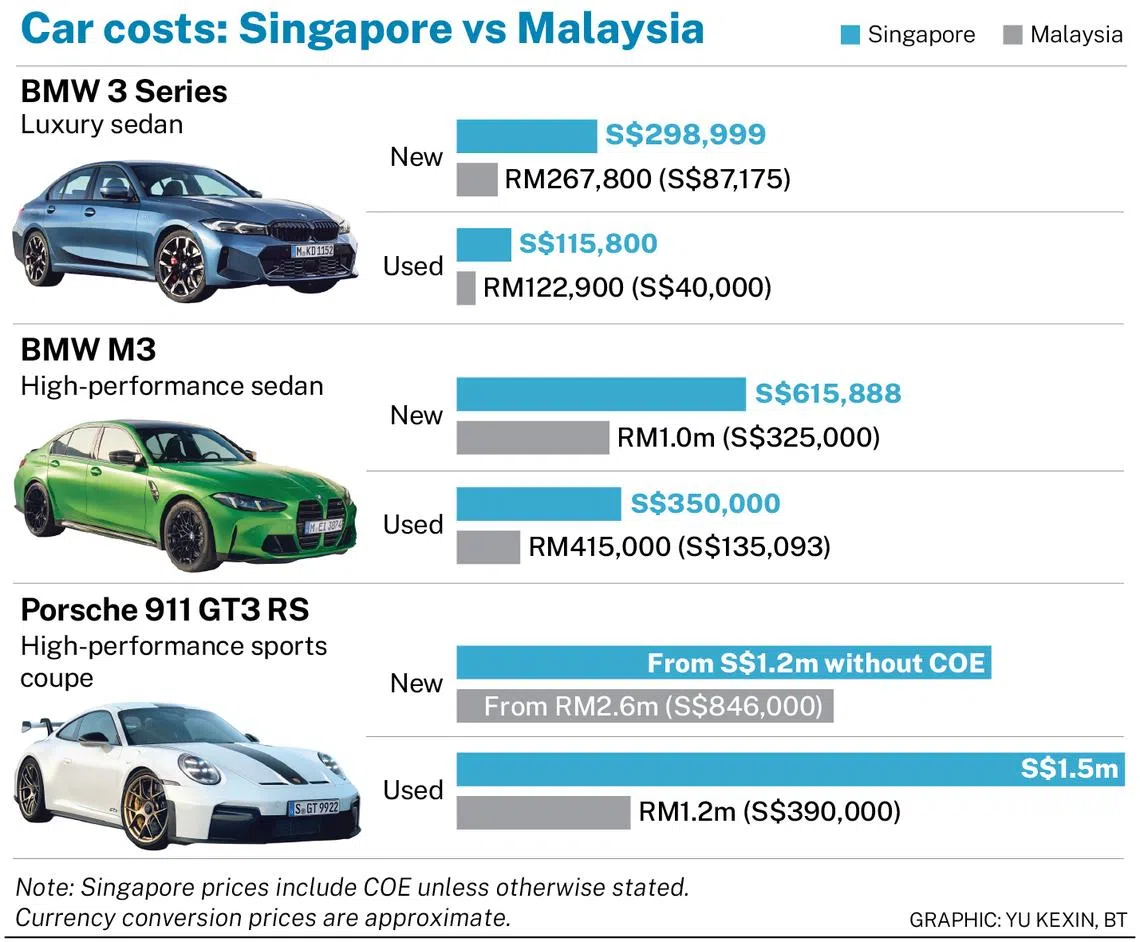
Illustrating the vast cost difference, Chong says: “If you drive (the million-plus dollar car) from Singapore, you would probably lose S$200,000 to S$300,000 in depreciation after the first two years. You could easily fund the same car in Malaysia with that.”
A recent policy move in Singapore could boost the trend of Malaysian ownership. The Preferential ARF rebate for early deregistration of cars has been slashed by 45 percentage points, which may make luxury cars more expensive to own.
“I would definitely think that (the rebate reduction) will make more people consider buying cars in Malaysia. It costs you more to own the same car over the 10-year COE lifespan,” says Sharma.
“Hence, those looking to buy their weekend or dream cars, or even car collectors, might look to Malaysia for their purchases instead.”
Baby I can drive my car
Costs aside, car ownership in Malaysia allows for activities and sports not found in Singapore, such as track and off-road driving.
Says Sharma: “Some (owners) join car clubs in Malaysia. They and their families visit on weekends to drive around the B-roads, visit durian plantations and so forth. It’s a lifestyle choice for them.”
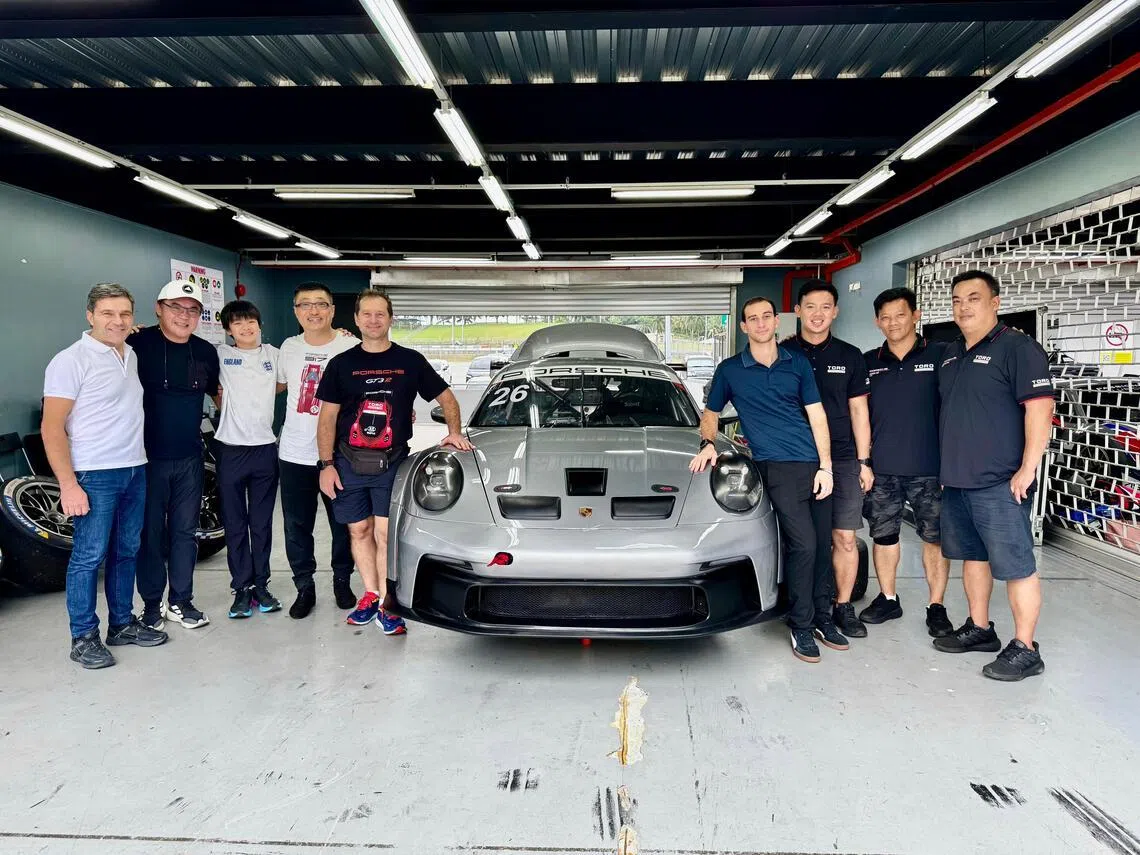
Meanwhile, Chong notes a clear rise in race-track driving: “In the past few years after Covid, there has been a notable increase in Singaporeans owning track cars at Sepang. I would say there are at least 20 to 30 such cars now compared to around 10 or fewer, previously.”
Dedicated track cars are not only cheaper to own, but also offer higher performance. They are lighter, more powerful and come with track-focused safety equipment such as harnesses.
An example is the Porsche 911 GT3 Cup, which costs around 230,000 euros (S$340,000) new. It provides higher acceleration and performance than the Porsche 911 GT3 RS, which is almost four times as expensive.
The 911 GT3 Cup can only be purchased new with participation in the Porsche Carrera Cup Asia racing series, which costs around 500,000 euros including the car – although used examples are available to all buyers.
Most track-car owners enjoy high-performance driving and wish to hone their skills in a controlled environment, says Chong.
Interest has grown, he adds, with an average track day attracting around 60 to 80 participants, up from 20 to 30 in the early 2010s.
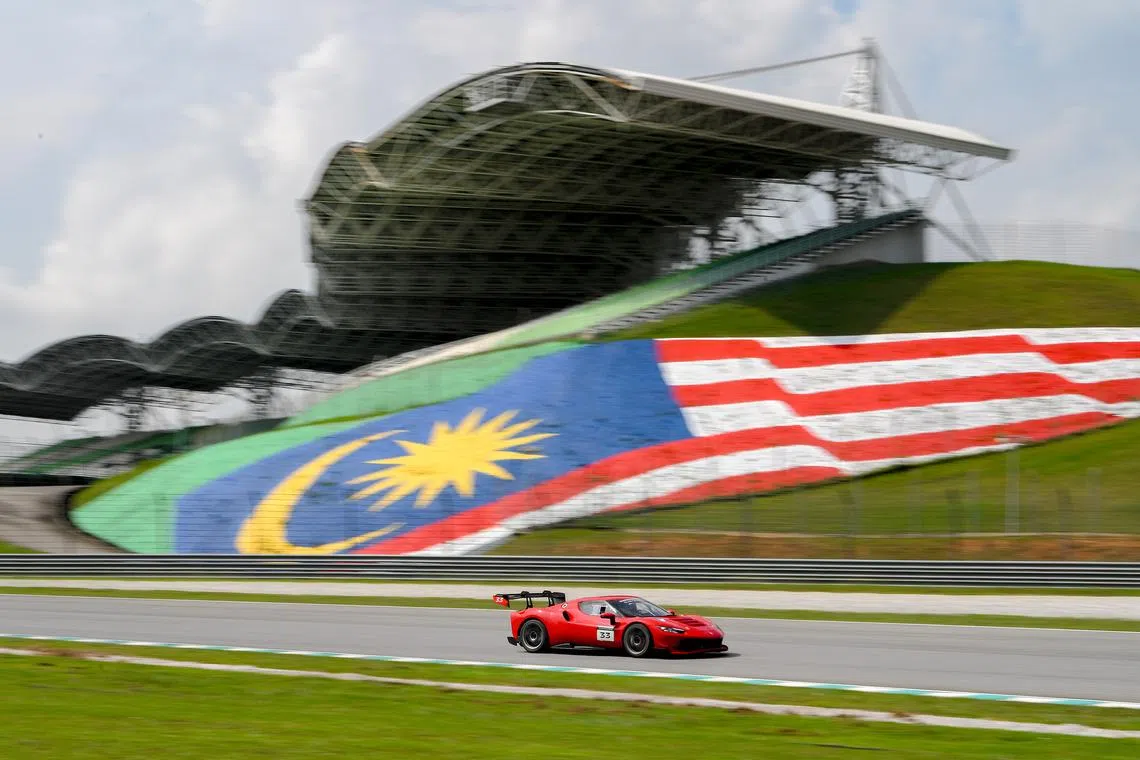
Ital Auto, the authorised Ferrari importer and agent for Singapore and Malaysia, manages around 10 racing cars for Singapore-based owners at Sepang.
These are mostly Ferrari 488 Challenge and 296 Challenge racing cars, with the owners participating in the Passione Ferrari Club Challenge South-east Asia, a regional racing series for Ferrari owners.
Participation in one season costs around 80,000 euros, while a car costs around S$450,000.
Ital Auto general manager Jeremy Gaw points out that Ferrari has long offered such participation under its customer racing effort Corse Clienti.
“For Ital Auto, we’ve invested heavily to support the programme and seen an overall increase in the number of customers taking part in such activities in the past few years.”
Boldly go
There are also owners who go off the beaten path, and those who restore cars to keep.
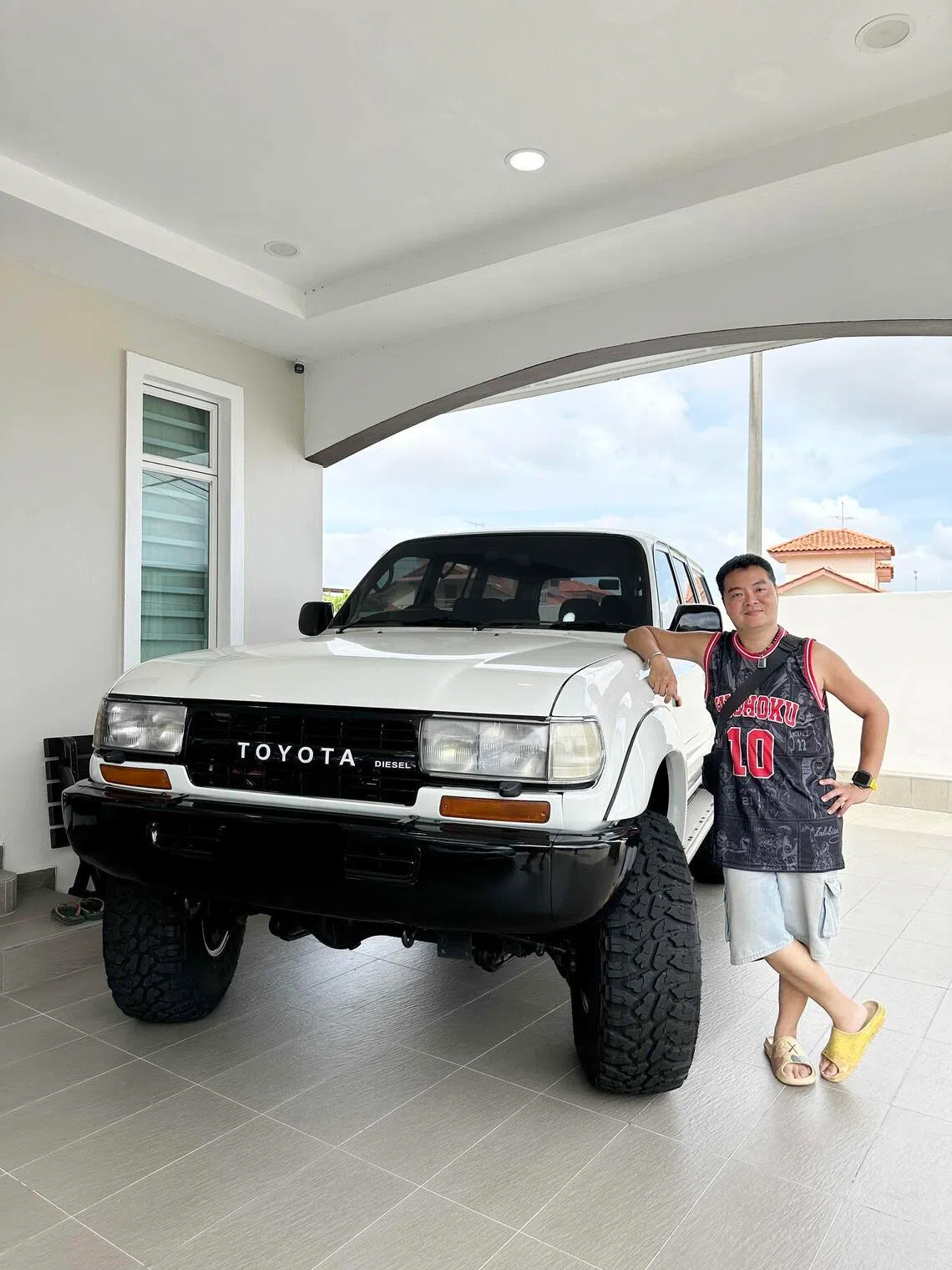
Oliver Kang is both. Last December, the outdoorsy operations manager bought a 1996 Toyota LandCruiser 80 Series for around RM80,000.
Together with other off-road enthusiasts, he has driven to nature areas such as Kota Tinggi and Endau-Rompin National Park in JB, sometimes camping for a few nights.
“Usually we will travel in a small group and explore national parks or other wilderness areas legally,” he says. “We can find beautiful spots in the mountains, trek to waterfalls and so on. In Singapore, there isn’t even any place to drive off-road legally.”
Kang is also among a group of collectors who buy and restore cars that are hard to find in Singapore. These include Japanese domestic market models with a cult following, such as the Nissan Skyline GT-R R32 and Toyota AE 86.
More expensive collectors’ cars may become popular in the future, says Consign Cars’ Koh, citing the limited-edition Porsche 911 GT2 RS Weissach sports car that is expected to appreciate in value.
“It’s more reachable in Malaysia; the equivalent price is about half compared to what it is in Singapore,” he adds. The company lists it at RM1.95 million. In Singapore, the same car would cost around S$1.2 million.
The fact that these cars do not need a COE is a key draw for collectors.
Lester Yeong, an automotive workshop and service manager who also owns a 4x4 in Malaysia, says: “In Singapore, it is next to impossible for the average automotive enthusiast to own and keep cars long term. How many have the means to afford a S$100,000 COE every 10 years?”
Getting into gear
Singaporeans can register cars in Malaysia themselves, says Yeong, who has helped friends do so on a non-commercial basis. But dedicated companies can help with the process and provide reliable maintenance.
The process is similar to buying a used car in Singapore. The vehicle must pass an inspection before the purchase, and the buyer must have insurance coverage. Unlike in Singapore, a buyer in Malaysia must renew the vehicle’s road tax in full.
The transfer of ownership may be done online or in person. The Malaysian Road Transport Department has a full guide on its website.
Foreign car owners who reside abroad must also provide a copy of their passport certified by a Malaysian embassy and a declaration of consent to the sale, signed before and certified by a Malaysian embassy officer in the country of residence.
Yeong says that financing and storage are the main barriers to ownership. “For foreigners, financing is difficult to obtain, so prospective owners would need to pay cash, and a registered address is required, in addition to a place to store the vehicle.”
This is where companies come in. Both Carlogy and Consign Cars source cars for buyers – including specific or rare models – and help with registration and other requirements.
Consign Cars does not have its own storage facilities, but can recommend such services in Kuala Lumpur and JB.
Carlogy offers car storage in JB ranging from RM450 to RM1,000 a month, with higher tiers including air-conditioning or services such as car washing and battery charging.
Yeong expects Malaysian car ownership to remain niche. “Singaporeans are conservative when it comes to big-ticket items, and there are some difficulties to navigate,” he says. “There’s also a thriving scene in Malaysia for rare or collectors’ vehicles too, so (an owner) would be competing with other collectors with deep pockets, too.”
He advises interested Singaporeans to take their time to shop around and view potential buys in person, noting that it may take much time and money to restore some vehicles.
Still, foreign ownership can be rewarding, especially in the long term, he says. “There are some very decent vehicles to be found in Malaysia. Plus, if you buy it there it’s yours to keep forever. No COE needed.”
TRENDING NOW

Government to bring forward raising of retirement age, give employers more financial support to create flexi-load jobs

If Europe goes to war, the fallout will be felt in East Asia
Former minister Maliki Osman, Revolut chairman join Asia Gulf Holdings advisory board

Small nuclear reactors could boost the Asean Power Grid: GE Vernova executive

