

Stablecoins and the global crypto regulatory arms race: What’s at stake for Singapore?
The race to become a leading hub of digital assets will increasingly involve cities strengthening their regulatory frameworks to favour stability over fast profits
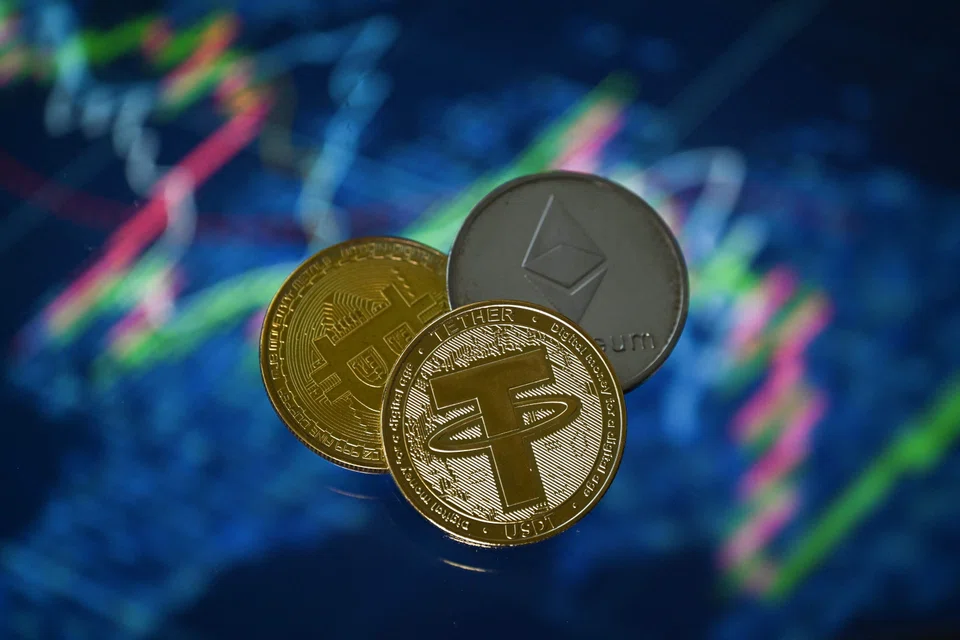
STABLECOINS are moving into the financial mainstream, as signalled by the growing attention from regulators across the world.
On May 21, Hong Kong’s Legislative Council passed a Stablecoins Bill, which aims to establish a licensing and regulatory regime for Fiat-Referenced Stablecoins (FRS). A month later, the US Senate passed the Genius Act, a Bill that creates a regulatory framework for stablecoins.
Yet, governments are not the only ones interested in stablecoins, which are cryptocurrency tokens that have their values pegged to the US dollar.
Major private players are also taking notice. For instance, US banking giant JP Morgan has announced plans to launch a digital token that is backed by its commercial bank deposits. Global payment providers Visa and Mastercard have also introduced measures to support the use of stablecoins on their payments systems.
What is driving this recent boom in crypto adoption, and how will this impact global financial centres such as Singapore?
But first, are stablecoins really money?
Stablecoins belong to an emerging class of assets known as digital assets, which includes cryptocurrencies and non-fungible tokens (NFTs).
Unlike other cryptocurrencies, however, the value of a stablecoin is not determined by market forces. Rather, it is pegged to another asset such as a fiat currency or commodity. For instance, USDC is pegged to the US dollar while Tether Gold is pegged to gold.
It is this feature of having its value pegged to a stable asset that has allowed stablecoins to become increasingly recognised as a form of financial asset. This has significant policy implications.
For instance, the US Federal Housing Finance Agency, which oversees federal housing agencies Fannie Mae and Freddie Mac, announced on Jun 25 that the two agencies are now required to consider cryptocurrency as an asset for single-family mortgage loan risk assessments.
The implications of this can be wide-ranging. Specifically, borrowers could potentially use their crypto assets to apply and qualify for home loans.
Japan’s Financial Agency is also reviewing its regulatory framework for crypto assets, with the goal of reclassifying cryptocurrencies as financial products. This means that investors can potentially gain greater access to crypto assets while policymakers could align capital gains taxes on crypto assets with those of stocks and other traditional financial instruments.
However, there remain significant risks associated with cryptocurrencies, even stablecoins. For example, TerraUSD (UST) collapsed in 2022 when the stablecoin lost its peg to the US dollar due to a flaw in its underlying algorithm.
This resulted in a loss of US$50 billion in market valuation and sparked off calls for greater regulatory oversight of the cryptocurrency space.
In any case, the growing mainstream acceptance of stablecoins as a form of financial asset has captured the attention of both investors and policymakers across the world. This has led to efforts to boost digital asset development among financial centres.
Race for the (digital) money
Hong Kong’s Stablecoins Bill is part of its broader Policy Statement 2.0 on the Development of Digital Assets, a policy framework that aims to establish the city as a leading global hub for innovation in digital assets.
Taken together, Hong Kong’s Stablecoins Bill can be seen as a means through which the city can establish itself in the burgeoning digital assets industry through greater regulatory clarity.
Efforts by the US and Japan to increase mainstream recognition of digital assets through greater regulatory reforms similarly aim to expand their respective digital asset markets and establish their financial hubs within this emerging space.
This differs markedly from the traditional policy playbook of establishing positions of dominance in global financial centre rankings. Previously, efforts have focused on attracting global banks and financial institutions through financial incentives or market liberalisation, the latter of which often involves relaxing regulations.
In contrast, recent efforts to capture and grow the digital assets space have involved enhancing – rather than relaxing – regulatory rules and guidelines. This is largely due to the high levels of volatility and uncertainty that continue to plague the digital assets space, particularly cryptocurrencies.
As regulation becomes the critical determinant of financial centre competitiveness in the digital asset space, financial centres across the world will seek to enhance or strengthen regulatory oversight in a bid to attract and assure investors.
The impact on Singapore
Singapore is no exception, as seen from the country’s recent moves to tighten regulatory oversight of crypto exchanges to ensure the digital asset sector grows in a safe and sustainable manner.
The Monetary Authority of Singapore (MAS) recently announced that exchanges serving only overseas customers will now need to obtain a licence to continue providing such services. It also stated that it will issue few such licences, if at all.
This builds on the MAS’ signalled intentions to build up Singapore’s digital assets space, yet minimise cryptocurrency speculation at the same time.
While the MAS’ recent moves have led observers to predict an exodus of unlicensed crypto players to other financial hubs such as Hong Kong or Dubai, the converse is likely to be true.
Faced with uncertainty and risk, the digital asset investor is more likely to welcome closer regulatory oversight rather than less.
The race to become a leading hub of digital assets will increasingly involve cities strengthening their regulatory frameworks, with the focus shifting from fast profits to stability. For investors and policymakers, this is good news indeed.
The writer is senior lecturer at the Lee Kuan Yew School of Public Policy, National University of Singapore. He is the author of three books on Singapore’s development as a global financial centre.
TRENDING NOW

High Court rules against Julius Baer’s Singapore trust arm in US$50 million family trust dispute
MSCI proposes standalone status for Indonesia; Jakarta stocks plunge 8%

Once staunchly pro-China, Malaysian Chinese businesses are now distancing themselves from Beijing

No chicken feed: How Malayan Flour Mills built an empire from flour to fowl

