Starmer’s energy summit gig bumps up UK’s post-Brexit profile
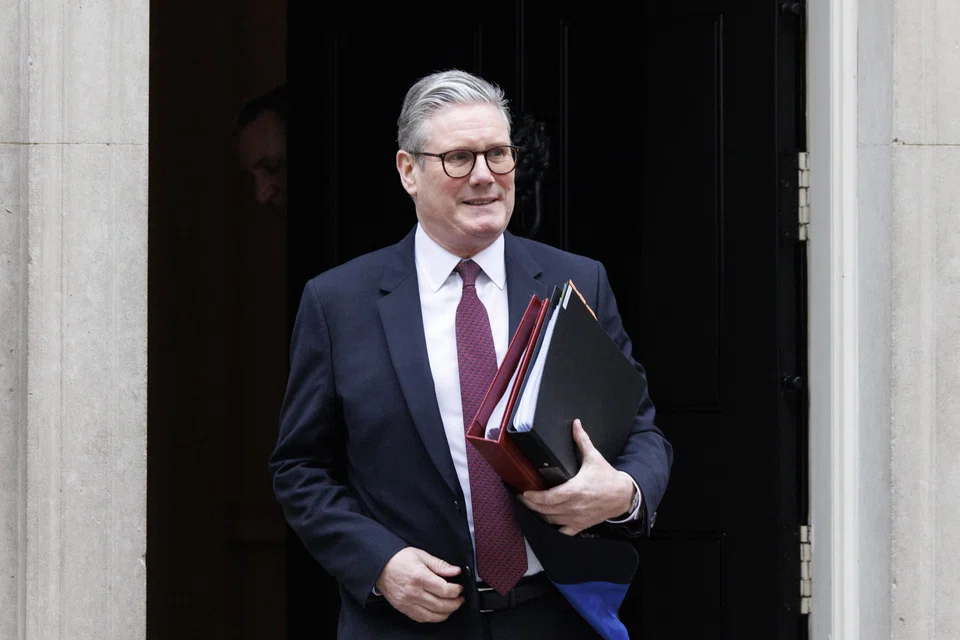
UK Prime Minister Keir Starmer has been criticised for the large amount of time he has spent on foreign policy in his first year in office. However, there are some growing positive signs of London’s investment in its post-Brexit economic and political leadership on the global stage.
The window of opportunity for this key development to happen follows last year’s general election, which saw Starmer win a huge majority in the House of Commons. This means that the ruling Labour Party can be confident of remaining in office for at least a full parliamentary five-year term till 2029, unless Starmer decides to call an early ballot.
In the last two months, alone, the United Kingdom has emerged alongside France as Europe’s leader in assembling a “coalition of the willing” to provide enhanced assistance to Ukraine.
This included Starmer’s hosting of the Lancaster House Summit on Mar 2 of almost 30 Western nations, including Canada, to discuss next steps in the war against Russia.
Moreover, this Thursday and Friday (Apr 24 and 25), Starmer co-hosts with the International Energy Agency (IEA) a big international conference on energy security. This dialogue will span across the sector, including oil, gas, renewables, electricity, nuclear, and critical minerals.
Especially since Russia’s invasion of Ukraine, energy security has risen up the global agenda as countries seek to respond to protect themselves from future shocks. A key goal of the summit is trying to build a greater consensus on a holistic approach to energy security and ensure governments have the tools they need for the challenges and opportunities confronting them.
Dozens of attendees from government and the private sector will attend from Africa, the Americas, Asia-Pacific, Europe and the Middle East. This includes executives of major firms including Shell, Eni and Orsted.
European Commission President Ursula von der Leyen is one of the biggest name politicians of the approximately 60 governments attending. This alongside many ministers from a wide range of nations inside and outside Europe including Germany, France, South Korea and Turkey.
It is no coincidence that the IEA has chosen to host the event in London. At a time of growing so-called “greenlash” across the world, with widespread backlash against the climate agenda, Starmer’s UK government has re-committed for the country to become what it calls a “clean energy superpower”. Starmer and his ministers will seek to use the summit to advance this vision, including UK plans to accelerate a new era of clean electricity by 2030.
This vision builds from the UK Investment Summit last autumn which the government claims saw over £60 billion (S$105 billion) in new investment announced by business, about half in clean energy. One driver of this spurt is last year’s launch of the new Great British Energy – an investment body and publicly owned energy generation company which aims to ensure a massive expansion in clean energy to help enhance UK energy security.
Since the Starmer government came to power last July, it also has confirmed funding to launch the UK’s first Carbon Capture, Utilisation and Storage (CCUS) sites in Teesside and Merseyside. In a more than £20 billion commitment, two new CCUS-enabled hydrogen projects will help remove over 8.5 million tonnes of carbon emissions each year, the equivalent of taking around 4 million cars off the road.
Moreover, the government overturned a nine-year ban on onshore wind power construction under the last several Conservative governments. This was followed by one the most successful renewable auction rounds in UK history.
Given the emphasis that the UK government is putting on the energy agenda, it is perhaps no surprise that this issue will be one of the key ones of the UK’s new, anticipated 2025 Brexit reset deal with the EU alongside defence and fisheries.
One of the energy topics under discussion between Starmer, von der Leyen, UK Energy Security and Net Zero Secretary of State Ed Miliband and EU Energy Commissioner Dan Jorgensen, is closer alignment on electricity trading, plus greater cooperation between the EU and UK carbon emissions trading schemes.
Yet, as much as Starmer will have many welcome friends at the summit, there may also be more challenging ones too. At the time of writing, it is unclear which US senior officials, if any, from the Trump administration will attend on Thursday and Friday.
Reportedly, US Acting Assistant Secretary of Energy Tommy Joyce, who served in the 2017-2021 Trump administration, will attend.
Joyce is acting in post while Trump’s pick to head the department’s international affairs office, David Eisner, waits for legislative confirmation.
Joyce, like Trump, is an avowed opponent of global climate diplomacy. Joyce has asserted that the US “will not sacrifice our economy or our security for global agreements for a so-called net-zero future, nor do we encourage any other nation to make that sacrifice either”.
He has also said that “there’s no greater thing we can do for our fellow human beings around the world than share with them our energy technology and our energy bounty. That includes, of course, LNG exports”.
This critique builds from that of US Energy Secretary Chris Wright, who has slammed UK adherence to net-zero policy, in particular, for resulting in what he claims to be “higher prices and fewer jobs for UK citizens, higher global greenhouse gas emissions...and all of this is a climate policy?” Wright said.
The clash between the Trump team and that of Starmer couldn’t be much starker on this issue. The Labour government’s alternative pathway to energy security is through commitment to net zero and phasing out fossil fuels and renewables investment.
While the US-UK dialogue might therefore be frosty, at least on this specific issue, there could be some scope for warmer words on wider topics, including liquified natural gas (LNG). The US is the UK’s second LNG supplier.
It is no secret, at all, that Trump would like to see European countries buy more US LNG as part of the pathway to potentially reduce the new US tariffs.
This stems from the Trump team’s goal of US “energy dominance” through the production and export of fossil fuels.
As on the Ukraine agenda, it is therefore the Trump team that poses one of the major headaches to the UK’s advancement of its energy security vision centred around net zero.
While this will be a major challenge for Starmer, the IEA is another welcome sign of a ramp-up in the UK’s growing post-Brexit international leadership.
The writer is an associate at LSE IDEAS at the London School of Economics