Statecraft and diplomacy in the age of political candour
Not many people have the time, the patience or the inclination to decipher what their leaders are trying to say
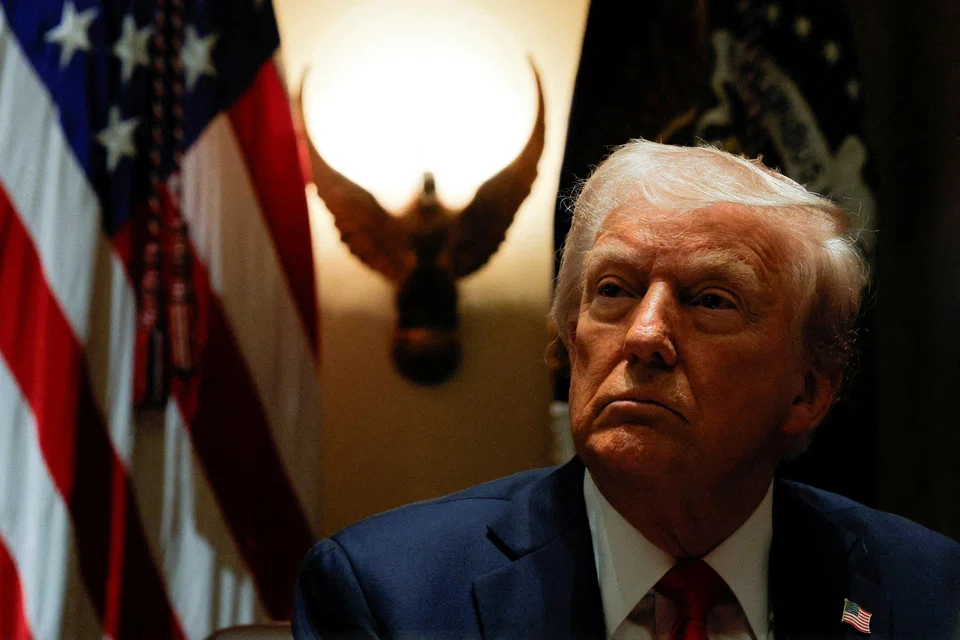

IT USED to be that the concept of “plausible deniability” was considered a useful tool in statecraft. Not any more, it seems, considering US President Donald Trump’s recent pronouncements about the Venezuela situation. More on that later.
The expression itself had its first airing in the aftermath of the 1973 military coup in Chile. America’s intelligence services were deeply involved but Henry Kissinger, then US secretary of state, blithely denied that Washington had anything to do with the overthrow of an elected government, thereby elevating diplomatic double-talk to an art form.
Later, as the congressional Watergate hearing into the Nixon administration rolled on, it became apparent that “plausible denials” were pervasively used as a political tool in operations against perceived enemies of the White House.
The concept, however, has great pedigree. Consider this well-known quotation: “Will no one rid me of this troublesome (sometimes rendered as “meddlesome”) priest?” It is attributed to King Henry II of England and it led to the death of Thomas Becket, the archbishop of Canterbury, in 1170. There has been endless debate on whether the king gave an indirect order to kill or it was merely an expression of exasperation. Most likely, ambiguity was the point. The archbishop was duly murdered. It may be fairly said that politicians everywhere, at one time or another, have indulged in this sort of verbal legerdemain.
Now, however, the world seems to have entered an age of candour. The current US administration probably leads the way. When asked what he planned to do against the South American country, Trump said his “war” was against Venezuelan drug cartels. Then, he added: “I don’t want to tell you exactly, but we are certainly looking at land now because we’ve got the sea very well under control.”
More importantly, when asked if he would seek congressional authorisation for an invasion, he said: “Well, I don’t think we’re going to necessarily ask for a declaration of war (from Congress). I think we’re just going to kill people that are bringing drugs into our country. OK? We’re going to kill them, you know, they’re going to be, like, dead. OK.”
Blunt talk
That must be about as clear a statement of intent any politician has uttered in recent history. It has been reported that Washington currently has eight warships in the region, with plans to increase that number to 14, along with more than 10,000 troops. This represents the largest military build-up in the Caribbean in over 35 years.
To be fair, he is not the only leader who has taken to blunt talk in recent times. For instance, Russian President Vladimir Putin, although more verbose, made it clear that Ukraine should not be considered a separate nation.
He then went on to launch his so-called “special military operation” that has lasted more than three years. And Israeli Prime Minister Benjamin Netanyahu’s warnings to various enemies are known well enough to need repetition here. His actions generally match his words.
So, what accounts for this outbreak of candour? Perhaps it is a reaction to a stifling woke culture at a time of short attention spans – thanks to smartphones and social media. Not many people have the time, the patience or the inclination to decipher what their leaders are trying to say.
Politicians, as a class, are adapting to the new norm.