Stop at two: Singapore may not need a third telco
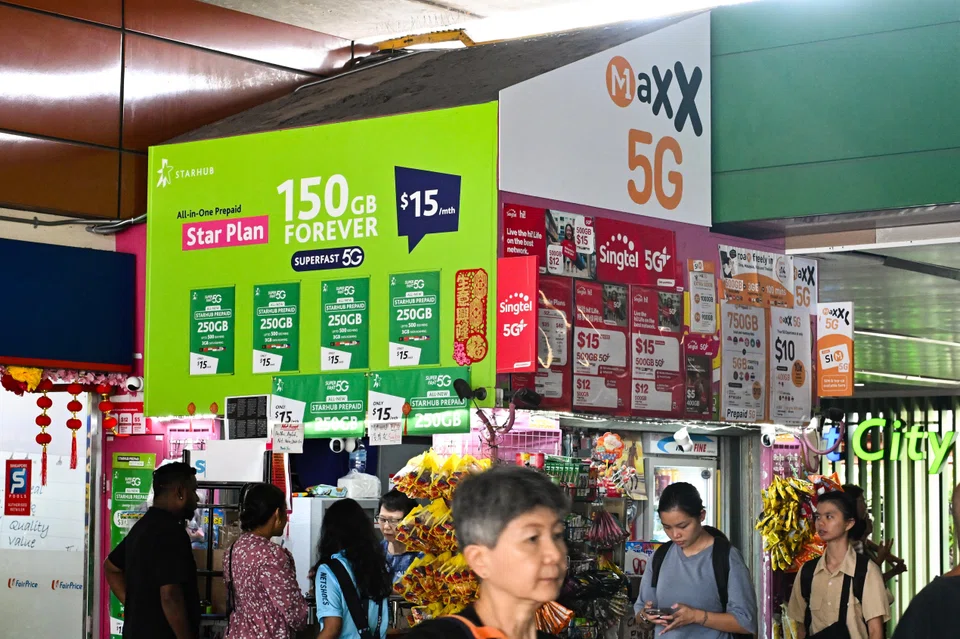
A StarHub-M1 deal would leave three networks; Simba’s troubles could make it two – that may not be a bad thing

[SINGAPORE] In the 1970s, Singapore told families to stop at two. The posters were blunt: girl or boy, two is enough.
Half a century later, the telco industry may be heading the same way.
StarHub and Keppel confirmed last week that they are in talks over a deal for M1. If it goes through, Singapore’s mobile networks drop from four to three.
But why stop there?
Should the StarHub-M1 deal go ahead, Simba would be left in a distant third place.
Its own S$1.43 billion bid for M1 collapsed in May, after the Infocomm Media Development Authority (IMDA) froze its review amid probes on whether Simba had used airwaves it was not allowed to use. Last week, Simba admitted it had gone past its limits, putting the blame on hardware and software problems.
IMDA has not said what happens next, but Simba’s Australian parent, Tuas, has listed the options in its annual report – ranging from fines to changes to its licences, or losing them altogether.
Even if Simba keeps its licence, life is getting harder. Singapore’s shift to standalone 5G means Simba can no longer lean on its 4G network.
DBS Group Research reckons Simba’s spectrum for standalone 5G is about a tenth of what its rivals hold.
In June, DBS put out a report asking whether Simba can survive at all, estimating that new cybersecurity rules could cost it S$21 million to S$28 million upfront – about what Tuas made in free cash flow in its whole 2025 financial year.
So, the idea of a two-telco Singapore is not too far-fetched. And that may not be so bad.
Too many stalls
Think of the mobile market as a small food court with four chicken rice stalls. Each keeps cutting prices to steal the others’ customers. The diners eat well, but none of the stall owners can afford to fix the stove.
That is roughly where the industry is.
StarHub’s mobile service revenue fell 10.5 per cent in the first half. By CGS International’s count, its underlying profit, excluding Ensign, fell 76.1 per cent to S$12.4 million.
Bloomberg Intelligence notes that a 5 per cent yearly drop in consumer revenue wiped out the savings from StarHub’s Dare+ cost-cutting programme.
Meanwhile, the bills for the next stage are big.
Standalone 5G, tougher cyber rules and the artificial intelligence boom all need faster and safer networks. That costs money that the industry is not making. To help foot the capital expenditure bill, the sector needs to consolidate.
But what would a two-telco market look like?
Thailand became a two-horse race after True and DTAC merged. AIS, the Thai telco partly owned by Singtel, is doing nicely out of it, with revenue per user rising.
India is another example. It once had more than a dozen mobile operators. Then Reliance Jio arrived in 2016 with free data, and the price war that followed wiped out or merged most of the rest.
Today, Jio and Bharti Airtel have about 77 per cent of users between them.
To be clear, India is not exactly a two-player market – but close enough. The government has kept the struggling Vodafone Idea alive with a five-year break on its dues to the state, because it does not want a pure duopoly.
Still, prices have only gone up since the shake-out.
Airtel’s revenue per user rose from Rs 178 (S$2.37) in the quarter ended March 2022 to Rs 264 in the quarter ended June 2026. Analysts expect Airtel’s profit to almost double in two years, helped by more tariff hikes.
Singtel owns a large stake in Airtel, with the Indian telco making up about half of Singtel’s value, based on estimates.
So Singtel already knows what a two-player market tastes like – with positive examples in Bangkok and New Delhi.
The bad news for Singapore consumers is that prices will go up. But from the telcos’ side of the counter, that is the whole point.
Keeping a close watch
Bloomberg Intelligence expects revenue per user to start recovering in late-2027, with room for price increases once any price freeze tied to a StarHub-M1 deal ends.
Simba is estimated to earn about S$9 to S$10 a month per user, about half what Singtel and StarHub make. Take away the budget stall, and the floor under prices goes with it.
Two players, however, would raise the risk of price fixing. Nobody even needs to meet in a back room – each side simply watches the other’s price list and follows.
Then, there are the optics. A two-telco Singapore would be a contest between two firms with the same controlling shareholder.
Temasek owns just over half of Singtel. It also has a deemed interest of about 56 per cent in StarHub and about a fifth of Keppel, which is selling M1.
Temasek will say, fairly, that its companies are run by their own boards. But consumers may still wonder which side they are supposed to cheer for.
For a two-player market to work, it needs a much firmer hand from the regulator and some political nerve.
IMDA already takes a close look at any deal that leaves a player with more than 40 per cent of the market. A merged StarHub-M1 would have about 42 per cent of mobile users, against Singtel’s 45 per cent.
In a three-player market following StarHub and M1’s merger, some market watchers expect IMDA to ask for spectrum to be handed back, for rivals to get access to the network, and for prices of cheap plans to be frozen for two to three years.
But in a two-player market, even that will not be enough.
Once only two networks remain, the telcos will start to look like utilities – and should be put under a similar microscope.
For example, the regulator could demand telcos cap the price of basic plans. Or make both networks rent capacity to virtual operators such as Circles.Life at fair rates, so someone is always there to undercut.
And if the telcos want pricing power, they should be made to publish how much of the extra money goes back into their networks each year.
That is where political will comes in. Nobody wins votes by raising phone bills. Someone will have to tell consumers, out loud, that paying a bit more now is the price of a better network later.
Singapore’s “Stop at Two” in the 1970s worked too well. By 1987, the government was urging couples to have three or more, if they could afford it.
But two telcos can be enough for Singapore. The regulator just has to watch closely enough to know when they are not.
TRENDING NOW
Green fuels, autonomous ships: How Singapore is future-proofing its shipping industry
US trade chief to consider trade deal tariff caps in excess capacity probe
Grab CEO’s wife Chloe Tong on life with Anthony Tan and finding her purpose
Deal between tycoon friends sparks scrutiny of Philippine power sector