

Strong debut for Centurion Accommodation is only half the story unfolding in the S-Reit space
Pressure for value-up initiatives could test resources and networks of sponsor groups; CapitaLand Investment may set new standards for them with listing of a China Reit

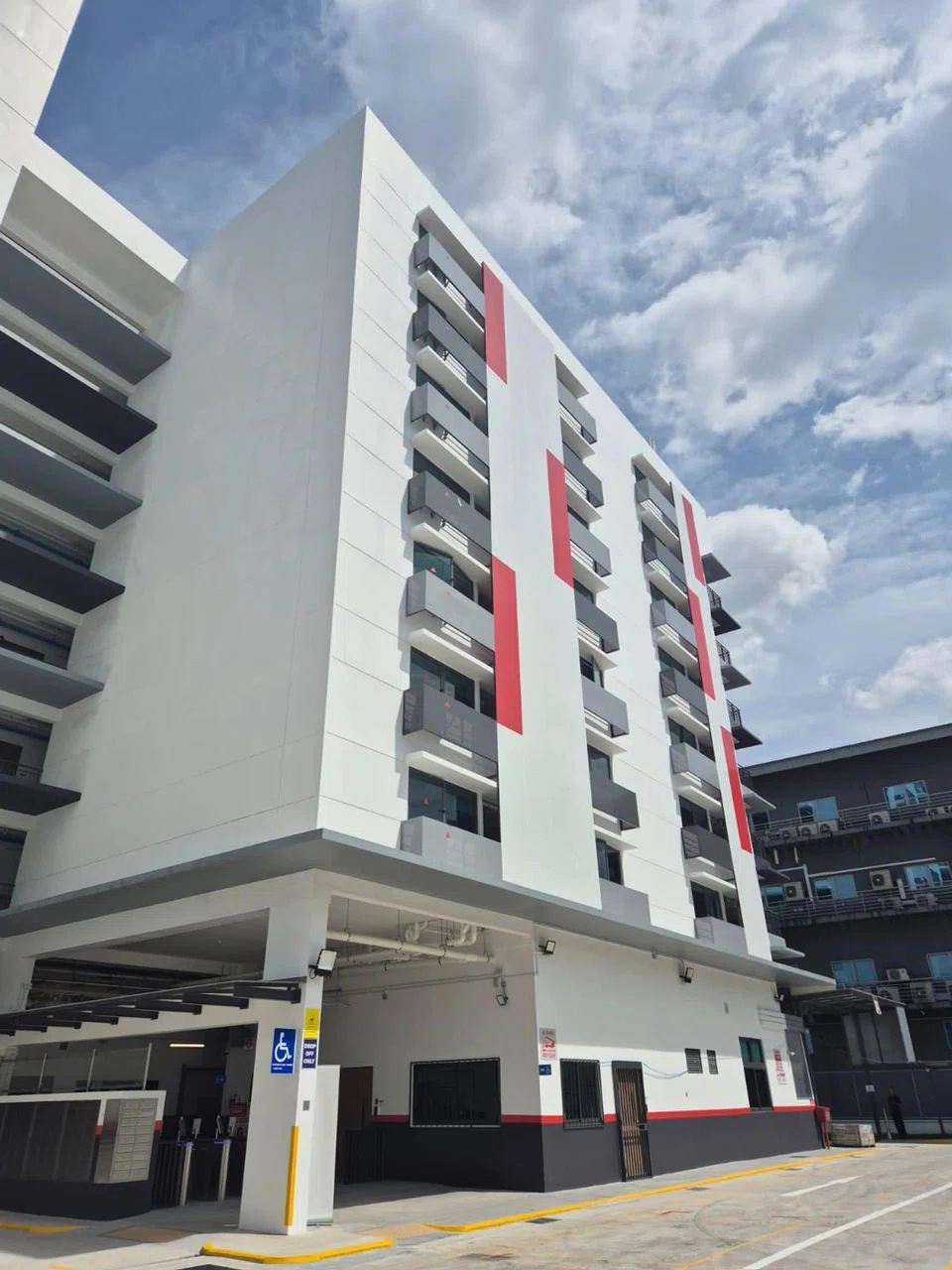
[SINGAPORE] Following the successful debut of Centurion Accommodation Real Estate Investment Trust (Reit) on the mainboard of the Singapore Exchange (SGX) last Thursday (Sep 25), many investors may turn their attention this week to the listing of CapitaLand Commercial C-Reit (CLCR) on the Shanghai Stock Exchange.
This exercise could have significant implications for CapitaLand China Trust (CLCT), which has seeded CLCR with a shopping mall and taken a 5 per cent stake in the new Reit.
If CLCR garners a strong market valuation in Shanghai, CLCT would have an avenue to keep tapping China’s domestic capital market to unlock the value of its mature retail properties, and enable it to further diversify and strengthen its asset portfolio.
The way I see it, this might boost the market valuation of CLCT’s SGX-listed units. CLCT closed last week at S$0.785, a 24.5 per cent discount to its net asset value (NAV) as at Jun 30 of S$1.04 per unit.
CLCR would also extend CapitaLand Investment’s (CLI) listed funds platform to four countries – Singapore, Malaysia, Japan and China – and strengthen its position as a global real estate asset manager.
On Sep 8, CLCT’s manager said CLCR’s initial public offering (IPO) price had been set at 5.718 yuan (about S$1.03) per unit. It also stated that CLCT will divest CapitaMall Yuhuating in Changsha to CLCR for 813.8 million yuan (approximately S$146.8 million), a 3.7 per cent premium to property’s book value as at Dec 31 2024.
CLCR’s initial portfolio also includes CapitaMall SKY+ in Guangzhou. The two properties have a combined value of approximately 2.6 billion yuan.
On Sep 12, CLI said CLCR’s offering saw very strong demand. The bookbuilding tranche was 254.5 times covered, while the public tranche was 535.2 times subscribed.
A total of 400 million units were issued at 5.718 yuan per unit, raising a total of 2.29 billion yuan (or some S$409 million). This was 7 per cent more than the initial estimate of 2.14 billion yuan (S$382 million).
The CapitaLand group (including CLCT) collectively holds 20 per cent of the IPO units, while cornerstone investors took up 40.11 per cent. Institutional investors were allotted 27.92 per cent in the bookbuilding tranche, while the remaining 11.97 per cent went to retail and institutional investors in the public tranche.
CA-Reit’s strong debut
The listing of CLCR in Shanghai comes just as things seem to be looking up for the S-Reit sector.
Notably, Centurion Accommodation Reit (CA-Reit) was warmly received by investors last week. On Sep 25, the first pure-play, purpose-built living accommodation Reit to list in Singapore ended its first trading day at S$0.96, nearly 9.1 per cent above its IPO price of S$0.88.
CA-Reit’s manager said nearly 249 million units had been sold to investors via a placement, and a further 13.2 million had been sold through a public offer. The placement tranche was 16 times subscribed, while the public offer was 30.9 times subscribed.
Including the more than 614 million units sold to cornerstone investors, CA-Reit raised a total of S$771.1 million. CA-Reit had nearly 1.72 billion units in issue immediately after the close of the offering.
CA-Reit’s initial portfolio of purpose-built living accommodation assets – located in Singapore, Australia and the United Kingdom – has an appraised value of nearly S$1.84 billion. At its IPO price, CA-Reit is projected to deliver a yield of 7.47 per cent in 2026
Meanwhile, the only other S-Reit to hit the market this year seems to be making a comeback after a weak debut.
NTT DC Reit was listed in July, following an IPO at US$1 per unit. It closed below its IPO price on its third trading day, and eventually hit a closing low of US$0.93 in August. Since the beginning of this month, however, NTT DC Reit has rebounded strongly. It ended last week at US$1.00.
NTT DC Reit holds six data centres with an appraised value of nearly US$1.6 billion. At its IPO price, it is forecast to deliver a yield of 7.8 per cent for the 12 months to Mar 31, 2027.
Going private, getting sold
The listing of these new S-Reits is only half the story, though. Earlier this year, Paragon Reit went private, after its manager said a major asset enhancement initiative at its flagship property on Orchard Road was necessary in order to maintain its competitiveness.
Frasers Hospitality Trust is also being taken private by its sponsor group, after a strategic review found it was likely to struggle in the face of volatility and cost pressures in the hospitality sector as well as relatively high interest rates and persistent strength in the Singapore dollar.
On top of that, the managers of some S-Reits have changed hands recently, as the priorities of their sponsor groups shifted.
Stoneweg European Stapled Trust was known as Cromwell European Reit until the beginning of this year. At the end of 2024, Australia-listed Cromwell Property Group completed the sale of its European platform as part of a plan to reduce its gearing and refocus on Australia and New Zealand.
Acrophyte Hospitality Trust was known as ARA US Hospitality Trust until October last year. Shortly before that, its manager entities were sold to a company ultimately owned by property tycoons Gordon and Celine Tang. The sale came as ESR Group sought to streamline itself after acquiring ARA Asset Management in 2022.
On Sep 27, the managers of Acrophyte H-Trust warned that hotel brand owners have begun strictly enforcing renovation requirements to comply with their brand standards and franchise terms. This could result in Acrophyte H-Trust having to fork out US$100 million in capital expenditure from 2025 to 2027.
The managers noted that the S-Reit does not have sufficient headroom to fund the capital expenditure entirely with increased debt, and that a rights issue or asset sales might not be viable. Other possible options include suspending its distributions, and a transaction involving its stapled securities or its entire property portfolio.
Acrophyte H-Reit ended last week at US$0.29, a steep 58.6 per cent discount to its NAV as at Jun 30 of US$0.70 per share.
Pressure for value-up initiatives?
While recent activity in the S-Reit sector suggests there is investor appetite for emerging asset classes such as data centres and purpose-built accommodation, the outlook for S-Reits focused on more traditional assets such as shopping malls and hotels is clearly less bullish.
S-Reits have performed relatively poorly since the pandemic. During the five-year period to Sep 19, the iEdge S-Reit Index returned just 6.8 per cent while the Straits Times Index (STI) returned 115.9 per cent.
Since the beginning of this year, as interest rates tumbled, the relative performance of S-Reits has improved. The iEdge S-Reit Index returned 13.4 per cent since the beginning of the year (up to Sep 19), versus the STI’s total return of 18.5 per cent.
Still, it could be just a matter of time before the managers of some of the weaker S-Reits find themselves under pressure from unitholders to pursue value-up initiatives, mirroring the clamour in the market for companies to unlock value and reposition their core businesses.
The manner in which they respond could depend on the resources and networks of their sponsor groups. With the listing of CLCR this week, CLI might be about to raise the bar for all of them.
The writer owns CapitaLand Investment shares and CapitaLand China Trust units.
TRENDING NOW

Grab CEO’s wife Chloe Tong on life with Anthony Tan and finding her purpose

What role can Japan play in Asean’s future?

He built the Vingroup empire. Now South-east Asia’s richest man is handing some key roles to his sons

Asean’s challenge is to become resilient against global geopolitics: former Indonesia trade minister

