

Stronger Singdollar makes ‘long Singapore property, short overseas property’ strategy compelling
Local currency strength can erode overseas property returns, while foreign purchases of Singapore real estate may gather momentum

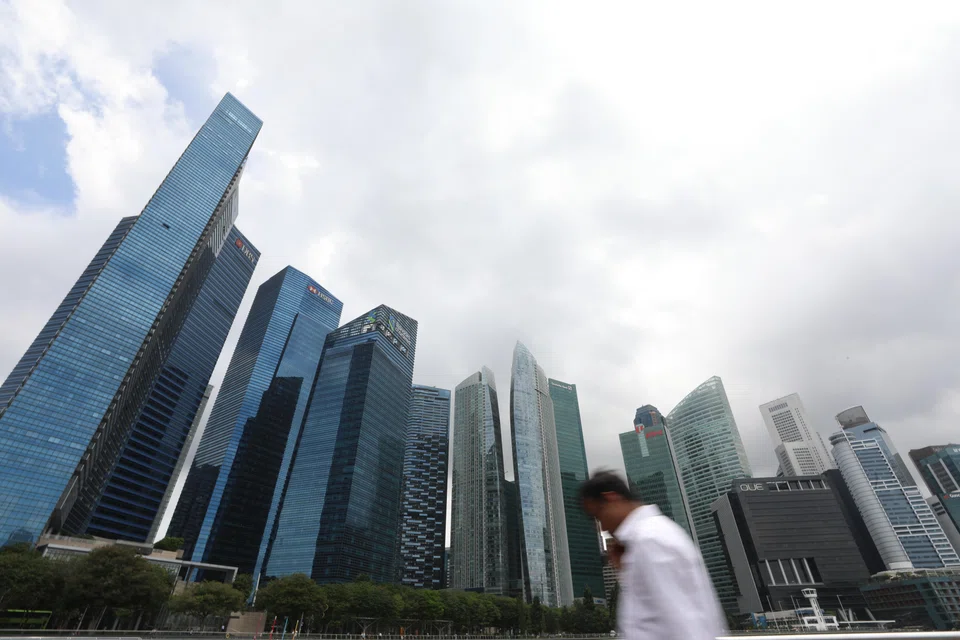
[SINGAPORE] Is the new king dollar no longer the US dollar but the little red dot’s Singapore dollar?
DBS’ Singapore 2040 report is bullish on the Republic. It sees the economy doubling, the Straits Times Index reaching nearly 10,000 points and the Singapore currency possibly achieving parity with the greenback by 2040.
Will the projection of Singapore dollar and US dollar parity be way off? Possibly not.
In perspective, parity between the currencies will be reached by 2040 if the Sing dollar appreciates by a ballpark of about 30 per cent versus the greenback over 15 years or at a compound annual growth rate of about 1.8 per cent.
In a chaotic world where many countries are fiscally shaky, Singapore’s currency will be supported by its stability and fiscal strength. Add to that, the Republic may enjoy decent productivity-led economic growth.
A stronger Sing dollar helps the city-state’s residents when travelling or studying overseas. A strong local currency also helps better manage inflation at home.
However, an appreciating Singapore currency could hurt the country’s tourism sector and its cost competitiveness for businesses.
A Sing dollar that strengthens against the US dollar, as well as currencies of other developed countries and Asian countries, has major implications on real estate investments.
Buying overseas property
One, individuals, companies and real estate investment trusts (Reits) seeking to buy overseas property should proceed with extreme caution.
Sure, Singapore physical property yields are tight and investors might get higher yields when buying overseas property.
Recently, Keppel Reit unveiled the strategic acquisition of its first pure-play retail asset, Top Ryde City Shopping Centre in Sydney, Australia.
The fully leased initial yield on this regional shopping centre, which focuses on non-discretionary retail, is 6.7 per cent per annum. Such a yield may be nearly 200 basis points higher than the net property income (NPI) yield for a suburban mall here.
In short, a Reit manager looking to buy properties that are accretive to a trust’s distribution per unit can fare better by venturing overseas instead of hunting locally.
However, currency movements could significantly alter investment returns.
Compare an overseas property that is bought at an entry yield of 6.5 per cent per annum with a local property of similar capital value which offers an annual yield of 5 per cent.
If both properties see income growth of 2.5 per cent annually and the Sing dollar appreciates by around 1.8 per cent annually, after 15 years, the NPI of the two properties in Singapore dollar terms will be broadly similar.
Add to that, assuming exit capitalisation rates of the Singapore and overseas assets are 5 per cent and 6.5 per cent respectively, the local property’s capital value is 30 per cent higher than its overseas counterpart in Sing dollar terms after 15 years.
Consider a local party who buys an overseas property that enjoys capital gains of 2.5 per cent annually. After 10 years, said property’s value has grown by 28 per cent.
However, if the overseas currency weakens versus the Sing dollar by 2 per cent annually, the gains of the above property translated into Sing dollars is a far more modest 4.6 per cent.
Of course, one can use currency hedges to hedge against a foreign currency weakening against the Sing dollar. But, hedging costs will over time add up to a substantial sum that erodes an overseas investment’s returns.
Seen another way, an arbitrage involving a local retiree renting out his home here and living overseas in a rental property might work well. Here, an appreciating Sing dollar versus its overseas counterpart can help effectively mitigate against inflation.
Buying Singapore property
Two, an overseas investor may prioritise investing in Singapore property if he sees the Sing dollar rising over time.
A foreign owner of a chunky investment property here enjoys recurring rental returns, which should exceed that of Sing dollar fixed deposits, and potential capital gains. An appreciating Sing dollar helps boost said owner’s rental returns and capital gains.
For one, a US fund could justify an entry yield of just over 3 per cent per annum for a Grade A office building in the city centre here, because it believes in the fundamentals of the office market as well as the strength of the local currency.
Certainly, wealthy Americans may wish to seriously consider buying private homes here, especially as an American buying a first home here need not pay additional buyer’s stamp duty (ABSD).
Under respective free trade agreements, nationals and permanent residents of Iceland, Liechtenstein, Norway and Switzerland, as well as US nationals, are accorded the same stamp duty treatment as Singapore citizens.
A Singapore citizen buying a first home does not pay ABSD. The ABSD rates for a local are 20 per cent for buying a second home and 30 per cent for buying a third and subsequent home.
Even for foreigners paying 60 per cent ABSD when buying any home here, such as nationals of Malaysia, Indonesia, China and India who are not Singapore permanent residents, a rising Sing dollar can somewhat mitigate the effects of punitive transaction taxes.
Assume net entry yield for a home is 2.5 per cent, net income grows 2.5 per cent per annum and capital appreciation of 3 per cent annually. If the Sing dollar appreciates by 2 per cent annually versus the foreigner’s base currency, the foreign buyer can recoup the 60 per cent of ABSD after seven years.
Sure, many foreigners buying homes here face high transaction costs. Still, an appreciating Sing dollar makes the case for foreigners who pay 60 per cent ABSD to buy homes here somewhat less daunting. And the case for overseas buyers, who enjoy the same stamp duty treatment as locals, to buy Singapore residential property could be rather compelling.
Yields on various physical property types in Singapore are low. This can be attributed to the Republic’s safe-haven status, the stable supply-demand situation in the property market, solid economic growth prospects and low interest rates. Adding to the above, a stronger Sing dollar will put pressure on property yields to remain low.
Ultimately, currency strength is a good reason not to bet against Singapore physical property over the long run.
TRENDING NOW

He built the Vingroup empire. Now South-east Asia’s richest man is handing some key roles to his sons

Grab executives buy back shares after stock hits 3-year low on Atome deal

US dollar falters after Iran’s offer to reopen Hormuz sends oil lower

Martin Modern, Wallich Residences properties linked to money laundering case sell for S$16.3 million at auction

