

Sugar isn’t a harmless pleasure. It’s time to acknowledge this

Joan Ng
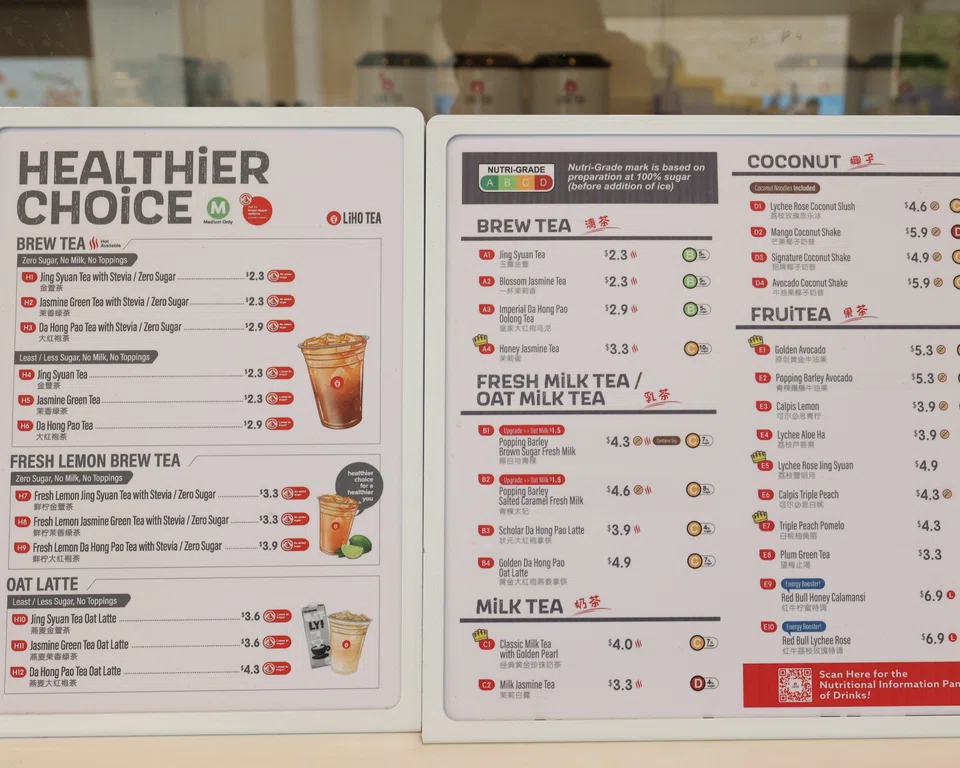
THE milk I drink every morning has received a grade of “D” from Singapore’s Health Promotion Board (HPB), even though its only ingredient is milk.
Its sugary, chocolate-flavoured counterpart is rated “B” – which means it gets to sport a “healthier choice” logo.
This contradictory rating is not new, but is worth resurfacing in light of a World Health Organization (WHO) call this week for countries to increase taxes on sweetened beverages.
WHO’s data shows that 108 countries tax some sort of sugar-sweetened beverage. Singapore is not among them.
“Taxing unhealthy products creates healthier populations,” said WHO’s director for health promotion, Dr Rudiger Krech. “It has a positive ripple effect across society – less disease and debilitation, and revenue for governments to provide public services.”
Given that Singapore is facing rising healthcare bills, it makes sense to consider this call with urgency.
When I voiced my view to a colleague, he suggested that I was being “elitist” and that such a tax would be tyrannical.
A tax on sugar-sweetened drinks unnecessarily penalises the less wealthy who, in his words, “have so few pleasures in life already”. He also suggested that taxes don’t bring down consumption – it is education, creating better habits, that does so.
There is some truth to this.


Statistics across high-income countries show a decline in drinking among youth. They aren’t cutting back because they can’t afford it, but because they understand the adverse health impact of binge drinking.
Is WHO wrong to suggest taxes would make a difference?
Changing public perceptions
Many studies demonstrate a statistically significant correlation between the introduction of cigarette taxes and a fall in cigarette consumption. Correlation does not imply causation, of course, and higher taxes don’t always work to reduce consumption.
One study of the impact of a sweetened-beverage tax in Philadelphia, in the United States, suggested that residents travelled outside the city to buy their drinks instead.
Denmark taxed soft drinks in the 1930s, but repealed the tax because drinks were being sold illegally instead.
Experts who have studied the taxation-consumption correlation say that taxes must be accompanied by education campaigns.
A tax must be acceptable before it is instituted – if not to all consumers, then at least to a large number.
Changing government positions
Singapore is probably right, then, to stay away from any sugary beverage tax – for now.
There is no widespread acceptance here that sugar is anywhere near as harmful as alcohol. It is, however, time to work on changing that perception.
Such a task must begin with HPB’s recommendations, as well as the narrative from various government organisations.
The science on sugar’s harms is clear, well established and widely accepted. Some of the negative outcomes of excessive sugar consumption are diabetes, gout, heart disease, cancer and depression.
There is no need to worry that Singapore is at risk of being inconsistent in its policies by making sugar the enemy while it does nothing about salt and oil.
Unlike salt and oil, refined sugar is not required by our bodies and offers no nutritional benefits.
Physicians will warn against an unsupervised salt-free diet, and olive oil is an important part of the widely recommended Mediterranean diet. The sugar our body needs, on the other hand, can be obtained from carbohydrates consumed.
The danger of low or zero
Singapore is taking the right step with Nutri-Grade labels that incorporate sugar levels.
The danger in these labels is that low-sugar is still being marketed as a healthier option – they do not need to be labelled healthy at all.
I acknowledge that a drink with 5 g of sugar is healthier than one with 10 g. It is good to nudge consumers towards the lower-sugar alternative.
Yet, the food and beverage industry is adept at adapting to regulatory impositions.
The term “healthwashing” was coined in reference to claims that a product is healthier than it is – commonly with a term such as “low-sugar”.
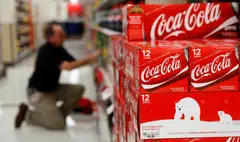
Coca-Cola is among the companies accused of this, with marketing that emphasises “balance” and a healthy lifestyle that includes exercise.
Health experts say that such messaging dilutes the risks associated with sugar consumption, and endangers consumers.
Just as bad are zero-sugar drinks with artificial sweeteners that are no better than sugar and may even be worse.
Such health claims create a false sense of security among consumers: that low-sugar chocolate milk or a diet cola is a healthier way to start your day.
Sugar is a treat. My personal weakness is a pillowy pandan chiffon cake. I know it does me no good, so I don’t consume a lot of it.
Decoding Asia newsletter: your guide to navigating Asia in a new global order. Sign up here to get Decoding Asia newsletter. Delivered to your inbox. Free.
Copyright SPH Media. All rights reserved.
TRENDING NOW

Gas Supply may pursue remedies if contract breached following Indonesia’s export cuts: Tan See Leng

Why the biggest business decision about AI isn’t which model to choose

If Europe goes to war, the fallout will be felt in East Asia

Singapore expects all parties to honour commitments, says PM Wong after Indonesia cuts gas exports

