

From Sumatra to Sao Paulo: practical lessons for COP30
Indonesia and Brazil show how forest protection is risk management and value preservation
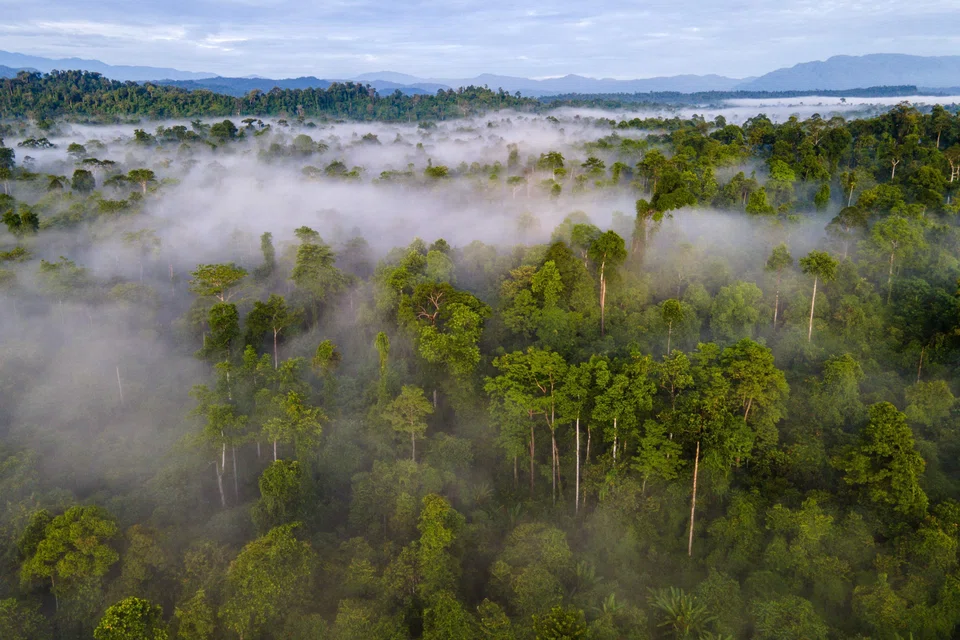
COP30 in Belem, Brazil, will rightly put the future of forests on the world stage. It should also highlight a quieter, but equally important, story: how practical lessons from major forest economies show that protecting nature is not only an environmental imperative, but also a driver of long-term value for business and communities.
Over the past decade, I have seen that companies which treat forests as expendable eventually face higher borrowing costs, fragile supply chains and eroding investor confidence.
By contrast, firms that integrate conservation into their operations reduce volatility, strengthen community partnerships and gain access to capital on better terms. Indonesia and Brazil, both economies built in part on forest resources, offer lessons that can travel across borders and balance sheets.
In short, nature risk shows up as volatility, and managing it lowers the cost of capital.
Both countries matter because of their scale and influence.
Brazil holds nearly 500 million hectares of forest, close to 60 per cent of its territory, and is among the world’s largest producers of pulp and paper. Indonesia is home to the world’s largest tropical rainforest outside the Amazon, with industries that contribute billions in exports and sustain millions of livelihoods.
Together, they manage critical carbon stocks and have developed institutions that make forestry central to both growth and climate resilience.
Indonesia: aligning livelihoods and conservation
In Indonesia, public policy and private practice increasingly converge on a simple truth: Without production, protection cannot be truly sustainable. Forest conservation endures only when it supports livelihoods and when it strengthens the economic fundamentals that businesses depend on.
Government initiatives such as the Social Forestry and Forest Management Unit (FMU) programmes are expanding community access to forest land and encouraging shared stewardship. These policies reduce social risks that often lead to disputes and disruptions, stabilising supply chains and providing a foundation for long-term investment.
Across industry, the private sector has adopted large-scale land commitments. The global bio-based resources and energy group RGE offers an example.
In its one-for-one approach, for every hectare of land managed for production, an equivalent area of natural forest is set aside for conservation or restoration. This includes more than 250,000 hectares of high-conservation-value forest, and the Restorasi Ekosistem Riau project, which protects and rehabilitates over 150,000 hectares of peatland in Sumatra.
Using a production-protection model, plantations are designed as protective buffers, reducing encroachment and fire risk while maintaining local employment.
Community collaboration reinforces these efforts. In Riau, partnerships with villages such as the Fire-Free Village Programme help safeguard peatlands and reduce fire risk through training, equipment and livelihood support. More than a decade of prevention work has cut fire incidents by over 90 per cent in participating areas, a reminder that sustainable outcomes rely on inclusion as much as enforcement.
These outcomes are not just ecological; fewer fires translate into more predictable production cycles, reduced remediation costs, lower insurance exposure and stronger confidence from lenders who prize risk mitigation and measurable performance.
Brazil: institutionalisation and transparency
Brazil provides complementary lessons through its government-led fire-management system. The federal Prevfogo programme, administered by the IBAMA (Brazilian Institute of Environment and Renewable Natural Resources), embeds fire prevention and training within national institutions, equipping community brigades before the dry season and coordinating agencies to anticipate risk.
This institutionalisation shifts the focus from emergency response to long-term readiness – a crucial distinction for lenders, who increasingly evaluate environmental preparedness as part of corporate resilience. For investors and supply-chain partners, such preparedness reduces the likelihood of large-scale losses, which can disrupt export markets or impair credit lines.
Transparency strengthens that model. Brazil’s National Institute for Space Research (INPE) operates the Queimadas platform, a public satellite-monitoring network that issues near-real-time fire alerts accessible to everyone. Open data plays the role of independent verification: it builds trust among communities, companies and investors by making performance visible.
This visibility reduces uncertainty for regulators and financiers, allowing more accurate risk assessment and improving confidence in governance. Over time, it lowers funding costs.
Private actors also contribute through restoration partnerships that align with these public systems. In Sao Paulo state, specialty cellulose producer Bracell’s one-for-one commitment supports the protection or restoration of an area of native vegetation equal to its plantation footprint.
In collaboration with the state’s Forest Foundation and non-profit organisation Fundaçao SOS Mata Atlantica, the company has helped plant 77,000 seedlings in Atlantic-Forest riparian zones to restore forest cover and protect water sources.
Together, these public and private efforts show how clear governance, open data and steady commitment can make forest resilience part of economic resilience, across the Atlantic Forest, Cerrado and Caatinga biomes.
The opportunity at COP30
Indonesia and Brazil demonstrate that protecting nature is not a sunk cost. Done well, it reduces volatility, stabilises supply and strengthens confidence in markets.
Both countries prove that when conservation is built around verifiable outcomes and community engagement, it becomes a competitive advantage. Their experience points to a pragmatic path forward: production-protection as a model, inclusion as principle, prevention as practice, and institutionalisation as structure.
These elements form the basis for pricing resilience: fewer climate-related losses, smoother cash flows, more credible, transparent and verifiable reporting – ultimately leading to lower perceived risk and capital costs. Collectively, they result in more sustainable growth.
As leaders gather in Belem, the practical lessons from Indonesia and Brazil can be valuable. The financial community should see forest protection not as philanthropy, but as risk management and value preservation.
Forests can be managed as enduring assets, anchoring long-term value for businesses and communities alike. In uncertain times, the real test for corporate leadership is not whether sustainability can be afforded, but whether in its absence, stability can be maintained.
That is a story businesses and investors understand, and one they can now choose to invest in.
The writer is managing director at RGE, which operates in Indonesia, Brazil, China, Canada, Spain and Malaysia
TRENDING NOW

Britain’s mansion tax shows the difficulty of targeting wealth

Once staunchly pro-China, Malaysian Chinese businesses are now distancing themselves from Beijing

The only common thing in S-E Asia is that we all eat rice: Cisco’s Asean president

Singapore data centre operator DayOne opts for US IPO at likely US$20 billion valuation

