The summit that barely happened: Why EU and China still talk
In geopolitics, showing up can sometimes be half the battle
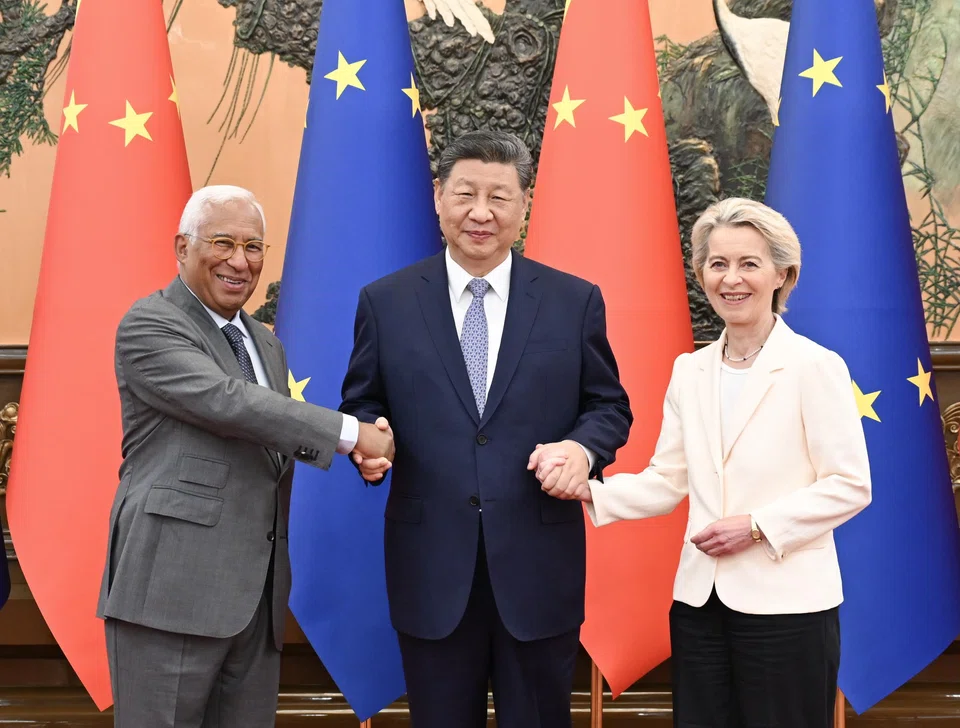
WHEN expectations are at rock bottom, simply showing up counts as progress. That is the story of this week’s EU-China summit in Beijing – a hastily truncated, one-day event after China’s President Xi Jinping declined to travel to Brussels. The absence of a formal joint communique and the palpable lack of deliverables should not obscure a critical fact that this meeting still matters.
The reality of interdependence
Despite rising tensions, the European Union (EU) and China together account for roughly a third of global gross domestic product and 30 per cent of world trade. Their economies are intertwined, and their geopolitical futures increasingly entangled.
Whether on trade, climate action, or global security, EU-China relations have outsized consequences that go far beyond the boundaries of Brussels and Beijing. That is why, even in a climate of mistrust and mutual suspicion, face-to-face dialogue at the highest level is a meaningful step forward.
Given how close the summit came to not happening at all, Xi’s confirmation – reportedly just days before – signals a reluctant but essential recognition: disengagement is not a viable strategy.
Fractured trust and strategic calculus
The optics were clear. A shortened visit, no banquet, and icy body language contrast sharply with the six-day red-carpet treatment extended to Australia’s prime minister just a week ago. The EU is not currently in Beijing’s diplomatic good books, and the reasons are manifold.
First and foremost is Ukraine. China’s tacit support for Russia’s war has alarmed European policymakers. Beijing’s reported position that a Russian loss could embolden US pressure in Asia, reflects a calculus starkly misaligned with European values. The EU’s recent sanctions on two Chinese banks linked to Russian military supply chains have further strained ties.
China’s restriction of rate earth exports to Europe, after easing them for the US, has inflamed tensions across the EU industry. Though fast-tracked licences have been promised, details remain opaque.
And for industries already grappling with competitiveness in areas like clean tech, automotive and computing, the uncertainty is as damaging as the restrictions themselves.
Caught between powers
Europe’s dilemma is exacerbated by the looming presence of the US. Even absent from the summit table, Washington was very much “in the room”. Both China and the EU are calibrating their moves with one wary eye on US trade policy. China fears a transatlantic deal that will shut it out while the EU fears becoming the dumping ground for excess Chinese goods that can no longer enter American markets.
Also, the timing of this summit could not have been worse. With the US trade deadline looming on Aug 1, the incentive on all sides is to avoid provocation. But long-term alignment remains murky.
The EU’s attempt to “de-risk” from China, as EU President Ursula von der Leyen has framed it, involves walking a tightrope: reducing strategic dependencies without provoking confrontation. That is a hard sell in both Beijing and Washington.
The search for leverage elsewhere
China is not the only partner the EU is looking at. Negotiations with Australia, South-east Asia and Mercosur signal a concerted push to diversify trade partnerships. While these will not fully offset dependence on China, they send a clear message: Europe is broadening its options.
Climate change might seem like one area ripe for cooperation. Both the EU and China have deadlines approaching for commitments ahead of COP30 in Brazil. Yet even here, progress is stymied.
The EU refuses to endorse any joint declaration unless China offers firmer pledges on emission reductions. The concern? That aligning too closely with Beijing could strain transatlantic ties.
Small steps, significant implications
So, will this summit be deemed a success? That depends on the yardstick. If the expectations are major breakthroughs or a reset in bilateral relations, then ultimately it will be a disappointment all around. But in geopolitics, showing up can sometimes be half the battle.
In a world becoming more fragmented and multipolar, structured engagement, however imperfect, is still our best hope. The EU and China may not trust each other much, but they understand that coexistence, and even cooperation, are inescapable. And that, in today’s world, is reason enough to keep talking.
The writer is senior partner at Penta, based in Brussels