Sunak’s huge AI hopes unlikely to be realised
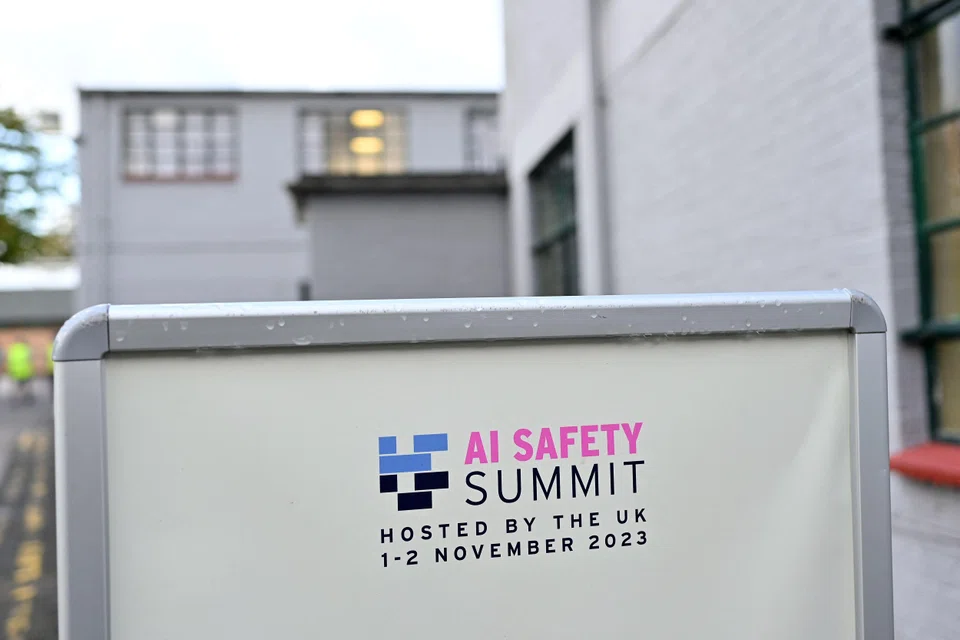
WHEN Prime Minister Rishi Sunak announced in June that he would host a big global summit on artificial intelligence this week (Nov 1-2), he claimed the United Kingdom should become the “geographical home” of AI safety. Laudable as that lofty goal is, it is, however, unlikely to be fully realised.
Sunak is well known to be fascinated by technology after the years he spent in California before he became a politician. Moreover, his father-in-law is the Indian founder of the technology company Infosys.
Sunak has regularly argued that the United Kingdom has fallen behind other economies, especially the United States, because of an innovation gap. He therefore wants to “make sure the United Kingdom is the country where the next great scientific discoveries are made, and where the brightest minds and the most ambitious entrepreneurs will turn those ideas into companies, products, and services that can change the world”.
Few would disagree with this ambition, but realising it in practice is not so easy. This is likely to be true too with his otherwise commendable AI ambitions.
To be sure, there is little question that the UK can be influential on the AI agenda. The nation has precedents for developing rules for governing emerging technologies, for example in stem-cell research.
Moreover, there is much symbolism in the fact that the summit is hosted by Sunak at Bletchley Park. During the Second World War, this was where the allied code-breaking effort broke the German Enigma codes in a major coup for Winston Churchill’s campaign against Nazi Germany.
Historic as the summit backdrop is, however, the planning for the big event has reportedly been very rushed. In June, Sunak compared this week’s AI event with the UN climate summits each year in November and/or December. However, planning for the latter events usually start at least a year in advance, whereas Sunak has only allowed less than six months for his AI conference, making it hard to deliver the scale of ambition he has lauded.
The AI Safety Summit this week also comes in a context of existing initiatives from other powers, including the United States. On Monday (Oct 30), President Joe Biden – who is not attending the summit – signed an executive order that he claims represents the most far-reaching action on AI of any country.
The new executive order requires AI system developers that pose risks to national security, the economy, or public health to share the results of safety tests with the US government, in accord with the Defence Production Act, before being released to the public. The timing of the move, just days before Sunak’s summit, is being seen by some as a “slap in the face” to the UK prime minister.
Meanwhile, the EU is working on AI legislation to align alongside other digital regulations, such as the General Data Protection Regulation and the Digital Services Act. China too is also moving forward with its own AI regulatory frameworks.
At the multilateral level moreover, the Japanese-chaired G7 is planning soon to announce joint principles, likely to be a code of conduct for firms developing advanced AI systems. Meanwhile, there is also a separate Global Partnership on Artificial Intelligence event in India in December.
So the UK summit does not take place in a vacuum. Indeed, if anything, the United Kingdom is catching up with regulatory moves in other key political jurisdictions rather than “leading the pack”.
Nonetheless, the summit has the potential to do good. For one, the proposed new, UK-based “world’s first AI safety institute” could play a key role in looking into the capabilities of new types of AI, and share its findings with the rest of the globe. After all, the computing power needed to research and develop large AI models can be out of reach even for medium-size states given the expense.
In so doing, the United Kingdom can help build a stronger international consensus on bringing AI more clearly into more inclusive global governance structures. At present, there is a significant risk of private sector tech firms ruling the roost in a context of US-China geopolitical rivalry. Unlike some previous era-defining technological advances – such as space or nuclear – AI is mostly being developed by private companies that are disproportionately located in the United States such as Google, Microsoft, OpenAI, and Anthropic.
The summit can therefore add value by deepening shared international understanding of major AI opportunities and challenges. This includes offering innovation to help address AI knowledge gaps, and including more countries, such as the so-called Global South nations, that do not have the financial means to develop a critical mass of AI capacity.
In this context, yet another area of challenge for the UK event is whether the specific focus on so-called “frontier AI” – that is, systems that severely threaten public safety and global security, and the best approaches to safeguarding them – makes the most sense.
The public conversation about this topic is important, for sure. Yet, some critics argue that this threat is over-hyped in the short to medium term and that the UK government is wrong to put so much emphasis on dangers.
The University of Oxford’s Dr Keegan McBride, for instance, claims that “AI systems based on technology that we have now and in the foreseeable future aren’t able to rise to the level of sophistication and intelligence that governments -- the United Kingdom, basically – and companies like OpenAI are discussing”. His argument is that there are regulatory frameworks already in place for these serious threats, and that industry is exaggerating the dangers of AI to shut out would-be rivals to centralise AI development.
Whatever the merits of this view, some key figures like Elon Musk – who is a keynote speaker at this week’s summit – disagree profoundly. Tesla founder Musk has often warned about the dangers he perceives in advanced AI systems, even signing a letter last spring warning that “out of control” advancement could “pose profound risks to society and humanity” and called for a pause on AI development.
From this vantage point, it is curious for Sunak to champion this agenda too, given his position that the UK will not “rush to regulate” so as not to stifle innovation. This despite his avowed concerns over the speed of AI development and the possibility of humanity’s “extinction” as a result of the technology.
Taken together, Sunak’s AI summit is therefore unlikely to deliver the huge ambition he hopes for. Laudable as his ambitions are, outcomes from the two-day event are likely to be more modest, albeit still potentially important, than the prime minister intends.
The writer is an associate at LSE IDEAS at the London School of Economics