

Sunak’s reshuffle gamble to spur UK growth
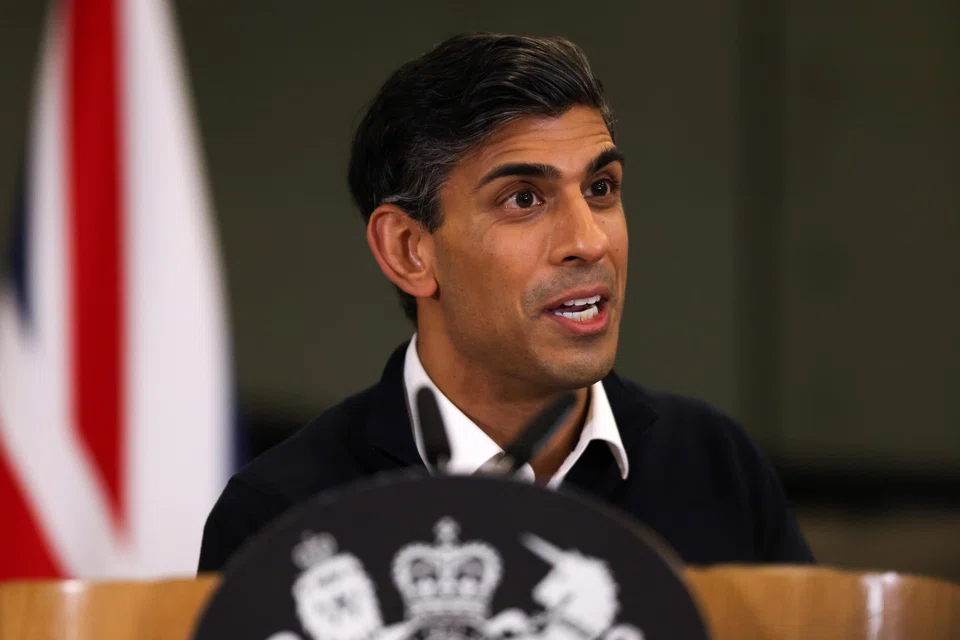
AROUND 100 days into office, UK Prime Minister Rishi Sunak undertook a reshuffle last Tuesday (Feb 7) intended to recharge his government. Yet, it may amount to little more than “moving the deckchairs on the Titanic”.
Sunak’s reshuffle, the fifth in some 20 months by successive Conservative governments, didn’t actually move many Cabinet ministers. Rather it shifted existing members of the prime minister’s top team around in what is actually more of a reform of the government architecture.
This restructuring of the ministry landscape saw the former Department for Business, Energy and Industrial Strategy (BEIS) split three main ways. This is only the latest change for the department which, since its inception in 1861 as the-then Board of Trade, has undergone wide-ranging changes since the 1960s in various forms.
The latest manifestation of change is three “new” entities: the Department for Business and Trade, which will be headed by Kemi Badenoch, formerly international trade secretary; the Department for Energy Security and Net Zero which will be led by Grant Shapps, the former BEIS secretary; and the Department for Science, Innovation and Technology which will be helmed by Michelle Donelan, the former secretary of state for culture, media and sport.
The reforms are intended to bring a fresh new approach to deliver on the prime minister’s policy priorities, including halving inflation and growing the economy. However, in some respects it represents much more of a “return to the past” with, for instance, an energy department previously having been in existence from 2008 to 2016 when Theresa May abolished it, and from 1974 to 1983 too.
Those many people wanting a turbocharged UK energy strategy will hope that the Department for Energy Security and Net Zero enjoys significant clout as a standalone department. This is not only in addressing high energy costs, but also addressing the decarbonisation of the energy system and the movement toward net zero.
Overall, the changes effectively recreate the old Department of Trade and Industry which was itself created twice (1970 and 1983) by Conservative governments before being split up or refocused by Labour. They also mark the end of the short-lived Department for International Trade, created by May as part of her bid to deliver “Global Britain” in the wake of Brexit.
The moves do little for ministerial stability in the important business brief. Badenoch’s move makes her the sixth secretary responsible for business since the 2019 election. Renewing and in some cases rebuilding those relationships with stakeholders and setting new departmental directions all take time with the clock ticking toward a probable 2024 ballot.
It is likely that Sunak’s former role as UK finance minister could also have played a significant role in his decision to salami-slice BEIS after he clashed last year with then-business secretary Kwasi Kwarteng over the government’s response to the energy crisis with a widespread belief that the department was too big to get a grip on the issue. As much as contrasting personalities, this rivalry reflects a deeper, long standing tension between the two pillars of government which had often found themselves at odds over how the economy should be managed.
As the constant changes to the department landscape since the 1960s shows, there has been an inability to find a permanent platform for the business function which frequently advocates for more interventionist approaches in the face of Treasury power. It is therefore possible that the big departmental winner could be the finance one long at the heart of the UK political establishment.
The decision to “create” a department focused on science and innovation may well reflect Sunak’s period in Silicon Valley when he lived in California. He has regularly argued that the UK economy has fallen behind its US counterpart because of an innovation gap, and that the new department “will make sure the UK is the country where the next great scientific discoveries are made – and where the brightest minds and the most ambitious entrepreneurs will turn those ideas into companies, products, and services that can change the world”.
Key early tests for the new science and technology team will include delivery of a credible and coherent semiconductor strategy which is long awaited. Plus also deciding upon the UK’s involvement in EU programmes such as the Horizon Europe research and development framework and the Copernicus Earth satellite scheme which remains up in the air amid friction with Brussels over the Northern Ireland protocol.
Politically, the key question from the reorganisation is whether this might allow Sunak to make unexpected strides before what is widely expected to be a general election next year. It is most unlikely this will be the case.
For one thing, redrawing the UK political landscape in this way often leads to “turf wars”, staff uncertainty and the creation of new working practices which tends to delay rather than accelerate change in the short term. It is estimated by some that setting up new IT and HR arrangements may take until 2025 before becoming fully operational.
Moreover, even if Sunak is proven right that the changes are a route to longer-term growth, turning the United Kingdom into a science and technological superpower is not a natural campaigning issue. He will therefore struggle to make this issue resonate with the electorate.
Another looming headache for Sunak is that, while the reset might provide him with some political breathing space to again focus on his priorities after the sacking of Nadhim Zahawi as a Cabinet minister, a threat still looms large from the investigation of Deputy Prime Minister Dominic Raab. There is increasing pressure around those bullying claims which may come to the boil this Spring.
Raab is still heading up the Ministry of Justice with Sunak wanting to follow due process while the minister, who insists he is innocent of all accusations, is probed. The challenge for the government is that, if Raab is eventually forced to resign or be sacked, there will need to be another mini-reshuffle in the next few weeks, leaving some Conservatives to ask why not wait to find out rather than having two periods of Cabinet-level change.
Far from recharging the government, the changes may therefore amount to somewhat inconsequential moves, reminding many voters that more than a dozen years into office that the Conservatives have done too little to deliver on these key policy agendas.
Andrew Hammond is an associate at LSE IDEAS at the London School of Economics
TRENDING NOW

First Resources blames El Nino, outside fires for Kalimantan hotspots amid haze scrutiny

High Court rules against Julius Baer’s Singapore trust arm in US$50 million family trust dispute

Singapore key exports jump by higher-than-expected 68.4% in September, led by non-electronics

MSCI proposes downgrading Indonesia to standalone market status

