

Sustainability reporting: leading by example
While there may be areas for improvement, kudos must be given to Singapore’s Ministry of Sustainability and the Environment for its voluntary initiative to share the carbon emissions and resource footprint of public agencies
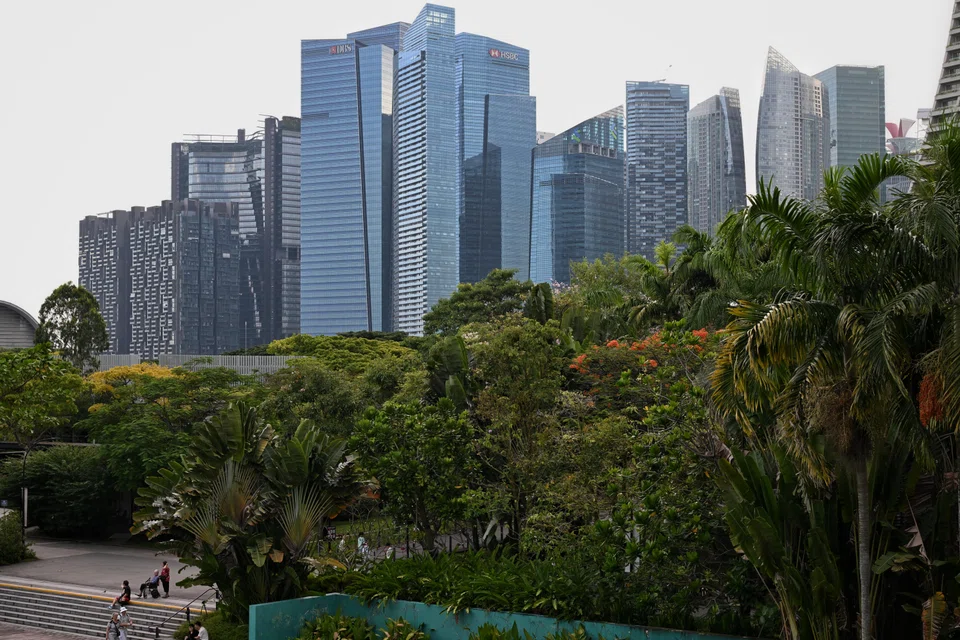
AMID growing international concerns about climate change, the Singapore government has taken a significant step forward to green the public sector with the publication last month of its first environmental sustainability report, the GreenGov.SG report.
Singapore is the first country in Asia, and among the first in the world, to publish a whole-of-government environmental sustainability report, the significance of which extends far beyond the disclosure of data. It is often said that “what gets measured, gets managed”. The report will focus the attention of internal and external stakeholders on the public sector’s environmental performance, inevitably elicit both criticism and praise, and, over time, drive further improvements in decarbonisation and how environmental issues are managed.
One area where more can be done is to include Scope 3 carbon emissions. The report addresses only Scope 1 and 2 emissions, whereas Scope 3 emissions, from an organisation’s value chain, often make up the bulk of its carbon footprint. CDP, a non-profit that runs an international environmental impact disclosure system, estimated that upstream Scope 3 supply chain emissions were on average 11.4 times greater than Scope 1 and 2 emissions.
Scope 3 comprises 15 categories of upstream and downstream emissions, not all of which may be equally relevant for the public sector – an example being Category 14, which deals with franchises.
But, most categories are relevant, such as Category 1, which addresses purchased goods and services, or Category 6, covering business travel. Of course, detailed Scope 3 carbon accounting would require considerable effort and resources, and a pragmatic balance must be struck between comprehensiveness, precision and materiality. If tracking emissions from individual procurement contracts across all public agencies is too onerous to implement all at once, spend-based estimates can be a good way to start.
Catalysing decarbonisation
While there are possible areas for improvement, kudos must be given to the Ministry of Sustainability and the Environment (MSE) for its voluntary initiative to share the carbon emissions and resource footprint of public agencies. There is no international or domestic requirement for the public sector to do so, nor any widely used international framework developed specifically to measure the public sector’s environmental impact. While the report takes reference from the Greenhouse Gas Protocol, the latter was prepared primarily as a corporate accounting and reporting standard. The GreenGov.SG report is thus a ground-breaking initiative by the public sector to hold itself accountable, and potentially encourage other governments to do likewise.
The GreenGov.SG report can also catalyse broader societal decarbonisation in Singapore. The report was written to be accessible to laymen, using clear and simple language to explain the public sector’s decarbonisation efforts. It includes insightful case studies that illustrate specific actions taken, which other organisations and companies can consider adopting. It also provides real-world examples of public-private partnership, such as the collaboration between the National Environment Agency (NEA) and Keppel to study the feasibility of integrating carbon capture at Singapore’s waste-to-energy plants to help them achieve net-zero, and potentially even net-negative, carbon emissions. NEA and Keppel are also exploring opportunities for the offtake and storage of captured carbon to close the carbon-cycle loop.
The breakdown of Scope 1 and 2 emissions by ministries was interesting, revealing which parts of the government have the highest emissions. However, it is not always apparent what is included under each ministry’s emissions, especially since many providers of public services have been corporatised. For example, are emissions from Singapore’s ports or autonomous universities included? Greater granularity on the report’s boundaries would help readers better understand what exactly is being measured and reported.
The GreenGov.SG report was refreshingly transparent in acknowledging gaps in data collection, such as the non-inclusion of energy data from district cooling, or performance data for waste. It explained that waste disposal is not metered in Singapore, and thus more time is needed to improve the public sector’s data collection processes for waste. With the many reported incidents of greenwashing and organisations overstating their sustainability achievements, the candour in admitting the limits of existing processes is reassuring. It does not detract from the report, but enhances its credibility. During the Parliament sitting on Jan 10, Minister for Sustainability and the Environment Grace Fu elaborated that the public sector aimed to start tracking and publishing data about its waste, starting from the next report.
The process of putting together an environmental sustainability report can be just as important as the outcome. Through the rigour of data collection and analysis, the public sector is raising environmental awareness and building up green capabilities. Over time, with the natural movement of personnel, this pool of sustainability-trained talent will also bring valuable green skills and mindsets to the wider Singapore workforce.
Taking a leaf from corporate sustainability reporting
As MSE reflects on the themes for its next report, it may want to consider incorporating elements from the standards and practices developed to guide corporate sustainability reporting, such as the requirement for companies to regularly review and determine their material ESG (environmental, social and governance) factors. Such materiality reviews involve the engagement of stakeholders and help companies prioritise and focus their attention on the most critical sustainability risks and opportunities. A similar materiality assessment might also help the GreenGov.SG report focus on the public sector’s most significant environmental impacts.
Another area where considerable work has been done by corporates is in the disclosure of climate-related risks and opportunities, following the recommendations of the Task Force on Climate-related Financial Disclosures first published in 2017.
Given the existential threat posed by climate change, a deeper discussion on how climate change, including both physical and transition risks, can have an impact on public sector organisations, and what they are doing in response would be appreciated by readers. It would also help Singaporeans and Singapore companies better understand how they should think about and address climate-related issues.
With the adoption of the Kunming-Montreal Global Biodiversity Framework in 2022 and release of the recommendations of the Taskforce on Nature-related Financial Disclosures last year, the GreenGov.SG report can, over time, also address nature and biodiversity-related issues, which are gaining increasing international attention.
There are many other topics that can be covered, but it would be unrealistic to expect the report to be all things to all people. The report’s breadth and depth would probably expand over time, just as corporate sustainability reporting has evolved over the years. Companies have taken many years to reach the current standards of sustainability reporting and are still regularly considering how they can do better. No sustainability report is perfect. What is important is for organisations to take the first step, and lead by example, as the Singapore public sector has with the GreenGov.SG report.
The writer is chief sustainability officer of Keppel Ltd
TRENDING NOW

Once staunchly pro-China, Malaysian Chinese businesses are now distancing themselves from Beijing

Looking beyond looming CEO succession, should UOB potentially pursue a transformative merger?

Could stablecoins be the future of money?

Grab CEO’s wife Chloe Tong on life with Anthony Tan and finding her purpose

