

Taiwan’s election results and the risks
MANY have been looking closely at the recent elections in Taiwan and not without reason. That attention, however, is not primarily about economic prospects, the key chipmakers, or day-to-day issues facing voters on the island of some 24 million. Rather, it is because mainland China lays claim to the territory whereas the United States is committed to assist its self-defence, making Taiwan a potential flashpoint for conflict.
While this is a long-standing issue, the noise level was much raised recently. More than a few politicians sounded alarm bells about the risks of Taiwan being invaded, mirroring Ukraine’s fate. Just last year, senior American military figures and former commanders publicly proclaimed that China has plans and timelines for invasion.
The People’s Liberation Army stepped up its military presence at sea and in the skies. As electioneering heated up, Beijing characterised Taiwan’s vote as a choice between peace and war.
Now the results are in, are risks of imminent conflict raised? Should businesses prepare for the worst?
Reading the results
Much depends on how the results are read.
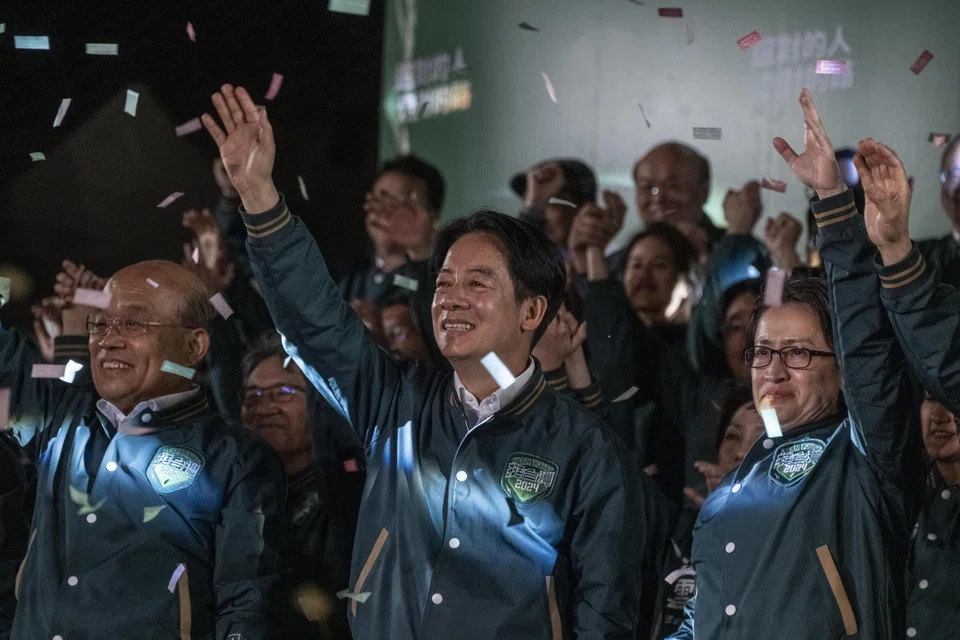
Lai Ching-te of the incumbent Democratic Progressive Party (DPP) comfortably beat the main opposition Kuomintang (KMT) party candidate Hou Yu-ih and Ko Wen-je from the newer Taiwan People’s Party. In terms of total vote share in the three-way contest, however, he did not secure an outright majority, with just over 40 per cent.
Compared to the last polls, this is a drop of some 2.5 million votes for the DPP’s support. Note too that voting for the Legislative Yuan was held concurrently, and the party also lost its majority. Beijing had labelled Lai as a “separatist” and mainland observers were happy to read the result to mean that a clear majority – some 60 per cent – reject the DPP and Lai.
The math is clear but interpretation is contestable about how voters feel about ties with the mainland. The established parties – DPP and KMT – did emphasise that question, with the latter more pro-engagement. Yet note how the new “third party” candidate, Ko from the TPP, garnered more than 3.6 million votes.
He tapped into voters, especially the young, who are more concerned about local and broader issues – slow growth, insufficient jobs with good wages, and a lack of housing. They embraced Ko as someone who could shake things up in their favour. Their choice reminds us of the old adage that “all politics is local”.
The incoming Lai administration will be well advised to take heed of these broader issues to try to win back support. They do not have a blank cheque on China and must rein in separatist tendencies.
Initial responses and the status quo
This does not mean relations across the Straits are now unimportant. There remain real differences in tone and character about ties with the mainland. But they are not black and white, war and peace.
No candidates promised independence. Even Lai – the suspected separatist – said he embraced the existing status quo of the current Tsai administration, rather than risky new ventures. After the result, he called for dialogue with China.
At the other end of the spectrum, the KMT did not accept future reunification. Note their reaction when former president Ma Ying-jeou suggested that Taiwan could never win a war against the mainland. Current KMT leaders feared such remarks would cost them votes and excluded Ma from their closing election rallies.
In the US, when asked about the result, President Joe Biden’s to-the-point response was that the US does not support independence. This tightly sticks to long-held US policy, compared to previous occasions that said the US would defend Taiwan.
China’s full response remains to be seen. But its leaders have other priorities including growing the economy and seeking investment. Those interests run counter to any proclivity to wage war unless Lai openly declares independence or takes rash actions.
In the coming months, security analysts will parse the size and frequency of military manoeuvres. There will be diplomatic skirmishes too, such as the island state of Nauru switching recognition away from Taiwan. Attention will also be given to what Lai will say at his inauguration speech in May, and how Beijing responds. Dialogue and understanding, however, may prove scarce. Lai and vice-president-elect Hsiao Bi-khim remain on a Beijing “black list” and there is no clear channel of communication.
The situation bears watching but headline concerns about conflict in the near term that some have raised now seem overstated. The election results have been relatively benign, indeed supportive of the status quo. Complications could arise from events elsewhere, however.
Meanwhile in Iowa
The largest risk from elections held in January was not Taiwan but in the state of Iowa, USA. This mid-west state held the primary contest among Republican candidates, the first stop on the long and arduous road to the American presidency.
The huge margin of the win by former president Donald Trump leads many to foresee him securing the nomination by the Republican party. Given how badly President Joe Biden is doing in the early election sentiment polls, some already predict a Trump Administration II. It remains too early to say. But such a prospect rightly bears contemplation, whether or not you like Trump.
The American vote will have global repercussions and not only on ties with China or Taiwan’s future. It would also be critical to the Ukraine and Israel-Hamas conflicts, as well as policies for business, trade and technology. Remember too that when he took office, President Trump seemed to delight in reversing decisions taken by his predecessor.
Some four billion people across the planet will have a chance in 2024 to vote for their next political leaders. Most elections will turn on local and national issues and preferences, and so will America’s. But its dominant role in the world and its domestic schisms make the US – far more than Taiwan – unpredictable and perhaps the biggest election risk in a turbulent world.
The writer is chairman of the Singapore Institute of International Affairs
TRENDING NOW

Malaysian king buys stake in Singapore-listed mining firm expanding into rare earths

Family offices ‘kept captive’ by relationship managers turn to independent advisers, direct deals

Once staunchly pro-China, Malaysian Chinese businesses are now distancing themselves from Beijing

Could stablecoins be the future of money?

