

Take calculated risks to revive local market
SGX RegCo has not gone as far as emulating the Tokyo Stock Exchange – but it hasn’t stopped talking about it

A LOT was said this past week about the national effort to revitalise the Singapore stock market. Most of it was encouraging, but some of it left me wondering if the most relevant issues will ever be addressed.
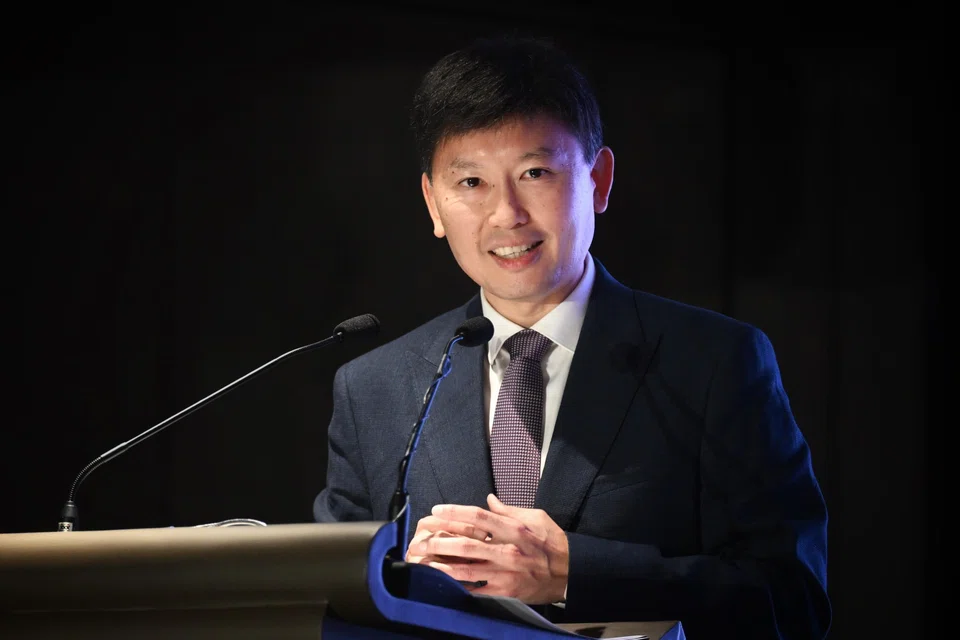
Second Minister for Finance Chee Hong Tat said in a speech on Sep 16 that the equities market review group set up by the Monetary Authority of Singapore (MAS) is prepared to try new ideas and take calculated risks.
He noted that Singapore has managed to establish itself as the largest real estate investment trust (Reit) market in the Asia ex-Japan region, and attributed this to a supportive regulatory framework and ecosystem.
“I believe there can be other such opportunities for Singapore’s equities market – not to go head-on against the larger exchanges, but to identify areas where we can add value by playing to our strengths,” added Chee, who is chairing the MAS review group.
Singapore could, for instance, try to position itself as a trusted listing venue for mid-sized regional companies, Chee said. Such companies would enjoy better investor familiarity in Singapore than in a larger global market.
Singapore Exchange chairman Koh Boon Hwee, who is a member of the MAS review group, expressed a similar view.
“We should not expect or require Singapore-domiciled companies to be listed locally, but I believe there is a sizable pool of companies in Singapore and the region that will be better off seeking liquidity in a venue where their products and services are known to the population at large,” Koh said, in SGX’s latest annual report released last week.
Both Chee and Koh emphasised that a vibrant stock market is crucial to Singapore’s economy, as it provides an avenue for private equity and venture capital investors to offload mature investments and reinvest capital into other startups and early-stage growth companies.
“Investors need liquidity events to recycle the capital deployed, failing which the supply of such capital will eventually dry up,” Koh warned.
“Some may argue that the stock market is only one aspect of our financial ecosystem, but it is more like a pillar,” Koh added. “We should recognise that if this one pillar were to falter, the whole is put at risk.”
Foster local funds
There is only so much SGX can do on its own, though. “The success of the stock market is dependent on multiple factors, some of which are outside the control of SGX Group,” Koh said.
He added: “We have worked hard to put in place an accessible venue that facilitates the exchange of capital and ideas. But the venue itself cannot create supply or demand. Other factors are necessary to bring about the vibrancy that is needed.”
Koh noted that previous attempts at enlivening the local market focused on the supply side. “We need to be more holistic in our approach, and more importantly, give equal emphasis to the demand side of the marketplace.”
One specific suggestion he made is to foster a domestic institutional asset management industry that invests in the local market. “Only when we support our own stock market, can we attract foreign companies to list here. After all, if we do not support our own market, why should we expect others to do so?”
Reduce regulatory burden
Chee said last week that the MAS review group is exploring three areas to better position the local market for growth, namely: encouraging a pipeline of quality listings; enhancing investor participation and broadening market liquidity; and re-evaluating Singapore’s regulatory structures and approach.
Among other things, the review group is studying ways to spur the secondary private fund sector to better support and nurture late-stage start-ups on the brink of considering an initial public offering (IPO).
The review group is also looking at enhancing research coverage of companies in targeted sectors, before and after they go public.
Chee said that ideas from industry players on how to improve market liquidity are also being examined. “Such measures include incentivising market makers to facilitate price discovery, broadening stock indices and expanding the pool of equity market derivatives.”
The review group also wants to reduce the regulatory burden on listed companies. “One area we are exploring is to streamline the prospectus disclosure requirements to lighten compliance burden for IPO issuers, while sharpening the focus on material disclosures and disclosure quality,” Chee explained.
Unlock value
While I do not disagree with the views expressed by Chee and Koh, I was disappointed that nothing was said about ensuring companies already listed take measures to maximise the market value of their shares.
Singapore’s thriving Reit market, which Chee mentioned in his speech last week, is anchored by big homegrown sponsor groups such as CapitaLand Investment and Mapletree Investments.
These sponsor groups have a strong incentive to ensure their Reits garner healthy market valuations – as this enables the Reits to raise capital and acquire properties from their sponsors.
Controlling shareholders of many Singapore-listed companies do not apparently have a similar incentive to keep their market valuations up. Many companies that come to market do little to develop an investor following, and their shares often quickly sink below their IPO prices.
In recent years, many companies with depressed share prices have ended up being taken private by their controlling shareholders.
Chee noted in his speech last week that approximately 85 per cent of the Singapore market’s securities daily average value is attributable to the 30 stocks that comprise the Straits Times Index.
The way I see it, the Singapore market will not easily draw promising mid-sized listing aspirants, especially if they are backed by private equity investors looking to maximise their return through an exit IPO.
This will be all the more difficult in the absence of a broad swathe of locally-listed mid-sized companies trading at healthy valuations.
Investors will not get excited about Singapore stocks and IPOs unless companies give them a reason to get excited.
Emulate Japan?
To be fair, Singapore Exchange Regulation (SGX RegCo) has been trying to remedy the situation – including by taking steps to promote board renewal, empowering shareholders to exercise their rights, and reviewing the manner listed companies are queried following unusual movements in their share prices.
SGX RegCo has, so far, eschewed taking a leaf from the Tokyo Stock Exchange and demanding that underperforming companies trading at low valuations disclose plans to turn things around.
It has not stopped talking about it, though.
“As the evidence mounts that the Japanese approach is working, there have been increasing calls for us to take a similar approach,” said SGX RegCo chief executive Tan Boon Gin, during a speech on Sep 17. “The biggest question, which I want to ask all of you directors here in the room, is whether the Japanese approach will be effective here in Singapore. Would the boards of our listed companies respond positively if we were to implement the Japanese approach?”
In my view, Singapore’s market regulators should go ahead and make it compulsory for companies with weak share prices to hammer out plans to unlock value. This could go a long way in improving the attractiveness of the Singapore market.
TRENDING NOW

First Resources blames El Nino, outside fires for Kalimantan hotspots amid haze scrutiny

High Court rules against Julius Baer’s Singapore trust arm in US$50 million family trust dispute

Singapore key exports jump by higher-than-expected 68.4% in September, led by non-electronics

MSCI proposes downgrading Indonesia to standalone market status

