Takeaways from a S$93.9 million Tanglin Hill GCB deal
Developers can be ambitious, pricing appears fair for the built-up area and specifications

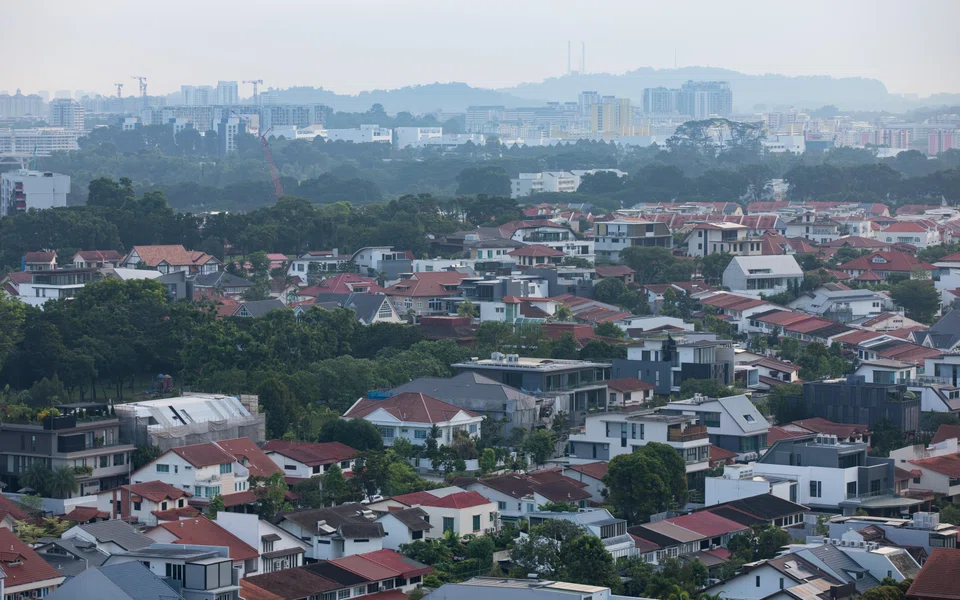
PAYING eye-popping sums for Good Class Bungalows (GCBs) in Singapore is not unheard of.
The estimated 2,700 GCBs located in 39 gazetted areas enjoy a scarcity value and represent the pinnacle of the housing market. These houses, which generally only Singapore citizens can buy, are found in locations such as Camden Park, Cluny Park, Nassim Road and Victoria Park.
Planning guidelines for bungalows in GCB Areas stipulate a minimum plot size of 1,400 square metres or about 15,070 square feet (sq ft).
Still, a deal involving the sale of a freehold bungalow in Tanglin Hill for nearly S$93.9 million stands out. For one, the Buyer’s Stamp Duty totals close to S$5.6 million.
The price per square foot (psf) of land area of nearly S$6,200 on the land area of 15,150 sq ft is a new record land rate for a GCB.
The bungalow is being developed by the Soh family, which is behind lifestyle developer Meir Homes. The two-storey house will have a high-ceiling attic and a large basement, as well as six bedrooms and a swimming pool. The built-up area of almost 30,000 sq ft includes the basement, which holds the entertainment areas, a wine cellar and space for more than a dozen cars.
Several takeaways can be gleaned from analysing this Tanglin Hill GCB sale.
One, a developer of a prime landed home should be ambitious. Build big and price high as one can snare a buyer with the right product. Possibly, a buyer of a new GCB with a large built-up area and high specifications needs to budget around S$100 million going forward. And the beauty of selling a bespoke house is one only needs to secure that one party who will pay a good price.
Rather than build a boutique condominium with 50 flats and gross development value (GDV) of close to S$100 million, a developer may be better off building one GCB with a similar GDV. With the latter, closing one sale clears the inventory completely. On the other hand, with the former, one may struggle to sell the project’s remaining few less choice units.
A developer who spends almost S$50 million buying land of over 15,000 sq ft in a choice GCB location and nearly S$40 million in other development costs may earn an adequate return by closing a S$100 million sale.
Also, as rebuilding an old GCB takes effort and time, some wealthy buyers may prefer to pay a developer to deliver them a completed high-specification GCB.
Moreover, a GCB buyer who needs time to rejig his portfolio and arrange financing, might value having wide flexibility in deal structuring such as a long period to exercise a purchase option.
Maxing the envelope
Two, maxing out the buildable area could be the way to go for private landed homes here. Perhaps high land costs encourage owners to build the maximum permissible for each inch of land despite elevated construction costs. The share of land cost in a house’s gross development cost falls as the built-up area increases.
A new-built GCB is a two-storey structure, with site coverage restricted to 40 per cent of its land area. There is scope to build an attic and mezzanine floors. Including the attic, the maximum overall height for two-storey landed houses is 12 m. Also, subject to various conditions, a GCB can have a fully submerged basement, with sufficient setback from the site’s boundary lines.
Among resident households, the average household size in landed homes was 4.07 persons in 2023 versus 4.65 in 2000, and 4.39 in 2010. Nonetheless, even if the household size in landed homes is not rising, buyers have environmental considerations and higher property taxes likely apply to homes with larger built-up areas, the economic logic of building mega-sized houses may continue holding sway.
Three, the Tanglin Hill GCB buy could represent good value based on an estimated price psf of built-up area of around S$3,100.
While not directly comparable, the above price is low versus the price psf of the saleable area of some prime condominiums. A 57th floor apartment of new project Skywaters Residences, along Shenton Way, was sold in May for S$47.34 million, or S$6,100 psf, marking a record price psf for a 99-year leasehold home.
Prices exceeding S$6,000 psf have been achieved for transactions in freehold condominiums – Les Maisons Nassim and The Marq on Paterson Hill – located fairly near Tanglin Hill.
Sure, one can access a condominium’s shared facilities such as the function room or gymnasium, whereas one has to provide for such amenities within a landed home’s compound. Still, wealthy residents may value the privacy accorded by GCB living.
Moreover, a condominium owner might need to deal with potential disputes among various strata owners over issues affecting all the development’s dwellers.
Tax effects
Four, the Additional Buyer’s Stamp Duty (ABSD) regime may drive heavier investment in a household’s primary residence.
A Singapore citizen pays no ABSD when buying the first home. For a local, the ABSD rate is 20 per cent for buying a second home and 30 per cent for purchasing a third and subsequent home.
Take a super-wealthy Singapore citizen family comprising a couple with two grown-up children who seeks to allocate around S$160 million to Singapore residential property.
In the above case, it may be sensible to spend close to S$100 million on a GCB as the family’s residence plus around S$20 million each on three luxury apartments for leasing out to earn rental income. No ABSD is payable if the four homes are held separately by each family member as their first property.
In contrast, the family incurs hefty ABSD if it spends S$30 million on the primary residence and S$130 million on 10 investment homes.
The GCB market enjoys many tailwinds – key of which is Singapore’s attractiveness to the rich. As such, expect developers who understand the market to deliver mansions with all the bells and whistles, and buyers to pay possibly new record prices for such trophy homes.
Still, while GCBs can be wonderful family heirlooms for passing through generations, potential future tax spikes might make holding on to such heirlooms tricky.