

Taking Singapore forward at a more relaxed pace
Far from enabling decline, a more forgiving view of success could encourage flourishing

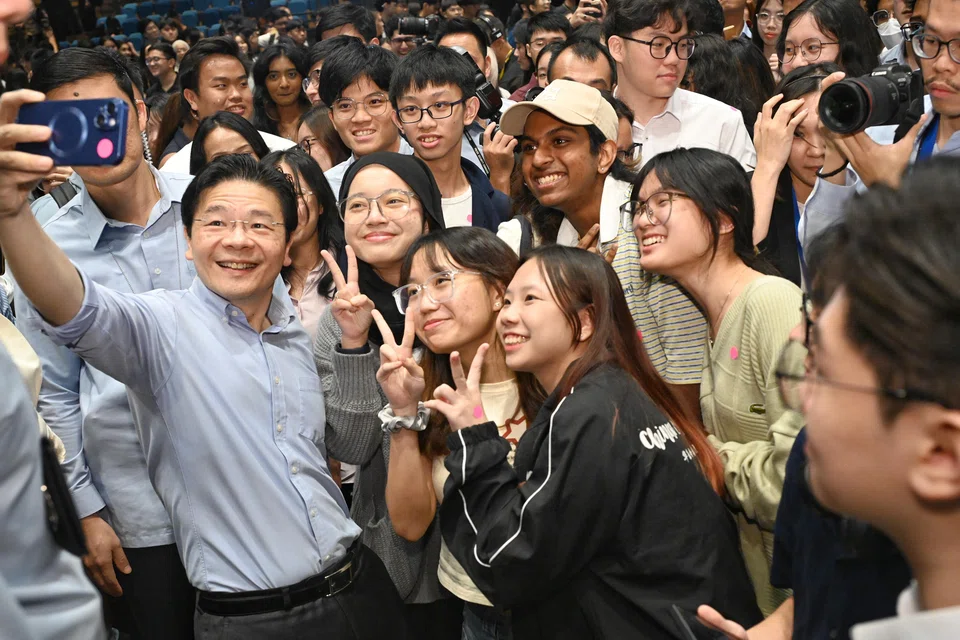
ON TUESDAY (Jul 2) evening, Prime Minister Lawrence Wong delivered a now-familiar message to an audience of keen young students: instead of feeling pressured to pursue one form of success, they can take their time to find their own way.
“We will provide more opportunities for all Singaporeans to chart your own paths – to pursue your diverse aspirations, and your own definitions of success,” the prime minister said at a dialogue held by the Institute of Policy Studies and student-led inter-university initiative Varsity Voices, at Singapore Management University.
With Singapore’s maturing economy heading towards a slower long-run growth path and employers facing persistent manpower shortages, one fear might be that such kind words will nurture a less productive generation.
To be fair, the idea of “many pathways to success” has been trumpeted even before Wong entered politics, with former PM Lee Hsien Loong using the term as early as 2006. Deputy Prime Minister Heng Swee Keat doubled down on it when he was education minister from 2011 till 2015, as have his successors in the ministry.
But there is a stronger sense now – not least after Covid-19 caused a worldwide reassessment of personal priorities, perhaps – that this mindset is taking root.
Policy changes have reinforced this by expanding educational and employment opportunities at various levels: from making it easier for Normal (Academic) students to enter polytechnics, to extra funding for Institute of Technical Education graduates to pursue diplomas.
And as much-maligned millennials become parents, the supposedly work-shy attitudes for which they once drew flak might translate to a less competitive style of parenting.
Could this portend a slide into decadence and decay? Employers have long complained that young Singaporeans are not hungry enough, while some managers bemoan what they see as an excessive interest in work-life balance.
First, it is worth noting that the prime minister did not advocate complacency, but rather pursuing excellence at a personal level. He said: “We all have our own abilities and strengths, there is no need to compare with others to squeeze into boxes we were not meant to fit. Instead, follow your own talents and strive to reach your own full potential.”
If anything, promoting different conceptions of success could ease longstanding manpower shortages in less attractive industries and roles.
Second, far from compromising Singapore’s vaunted economic efficiency, a relaxed attitude might instead ward off a different threat: burnout.
China’s phenomenon of “lying flat” or “tang ping” – in which young people reject a competitive culture and take an indifferent attitude to life – did not arise from a permissive societal attitude towards success.
It was prompted by the opposite: the earlier buzzword of “involution” or “nei juan”, describing how the rat race has become a destructive arms race.
In contrast, creating and maintaining multiple pathways for success can reduce overcrowding on any single route, allowing more people to go further together. Healthier, happier workers are also more productive ones.
That is not to say that Singapore should adopt a more expansive attitude on success in the secret hope that it will, ironically, result in greater overall productivity. Economic growth remains an existential imperative, but is itself a means to an end: greater societal welfare.
A kinder environment might indeed enable some degree of complacency. But this might be a worthwhile trade-off if it also creates the breathing room for high-fliers and ordinary workers alike to flourish in their own ways.
TRENDING NOW

World’s largest offshore wind platform by Seatrium consortium on track to be completed by 2028

Is stamp collecting enjoying an analogue revival or are its best days over?

GovTech retrenches another 38 staff in second round of layoffs

MBS adjusted property Ebitda falls 20.6% in Q3 with fewer high-roller visits, weaker hold

