

Taking stock of finances before 2025 ends
Six areas to look into when reviewing money decisions
THE year drawing to a close means that we are left with a few weeks to maximise tax savings – if one has not done so – by reducing our chargeable personal income. Before the taxman comes knocking in early 2026, bear in mind that there is an overall annual personal income tax relief cap of S$80,000.
1. Supplementary Retirement Scheme (SRS)
Every dollar you contribute to SRS will reduce your chargeable income by a dollar. All SRS contributions must be made by Dec 31 of the year or as required by your SRS operator, to be eligible for SRS tax relief in the following year of assessment. The yearly contribution cap is S$15,300 for Singaporeans and permanent residents, and S$35,700 for foreigners.
In your peak earning years, use SRS to defer taxes that would be paid in higher-income tax brackets. This way, you can pay taxes in lower tax brackets during your retirement years when you draw a lower or no income.
Do note that if you make withdrawals before the retirement age, a 5 per cent penalty applies and your full SRS withdrawal amount will be subject to your usual income tax rate.
Parking your savings in SRS not only makes you eligible for some tax relief, but also stretches your dollar through investment. After all, leaving the money idle only earns you a paltry 0.05 per cent per annum.
As at end-2024, total SRS contributions amounted to S$20.58 billion, of which 19 per cent or S$3.91 billion was left idle as cash. The balance was invested in shares, real estate investment trusts, exchange-traded funds, insurance, unit trusts and fixed deposits.
If you do not have an SRS account yet, consider setting one up and contributing S$1 (to keep it active). This lets you lock in the penalty-free withdrawal age of 63, as the statutory retirement age will increase to 64 on Jul 1, 2026; and to 65 by 2030.
The penalty-free withdrawal period starts when you make your first withdrawal at or after the statutory retirement age that was prevailing when you made your first SRS contribution. During the penalty-free withdrawal period, half of your SRS withdrawals will be subject to tax.
2. Central Provident Fund (CPF) accounts
Maximise your and your loved ones’ nest egg by topping up CPF accounts to leverage attractive interest rates and compounding.
I usually top up my CPF accounts and those of my loved ones in January to kick-start the compounding. This year, the CPF Basic Retirement Sum is S$106,500, the Full Retirement Sum is S$213,000 while the Enhanced Retirement Sum is S$426,000. And the Basic Healthcare Sum (for CPF MediSave Account) is S$75,500.
You can enjoy a tax relief of up to S$8,000 when you top up your own Special/Retirement Account and MediSave Account, and an additional tax relief of up to S$8,000 when you top up your loved ones’ Special/Retirement Account and MediSave Account.
3. Donations
Donations made to an approved Institution of a Public Character (IPC) are eligible for a 250 per cent tax deduction. This means that for every S$1 donated, you get S$2.50 deducted from your chargeable income.
Tax reliefs for donations are not subject to the overall annual personal income tax relief cap of S$80,000. They are usually granted automatically based on electronic records submitted by the IPC.
4. CPF Matched Retirement Savings Scheme
This scheme was enhanced in January this year to enable Singapore citizens – aged 55 and above – who currently have less than the Basic Retirement Sum, to save more and get a higher monthly payout. The government matches cash top-ups made to such individuals’ Retirement Account, up to a cap of S$2,000 each year.
If a CPF member puts in S$2,000 annually from age 60 for 10 years and receives the grant of S$2,000 a year, the savings work out to S$48,000, including CPF interest, when the CPF member reaches 70.
These cash top-ups must be made before the end of the calendar year. So if a member tops up S$2,000 this year, the government will pay the matching grant of S$2,000 next year.
5. SkillsFuture credits
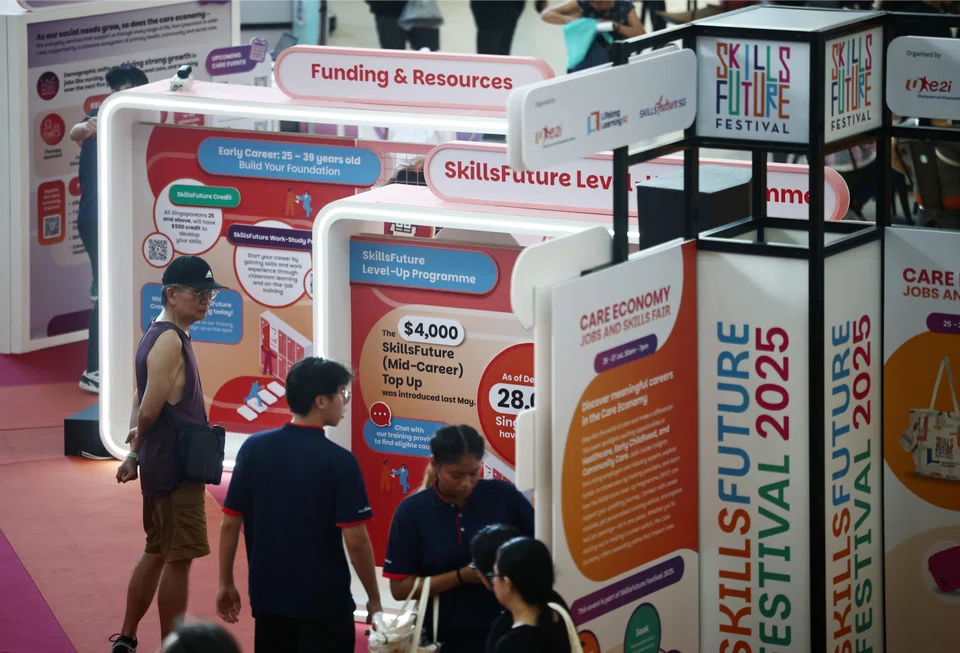
Aimed at encouraging lifelong learning and skills development for Singaporeans, SkillsFuture credits can be used to pay for out-of-pocket course fees of approved work-skills-related courses. And they can be used in addition to existing government course subsidies.
Generally, all Singapore citizens aged 25 and above receive an initial opening credit of S$500, which does not expire. The government provides periodic top-ups.
Do note that the one-off top-up of S$500 in 2020 will expire on Dec 31, 2025. Ensure that your course starts and the claim is submitted before this date.
One hack to maximise SkillsFuture credits is to stack it with other funding. Consider highly subsidised courses, and use your SkillsFuture credits to offset the balance of the course fee. Also apply for other credits that you may be eligible for, such as the mid-career support credit.
Remember that you must generally achieve at least 75 per cent attendance and pass any required assessments to be eligible for funding support.
6. Investment portfolio
It is important to review your financial plan and investment performance once a year and when major life events occur. This enables you to make strategic adjustments instead of having knee-jerk reactions.
Crucially, check that your investment portfolio is still aligned with your financial goals and risk appetite. This is a good time to rebalance your portfolio, weed out underperformers, and consider adding new investments with promising potential to suit your risk appetite and time horizon. Also check the investment fees and explore lower-cost options. Seek professional advice if needed.
To build your investments over time, consider adopting the dollar-cost averaging strategy.
When you invest a fixed sum regularly into the same choice of investment over a period, you are accumulating more units when prices are low and fewer units when prices are high. Over time, the average cost of your investment could potentially be lower versus a lump-sum investment. This avoids the pitfalls of timing the market; and, the low-entry investment sum makes investing accessible to newbie investors.
Furthermore, adopting a long-term investing approach as part of your overall financial plan is prudent so that you do not lose sight of your future financial security while planning for your short and mid-term goals.
You might also wish to check out robo-advisory platforms that offer automated investment services, providing diversified, low-cost access to global markets. Some, such as the DBS digiPortfolio, carries a fund that adjusts your investment mix over time to suit your risk profile as you age.
Here’s a good reason to stop procrastinating: The actions you take in these final weeks of 2025 will result in tangible tax savings and set the stage for a more prosperous 2026.
The writer is head of financial planning literacy at DBS Bank, and author of bestsellers Money Smart and Retire Smart
TRENDING NOW

Once staunchly pro-China, Malaysian Chinese businesses are now distancing themselves from Beijing

Looking beyond looming CEO succession, should UOB potentially pursue a transformative merger?

Could stablecoins be the future of money?

Grab CEO’s wife Chloe Tong on life with Anthony Tan and finding her purpose

