Talking about World War III
DANGEROUS changes in politics and security are intersecting with shifts in the financial, economic and environmental spheres. We grapple with this “poly-crisis” of diverse and complex factors. While growth opportunities exist, including in most of our region, overall conditions are challenging and stability is not to be assumed.
There is even emerging talk about World War III. Comments come not only from political pundits, but also from business titans such as Elon Musk and Ray Dalio. One recent reference arose when French President Emmanuel Macron said the possibility of sending Nato troops into Ukraine could not be ruled out. In response, Russian President Vladimir Putin warned that WWIII could be the result.
Widening, escalating conflicts
Some of this is bluster. Putin’s warning came after his vast electoral victory. Yet there are more than plausible pathways to escalating conflict.
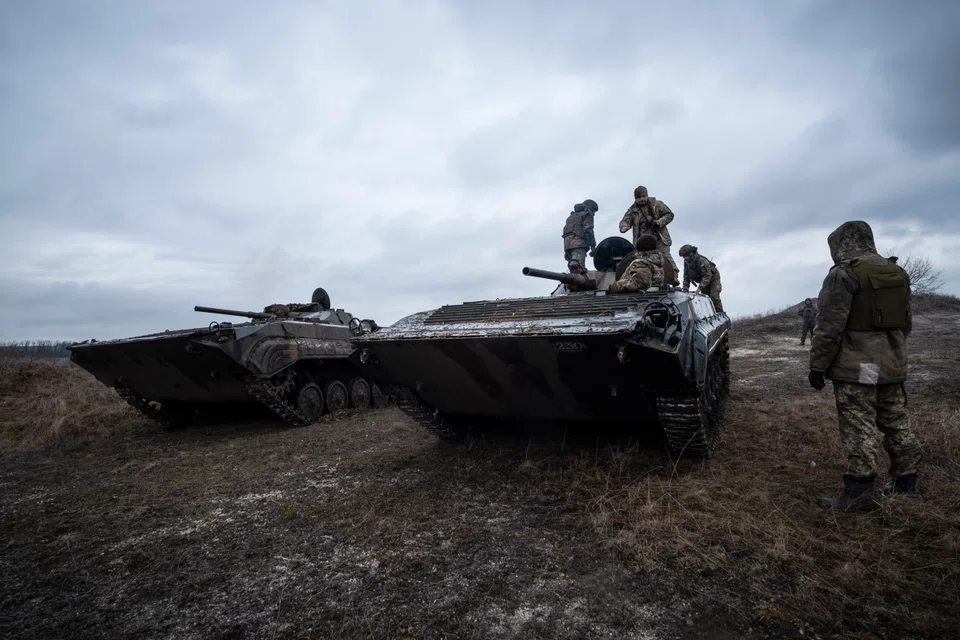
One is the war in Ukraine, already more than two years old and still without any clear effort at negotiation. Nato has expanded to include Finland and Sweden and, at great expense, supplies weapons to Ukraine. While this makes some feel secure, risks will rise if the goal is not just to prevent the Russian advance but also to defeat its military and weaken the state, which is a major nuclear power. The recent terrorist attack against civilians in a Moscow theatre – the largest ever suffered by the country – has increased Russian outrage.
Another risk arises from the Israel-Hamas conflict. Most focus on the narrow and heavily populated Gaza strip, and concern for citizens there. But there are already signs that the confrontation is widening with the Houthis and Hezbollah – two other groups backed by Iran.
Most visibly, the Houthis are targeting ships in the Red Sea and, in response, the US and UK are undertaking strikes at targets in Yemen. Concurrently, the Hezbollah has launched missiles from Lebanon, aimed at Israel. Some intelligence sources even suggested that a ground war is being planned along Israel’s northern border. That needs to be prevented, as does Iran’s direct involvement. Even so, the situation already involves more actors than it did just one or two months ago.
There are flashpoints in Asia too. With American resources stretched, some think North Korea may act unpredictably, or that China might be adventurous in the South China Sea or even with Taiwan.
Market (non) reaction and ‘business as normal’
Yet investors and many businesses presently show little to no reaction. Monetary policy and potential rate cuts are watched more closely than the next missile. It is true that markets can and have adjusted.
Remember the stir when Russia first attacked Ukraine in February 2022, leading to spikes in oil and wheat prices, which drove up inflation? There was also concern when the West slapped on broad and strict sanctions against Russia. But after a period, this has been normalised and business has largely carried on, regardless.
The Middle East situation seems to be approaching a similar phase. Most global shipping now avoids the Suez Canal, instead routing around Africa. This adds some three weeks to most voyages, with consequent ripples on the time, cost and reliability of supply chains.
There are no sanctions at present. Yet, driven by social media, consumers in some countries are already boycotting a number of high-profile American companies. As the US is seen to be Israel’s staunchest ally, McDonalds, Starbucks and Coca-cola have all seen revenue impacts in the Middle East and Asia.
Still, many seem to shrug it all off. These boycotts and sanctions on Russia are not major factors in market logic, compared to, say, sentiments about Big Tech. Or perhaps the assumption is that the current conflicts will eventually stabilise, and even de-escalate. It is true that after Russia’s annexation of Crimea in 2014, the conflict continued but at a lower intensity. Some think this can happen in Ukraine, especially if Donald Trump wins the US presidency and sympathy and resource support to Kyiv dries up.
Scanning and scenarios
Benign assumptions that this is the worst things will get bear scrutiny. Given all the unexpected things that have already happened, geopolitics clearly matters to the bottom line and risks can intensify. Reactions at the national level can also be especially pertinent. Take the example of TikTok.
In the US, the company – originally started in China – faces mounting political pressure as a fallout of Sino-American distrust and competition over technology and data. Meanwhile, in Indonesia, a new rule against selling products on social media triggered TikTok to sign off on a US$2 billion tie-up with the e-commerce unit of Indonesian giant GoTo Gojek Tokopedia.
Many global companies are giving more time and attention to politics. Appointments to senior management and even to boards now more commonly include those with political and strategic expertise. The demands for risk and strategic advice have also risen.
One set of scenarios under scrutiny relates to climate crises and the future price of carbon. Another is about Sino-American competition and shifting supply chains with sanctions as well as incentives for home and friend-shoring.
But few companies seem to look at the risk of WWIII. Perhaps amplifying such talk – especially from the mouth of Putin – is too scary and could spook investors irretrievably.
From past world wars, we know there were some sectors, businesses and countries that did well amid conflict while others fell badly and even failed. But it was never the same types of companies and sectors, and near impossible to predict in advance who would be the big winners. Consider too that any scenario for WWIII would have to factor in the risks of nuclear war.
The classic allusion is to the “fog of war” that prevents clear sight about what is ahead. Still, the best-managed and resourced companies will do well to gear up for such scenarios. Even if they cannot answer questions about WWIII, they may gain from the exercise of re-examining their business strategies as national governments and regions shift amid volatile global conditions.
The writer is chairman of the Singapore Institute of International Affairs and senior consultant for the WongPartnership law firm