

The ‘tech left’ is different this time
Many Silicon Valley leaders have embraced Trump’s second term. Will political dissent among US technology workers rise again?
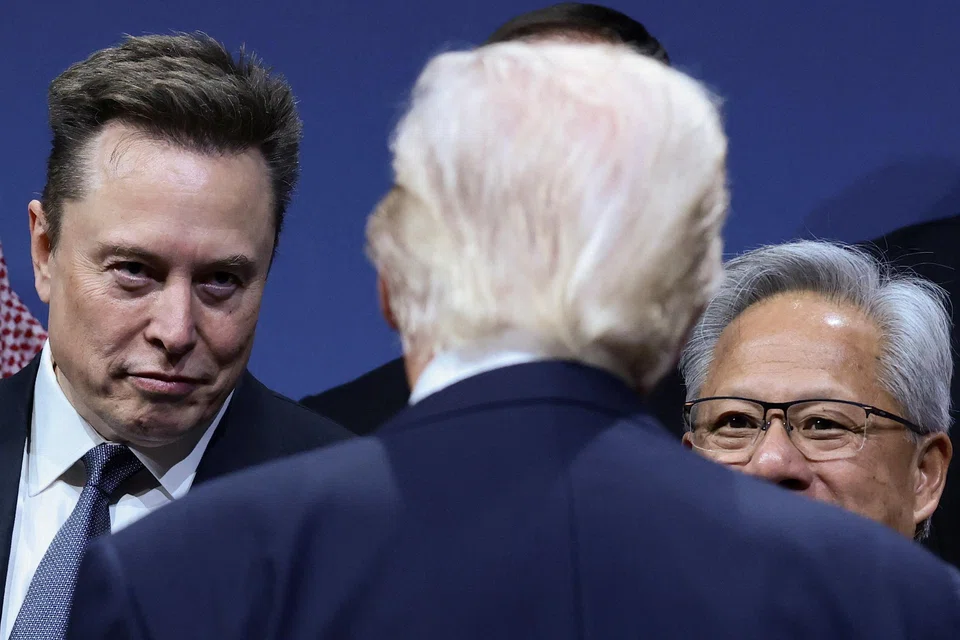
THE sight of the United States’ most powerful technology chief executive officers lined up behind the president – at an inauguration they helped pay for – was a visual declaration that the Silicon Valley effort to resist Donald Trump was dead.
As Trump took office again, gone was the anger that had emerged from Silicon Valley after the 2016 election, political action that brewed with the rank and file and extended to some of its top executives, such as Sergey Brin, the co-founder of Google, who protested in person against Trump’s 2017 travel ban on people from seven predominantly Muslim countries.
But recent events, most prominently the killing of a Minneapolis woman at the hands of an Immigration and Customs Enforcement (ICE) agent, has awoken the latent tech “left”.
“We all bear a collective responsibility to speak up and not be silent when we see things like the events of the last week,” Jeff Dean, chief scientist at Google, wrote on X.
“It stirred something in me,” concurred Manu Garg, a senior research engineer at artificial intelligence cloud giant Snowflake. Paul Graham, co-founder of the prominent Y Combinator startup incubator, asked simply: “How long before we say ‘enough is enough’?”
The question is what to do about it. “I don’t really have a call to action beyond this,” conceded Nikhil Thorat, who works at leading AI company Anthropic.
Over the weekend, a petition set up by a former Stripe employee was circulated on social media, asking tech employees to state on the record their opposition to providing services to ICE by the companies they work for or used to work for – an attempted revival of a successful rallying cry during Trump’s first term.
The petition calls for CEOs to denounce violent activity by the agency and cancel government contracts. It points to Trump’s decision to hold back on sending National Guard troops into San Francisco as evidence of the industry’s sway.
But organising tech workers in 2026 is much different than it was a decade ago. The petition’s organisers tell me it has so far attracted signatories from staff members at Meta Platforms, Amazon and Alphabet’s Google.


The list will be published when it reaches a threshold of 200. Given the immense workforces at the main companies – Alphabet alone has 190,000 employees – it’s a minuscule number that reflects the challenge ahead.
The landscape for activism has evolved drastically, and fragmented, since Trump’s first term.
One factor is the knock-on effects of a Biden administration that put the tech industry in its crosshairs and made Trump a lesser evil to some. Mergers that would have given workers a windfall were snarled by regulators. The administration’s hard-line stance on cryptocurrency stirred resentment and frustration.
“The only reason Silicon Valley was split in the past election was the spectacular own goal the Biden administration scored by alienating so many people in it,” Graham wrote to me in an e-mail. “Now that the Democrats have (mostly) stopped trying to attack tech, SV (Silicon Valley) should revert to its historical mostly Democratic norm.” He added: “I think the tech left will tend naturally to reassemble.”
Whether recent violent events will lead the reassembled left into activism in meaningful numbers is a difficult question. During the Biden years, technology companies shifted from humouring or endorsing dissent to ruthlessly clamping down on it. Even for the well-behaved, unless you’re a top AI researcher, the layoff axe dangles precipitously overhead.
For instance, on Monday (Jan 13), it was reported that Meta is planning a 10 per cent reduction to its Reality Labs division. Such cuts have become commonplace as firms tighten belts and channel budgets towards AI development. Rocking the political boat could come at a great personal cost.
In Trump 1.0, tech CEOs didn’t need much from their government besides continued paralysis on passing any meaningful regulation. CEOs could rebuff invitations to join Trump meetings without significant fear of retribution.
Now, they follow the president around the world, turn up at his photo ops and hand out golden tokens of affection. They do it to lobby for more favourable tariff conditions, lucrative AI contracts in the public sector and fast-tracked development of the infrastructure required to power it.
In these conditions, the sense of empowerment for the average tech worker has fallen. Survival instincts have taken precedence over politics. But as the number of prominent tech figures who voice dissent grows, the tech left may see a return to its strength in numbers. BLOOMBERG
Decoding Asia newsletter: your guide to navigating Asia in a new global order. Sign up here to get Decoding Asia newsletter. Delivered to your inbox. Free.
Share with us your feedback on BT's products and services
TRENDING NOW

Once staunchly pro-China, Malaysian Chinese businesses are now distancing themselves from Beijing

Looking beyond looming CEO succession, should UOB potentially pursue a transformative merger?

Could stablecoins be the future of money?

Grab CEO’s wife Chloe Tong on life with Anthony Tan and finding her purpose

