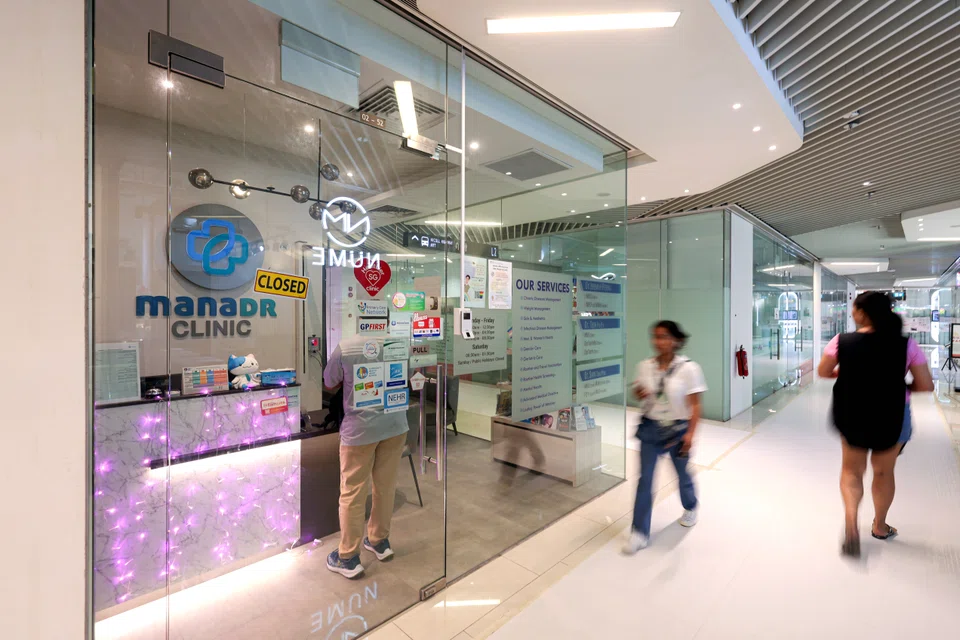
Telehealth abuse may go beyond MaNaDr clinic; more can be done to weed out errant doctors
In one sampled month, over 100,000 of MaNaDr’s teleconsultations involved video calls of one minute or less

AN UNCOMFORTABLE spotlight has been cast on Singapore’s telehealth providers – and all the bad apples may not have been caught yet.
On Aug 16, it emerged that teleconsultation services provided by MaNaDr Clinic “are likely to have involved clinically and ethically inappropriate practices”. Announcing these preliminary findings, the Ministry of Health (MOH) ordered MaNaDr to stop providing teleconsultations “until further notice”.
Among other things, in one sampled month, more than 100,000 of MaNaDr’s teleconsultations involved video calls of one minute or less. These “very short consultations” often resulted in the patient getting a medical certificate (MC) – with some patients getting several this way – within a short period of time.
“For example, in a sampled month, more than 1,500 patients were issued with MCs on five or more occasions, with the highest number of MCs issued to a single patient in a month being 19,” MOH said.
The shortest call lasted just one second. But what do the regulations say?
How short is too short?
MOH does not prescribe a minimum consultation duration. Rather, it mandates that a teleconsultation must be held to the same standard as any other consultation.
Whether online or offline, consultations take time. Doctors must listen to a patient’s symptoms; take their medical, family and social history; make a diagnosis; present a plan for treatment or further investigation; and type up these case notes. This is all before issuing an MC.
“There is no way a one-minute consult can achieve the above,” said gastroenterologist Desmond Wai. “In my personal opinion – and like in many institutions such as polyclinics – a 10- to 15-minute duration is required, especially for the first consultation.”
“For repeat consultations, sometimes it can be faster than 10 minutes”, but it is not possible that it can last only one minute, he added.
Granted, spurious MCs can be taken both in person and via teleconsultation. As Dr Wai put it: “Both are abusable.”
Yet, there are fewer hurdles to attending a teleconsultation compared to making a physical visit, making it “easier to cheat” on a video call, he said. “There is no need to physically go to the clinic, wait for the consultation, and return home – telemedicine allows a person to do it on his bed.”
Bad apples
MOH said it “will be auditing and monitoring other licensed providers of outpatient medical services via teleconsultation” to ensure compliance.
In doing so, it is likely to find similar cases of misconduct in some other telehealth players.
That is because many telehealth platforms – including MaNaDr – operate partially on an “independent contractor” basis. While some platforms are staffed by full-time anchor physicians, many rely heavily on third-party doctors operating on a locum, or part-time, basis.
These locum doctors are usually paid on a per-call basis, with the platform taking a cut – similar to how ride-hailing platforms take a commission from each ride.
Such locum doctors are free to work with multiple platforms. Indeed, just as how private-hire drivers switch between Grab, Gojek and other platforms to maximise their earning potential, locum doctors on telehealth providers may be doing the same.
Hence, any bad apples may be misbehaving not just on MaNaDr, but also on other platforms.
Weeding them out
Yet, even if locum doctors were independently choosing to engage in misconduct, that does not absolve MaNaDr of responsibility. Simple data analytics on any telehealth provider’s part – such as analysing consultation times – could have flagged this problem much earlier.
Telehealth providers could also choose to hard-code a minimum consultation time into their software. This would ensure that teleconsultations last for a predetermined period of time before the video call – for both the doctor and the patient – can be ended.
In addition, platforms could review the frequency at which individual doctors issue medical certificates, so that potential cases of misconduct can be flagged for further internal investigations.
However, only the most conscientious telehealth providers, if any, are likely to take such measures.
The reality is that in the absence of specific regulatory requirements, there is no incentive to invest the time, money and effort into having such safeguards.
Given telemedicine’s importance in Singapore’s wider healthcare strategy, perhaps it is time for more scrutiny of telehealth players.
TRENDING NOW
He built the Vingroup empire. Now South-east Asia’s richest man is handing some key roles to his sons
Grab CEO’s wife Chloe Tong on life with Anthony Tan and finding her purpose
DBS wants to be ‘Asian bank for Asians’ rather than global bank: CEO Tan Su Shan
PropNex plots its next act beyond Singapore residential property