Temper expectations in Singapore’s private purpose-built senior-living sector
Seniors are hardly homogenous and neighbouring countries can compete on costs

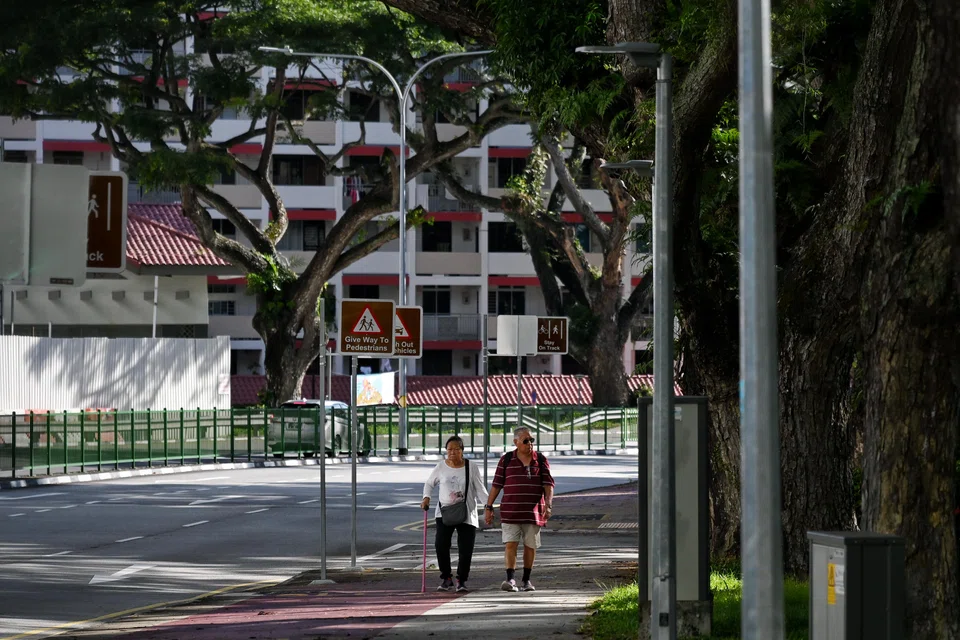
THE spectre of a rapidly ageing population is a chilling prospect for policymakers. What lies ahead could be a shortage of younger workers to drive the economy, or insufficient funds to meet the health and social care needs of the elderly.
Nonetheless, an ageing population can represent a business opportunity for some. Think of providers of walking aids or adult diapers. There can be rich pickings for drug companies and medical practitioners focused on geriatric medicine.
Property groups are an agile bunch. They can build compact homes to meet the needs of small households, or large luxury apartments that appeal to the super rich. They can pivot portfolios to where demand is strong, be it hospitality, data centres or modern warehouses.
Might we soon see developers clamouring to grow in the purpose-built senior-living space?
Last year, a unit of Perennial won the tender for a private assisted-living development in Parry Avenue for S$71.9 million. The development will comprise 200 assisted-living apartments, a nursing home with 100 beds, a wellness clubhouse and a geriatric care centre. Each unit, ranging from 366 to 666 square feet, will have one or two bedrooms, a private lift and access to balconies.
Recently, Keppel officially opened its first senior-living facility in Asia, in Nanjing, China. This purpose-built facility is the flagship project for Sindora Living, Keppel’s senior-living brand and operating platform for Asia. The facility is fitted out as a premier assisted-living community with care capabilities and around 400 beds.
In Singapore, the government is exploring how different types of senior housing influence the quality of life of seniors in a S$2.9 million project led by the National University of Singapore. This study aims to enhance the planning, design and provision of future senior housing.
The proportion of elderly residents has grown rapidly and will grow further amid rising life expectancy and low birth rates. The share of Singapore residents aged 65 years and over was 17.3 per cent in 2023 versus 9 per cent in 2010 and 7.2 per cent in 2000.
Between 2010 and 2023, the number of residents aged 65 years and over more than doubled to 717,843. Those aged 80 years and over also more than doubled to 139,909.
Nonetheless, property developers eyeing rich rewards from building purpose-built private senior-living facilities here may need to temper their expectations.
Wide-ranging needs
First, the elderly are hardly a homogenous group.
Some elderly folk who can live fairly independently may seek easy access to a helper or medical assistance on an ad hoc basis. Other seniors suffer from dementia or could be bedridden. In short, different seniors may require widely varying levels of medical care or assistance with daily tasks.
As such, developers might need to provide a wide range of eldercare facilities to cater to disparate needs of the elderly. Therefore, scaling up purpose-built senior-living offerings and achieving economies of scale to enhance investment returns may be tricky.
Moreover, a private-sector player aiming to go regional in the senior-living space may face huge challenges as the elderly in different countries could have differing needs. Additionally, various jurisdictions would have their own care systems and regulations.
Government efforts
Second, the government here is doing plenty on the senior-living front.
For example, seniors who would benefit from assisted-living options, can access Community Care Apartments, a new public-housing typology that pairs senior-friendly housing designs with on-site care services, such as 24-hour emergency monitoring and response, basic health checks and home fixes, as well as group activities.
Also, the government has piloted purpose-built senior-housing typologies, such as the co-location of senior housing with social and community facilities at Kampung Admiralty, as well as a sandbox programme on Shared Stay-in Senior Care Services, to trial the feasibility of having live-in domestic helpers to care for several seniors sharing an apartment.
If the government comprehensively addresses senior-living needs, the room for private-sector players to play in the senior-living space may be limited. After all, the elderly might find government-provided senior-living options to be the most cost-effective.
Third, private-sector players operating purpose-built senior-living facilities here may encounter high costs, especially that of land and labour.
Private purpose-built senior-living facilities here could face stiff competition from offerings in nearby destinations which may provide quality care at more affordable rates.
Indeed, might many of Singapore’s affluent seniors be cared for in Malaysia, Indonesia or Thailand where costs could be substantially lower?
Fourth, living in a conventional Housing and Development Board flat or private home will likely be the preferred living arrangement for many elderly folk here.
With support from family, friends, domestic helpers and the wider community, perhaps many seniors can age in place in their own homes. Additionally, more services could emerge and new technologies be applied to assist the elderly who live on their own or with family members.
Ultimately, many seniors may prefer living in developments with people of different age groups than with elderly peers in purpose-built senior-living facilities.
Fifth, managing elderly folk can be problematic.
Can private-sector players eyeing juicy investment returns provide a level of care at purpose-built senior-living facilities that meets the expectations of family members of the elderly?
Also, negative publicity could ensue if an operator evicts a senior who may be unsuitable to be cared for in a particular facility or defaults on payment.
Property developers invariably have to be nimble to meet changing live, work and play needs. With an ageing population, malls for example should be designed to be elder-friendly.
Still, what appears to be a rich opportunity in purpose-built senior-living here given the growth in the number of the elderly might turn out to be a mirage. Making a robust return from caring for seniors could be hard as seniors have disparate needs, the government is actively addressing many such needs, and more cost-effective senior-living options may emerge in neighbouring countries.