

Tesla shareholders seem to fathom Musk’s package just fine
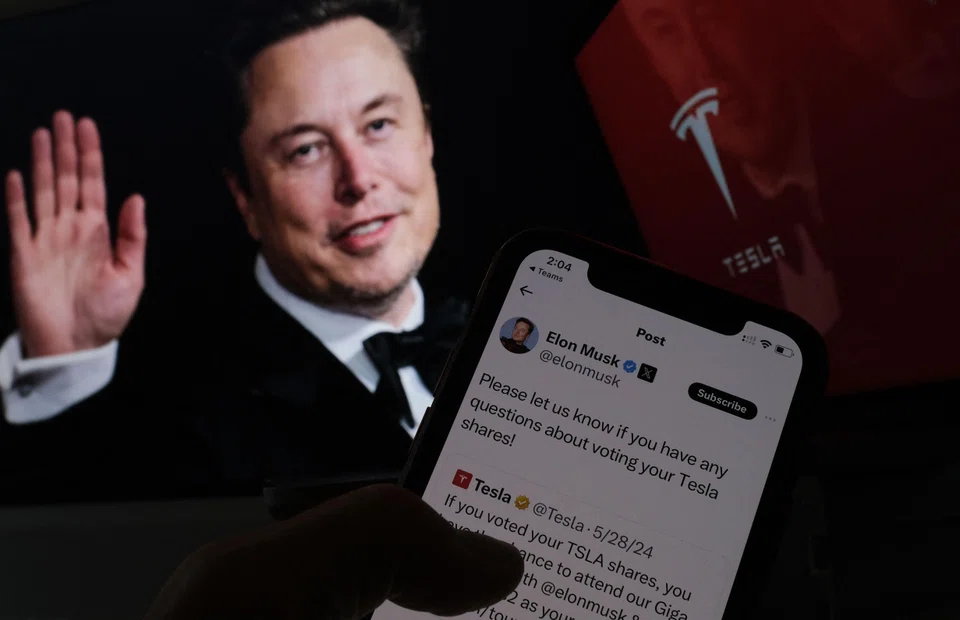

IF YOU cannot stomach defending a billionaire’s right to make more money, you’d best avert your eyes now. Perhaps you can raise them heavenward – you will be in good company with Tesla shareholders and other corporate rubberneckers as they contemplate the debacle of Elon Musk’s pay package.
In January, Delaware judge Kathaleen McCormick stood up for the little guy by nullifying Musk’s US$56 billion pay package at Tesla. Turns out, the little guy didn’t want any saving. On Jun 13, shareholders again overwhelmingly voted to award Tesla’s chief executive the same pay package they’d approved in 2018. This, despite McCormick’s finding earlier this year that the 2018 package was unfair because she’d considered two basic issues – price and process – and found them both problematic.
It’s fairly easy to get behind her dim view of Tesla’s compensation approval process. Back in 2018, the independence of the compensation committee was laughable. One committee member had known Musk for 15 years and another had regularly vacationed with his family.
The “fair price” issue, though, raises interesting questions. What yardstick do we use to find a US$56 billion payout “unfathomable”, as McCormick had? The comparison multiples are quantitatively large, but outrage is qualitative. Also – and this isn’t McCormick’s fault – it seems a little belated to be fathoming ballooning CEO pay packages now; I suspect most market watchers ran out of fathoms many, many zeroes ago.
In any case, the judge noted that Musk’s pay package was “historically unprecedented”, but hadn’t Tesla’s performance and sheer fact of existence been equally unparalleled? From March 2018 to end-2023, Musk achieved a total shareholder return of nearly 1,100 per cent, the company had argued.
McCormick hadn’t bought that, however, finding that Tesla had failed to prove that Musk’s efforts had solely or directly led to the firm’s success, or that his pay package had directly driven his efforts.
Does this strike players of the white-collar Hunger Games as a little idealistic? Demanding a sole or direct causality disregards the Faustian pact that underpins the corporate world – in return for getting all the bucks, the buck stops with you. You receive both credit and blame, however far removed you are from actual events. That’s the deal.
Then, there is the deal that Tesla shareholders made six years ago, when they wagered that Musk couldn’t achieve certain targets in exchange for this “unfathomable” payout. The judge said they didn’t know what they were doing when they made that bet, so she unmade it for them.
But in 2024, even with the extra information that the judge insisted they previously lacked, shareholders made their own calculations which resulted in a similar bet: Musk might walk if he doesn’t get his money; few want to find out what a post-Musk Tesla looks like, so they will give him his money.
So now that Tesla shareholders have shoved their chips back onto the table for the second time, what’s next? It’s possible that the courts find other flaws with the 2024 vote, and Musk’s payout remains stymied. But past a point, players in the great game of capitalism should be free to make their own bets and potential mistakes. And even if the courts do not like how this game is played, they ought to eventually let the chips fall where they may.
TRENDING NOW

World’s largest offshore wind platform by Seatrium consortium on track to be completed by 2028

Is stamp collecting enjoying an analogue revival or are its best days over?

GovTech retrenches another 38 staff in second round of layoffs
MBS adjusted property Ebitda falls 20.6% in Q3 with fewer high-roller visits, weaker hold

